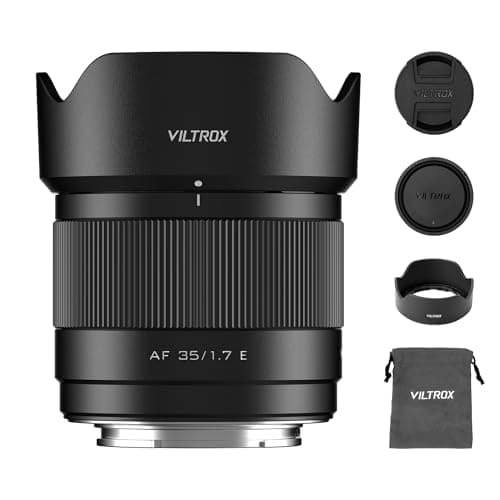
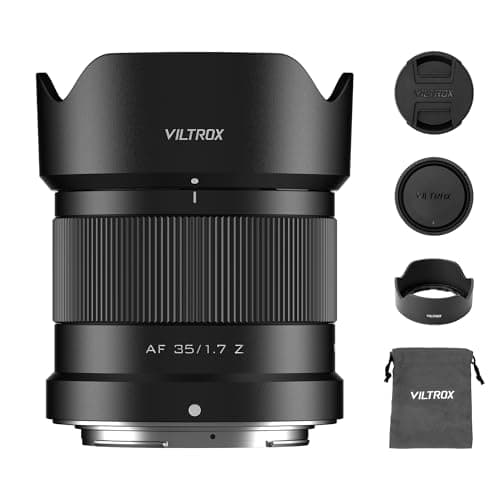
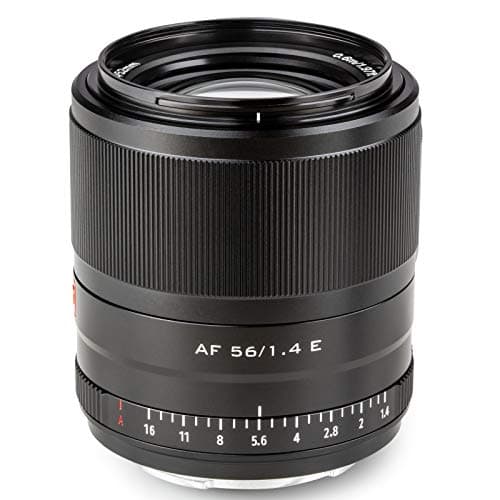
The best Viltrox lens is the 56mm F1.4. It is an autofocus 84mm-equivalent portrait prime with a genuinely fast aperture, at a price first-party 85mm-class glass does not reach, and it is the Viltrox that produces a photograph you could not otherwise have taken. It is for the APS-C owner who wants a flattering head-and-shoulders portrait with a background that falls away. Our budget pick is the Viltrox AF 35mm F1.7 Air, the cheapest lens here and a 170g 53mm-equivalent normal prime that is easy to leave on the camera permanently. Prices come from the live price layer with an "as of" date; where there is no verified purchasable offer, we show no price.
Viltrox is worth understanding before you buy one, because the brand is not simply "cheap Sigma". Its autofocus primes are designed around a single trade: it spends money on glass and on a fast maximum aperture, and saves it on weather sealing, on build materials and on the autofocus motor, which is a stepping motor rather than a linear one. In practice the pictures are better than the price suggests and the handling is a step behind. It also means firmware matters - Viltrox lenses have a USB port and the company ships updates that improve autofocus behavior on new bodies, which is a real advantage and a real admission at the same time.
The other thing to know is the Air series. The 35mm F1.7 Air weighs about 170g and is 11 elements in 9 groups; that is a deliberately simple design with a slightly slower f/1.7 maximum aperture rather than f/1.4, and it is why it costs what it does. For a camera you want to carry every day, that is the right compromise. For low light and portraits, the F1.4 primes above it are the better buy. We keep the two kinds separate below rather than pretending they compete.
What we required of a Viltrox lens to rank here
Viltrox sells manual-focus lenses, full-frame primes and a widening APS-C range. Three rules cut it to six.
- Autofocus only. A manual-focus-only lens is a different hobby, not a cheaper version of this one, and nobody buying their second lens should be sold one by accident.
- Built for the crop-sensor bodies this site covers- Sony E, Fujifilm X and Nikon Z. Viltrox's full-frame primes are good; they are simply not for an a6400 or an X-T30 owner.
- A live price from the price layer. Every pick below has a verified purchasable offer. Viltrox sells the 35mm Air in three mounts and we price each one separately rather than quoting the cheapest and hoping.
The six, and what each one is for
| Lens | Mount | What it is for | Main compromise |
|---|
| Viltrox 56mm F1.4 | Sony E APS-C | Portraits at about 84mm equivalent | Too tight indoors; stepping-motor AF, not linear |
| Viltrox AF 35mm F1.7 Air | Sony E APS-C | The everyday normal prime, about 53mm equivalent, 170g | f/1.7 rather than f/1.4; no weather sealing |
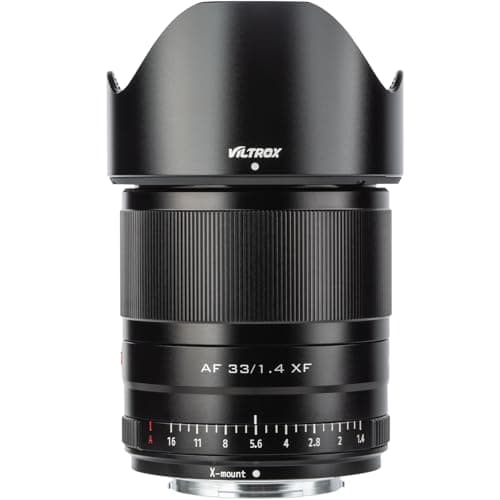
| Viltrox 33mm F1.4 | Fujifilm X APS-C | A fast 50mm-equivalent normal prime for Fujifilm | Heavier than the Air; Fujifilm X only |
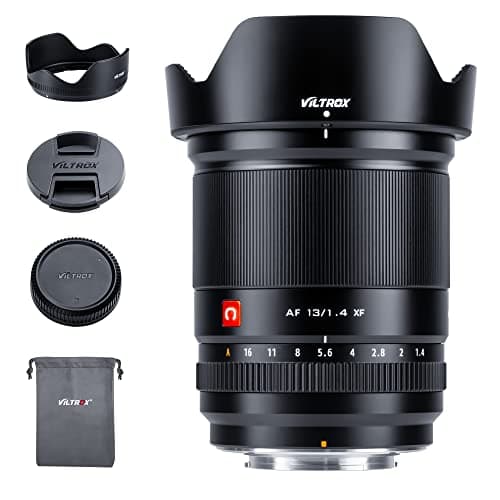
| Viltrox 13mm F1.4 | Fujifilm X APS-C | Fast ultra-wide, about 20mm equivalent | The most expensive Viltrox here; a specialist field of view |
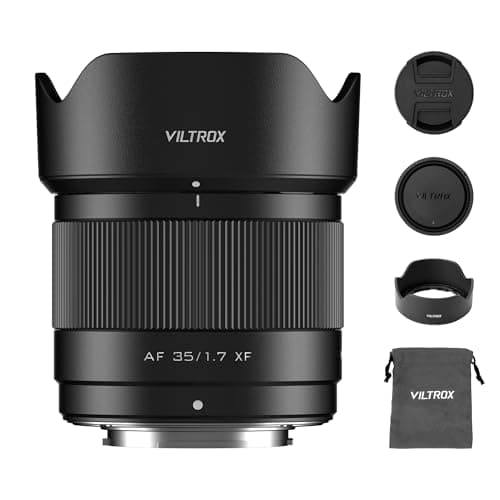
| Viltrox AF 35mm F1.7 Air (X-mount) | Fujifilm X APS-C | The same 170g normal prime for Fujifilm bodies | Same f/1.7 compromise; 52mm filter thread |
| Viltrox AF 35mm F1.7 Air (Z-mount) | Nikon Z APS-C | The cheapest autofocus prime on Nikon Z DX | Nikon's own DX prime range is thin, so there is little to compare |
Why the 56mm F1.4 wins
84mm equivalent is the portrait length, and the reason is physical rather than stylistic: at that distance a face is rendered without the nose-forward distortion a wide lens gives, and you stand far enough back that your subject relaxes. Pair that framing with f/1.4 and the background behind a head turns to a smooth wash instead of a cluttered room. No kit zoom can produce that picture at any setting, which is what puts this lens at the top of a Viltrox ranking rather than merely in it.
The honest cons: 84mm is unusable in a small room and wrong for groups, so this is a second or third lens rather than a first. Autofocus is a stepping motor, which is accurate and quiet but less decisive on a fast-moving subject than a first-party linear-motor design. And there is no weather sealing. The rival worth checking is Sigma's own 56mm - the comparison is in Sigma 56mm vs Sony 50mm and the wider field in best portrait lenses.
The budget pick, in three mounts: the 35mm F1.7 Air
This is the lens that made the brand's name with beginners and it earns the budget-pick slot on merit rather than on price alone. At about 170g it weighs less than most kit zooms, it frames like about 53mm - the normal field of view, so nothing in the frame looks stretched or compressed - and f/1.7 is roughly two and a half times the light of a kit lens at f/2.8. It has a 52mm filter thread, an 11-element, 9-group optical design, and it updates over USB.
What you give up for the weight is a half stop against the F1.4 primes, any weather resistance, and the reassurance of a metal barrel. It is sold in Sony E, Fujifilm X and Nikon Z and all three carry a live price, which is unusual and is why it appears three times in the ranking instead of once. On Nikon Z DX in particular it is the cheapest autofocus prime available at all. Our full write-up is the Viltrox 35mm Air review, and the lens also anchors best lens under $200.
For Fujifilm: the 33mm F1.4 and the 13mm F1.4
Fujifilm owners get the most from Viltrox because Fujifilm's own fast primes are expensive. The 33mm F1.4 is the normal prime for an X-mount body - about 50mm equivalent - and the extra half stop over the Air is worth having if you shoot indoors a lot; you pay for it in weight. The 13mm F1.4 is the specialist: about 20mm equivalent and fast, a combination that suits interiors, cramped travel scenes and astrophotography, and it is the most expensive Viltrox on this page. Both sit in best lenses for Fujifilm.
What we would actually buy
One Viltrox, for most people: the 35mm F1.7 Air in your mount, because it is cheap, light and the right field of view to leave on a camera. Two, if you photograph people: add the 56mm F1.4. Three is where the brand stops making sense and a Sigma zoom starts to - the comparison between the two third-party ranges is in best Sigma lenses, and the cheap end of the whole market is ranked in best budget Sony E lenses.