Skip to content
Focal & Frame

Glass · Lenses

The Best Lenses for Astrophotography

Shooting the night sky asks for two things a kit lens cannot give you: a wide field of view and a very wide aperture. Five lenses ranked on both, plus the cheapest one that genuinely works.

By Stephen V.Updated How we research
#ad

We earn a commission when you buy through our Amazon links, at no extra cost to you. It never decides our rankings — we say so when the cheaper pick is the better buy. How this works.

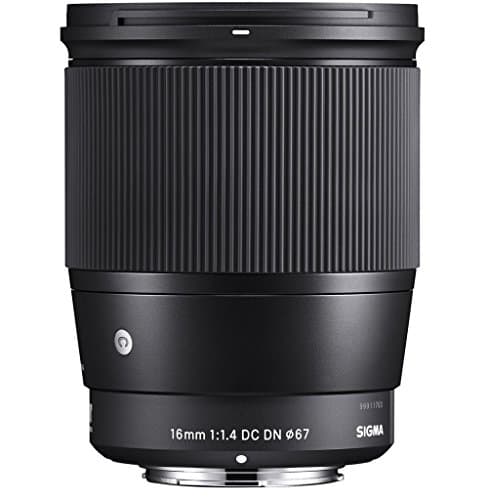
Sigma Sigma 16mm F1.4 DC DN

Our #1 pick

Sigma 16mm F1.4 DC DN

The value creator wide: a fast ≈24mm-equivalent f/1.4 that's brilliant for vlogging, low light and astro, at a price that undercuts the first-party options.

Don't buy it if you want the lightest possible lens for arm's-length vlogging. It's a bit front-heavy for long handheld sessions — the Sony E 11mm f/1.8 is lighter and wider for selfie framing.

#ad · Live Amazon price as of November 21, 2026. No verified price → we show none.

The best astrophotography lens for most people is the Sigma 16mm F1.4 DC DN. It pairs a roughly 24mm-equivalent field of view with an f/1.4 aperture — the combination the night sky actually requires — and it exists in Sony E, Canon RF, Fujifilm X and Nikon Z. That is the pick for anyone shooting the Milky Way, aurora or star trails on an APS-C body. If you want a zoom instead of a prime, the Sigma 10-18mm F2.8 DC DN holds f/2.8 across an ultra-wide range. Our budget pick is the Viltrox AF 35mm F1.7 Air: not wide, but the cheapest lens here fast enough to record stars properly. Prices come from the live price layer, each with its own date.

Astrophotography is the one genre where the lens specification genuinely decides whether the photograph is possible. The reason is a hard constraint called the rule of 500: the Earth rotates, so a star becomes a visible streak if your shutter stays open too long, and the longest exposure you can use is roughly 500 divided by your equivalent focal length — about 20 seconds at 24mm equivalent, about 10 at 50mm. You cannot extend that by wanting to. So you have exactly two levers: go wider, which buys you a longer exposure, and open the aperture, which gathers more light in the time you have.

That is why every lens on this page is wide, fast or both, and why a kit zoom is hopeless at this. A kit lens at f/3.5 gathers roughly an eighth of the light an f/1.4 prime does in the same exposure, and no amount of raising ISO fixes that — it only makes the noise louder alongside the stars. Everything below is ranked on the two numbers that matter, with the mount notes you need before ordering.

The short answer

Quick picks

#ProductBest forScorePrice
01
Sigma Sigma 16mm F1.4 DC DN
Sigma 16mm F1.4 DC DN

The value creator wide: a fast ≈24mm-equivalent f/1.4 that's brilliant for vlogging, low light and astro, at a price that undercuts the first-party options.

The best-value wide prime
7.8
$414.00Amazon
02
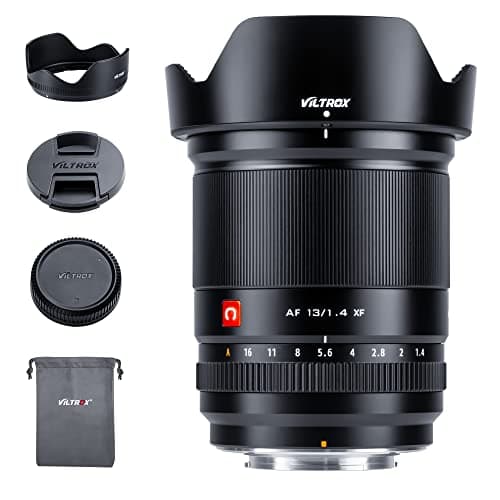
Viltrox Viltrox 13mm F1.4
Viltrox 13mm F1.4

A rare thing on Fujifilm: a genuinely fast ultra-wide that does not cost a fortune. The ≈20mm-equivalent view and f/1.4 aperture make it a natural for astro, interiors and dramatic landscapes.

The best-value fast ultra-wide for Fujifilm
7.8
$388.80Amazon
03
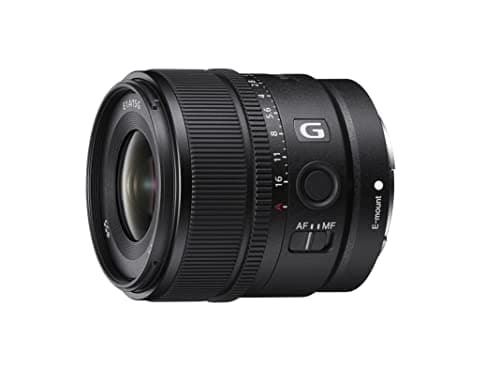
Sony Sony E 15mm F1.4 G
Sony E 15mm F1.4 G

The premium creator prime: a fast, sharp 15mm with a clicked/de-clicked aperture ring that's as happy shooting stills as smooth, cinematic video.

The premium wide creator prime
7.8
$848.00Amazon
04
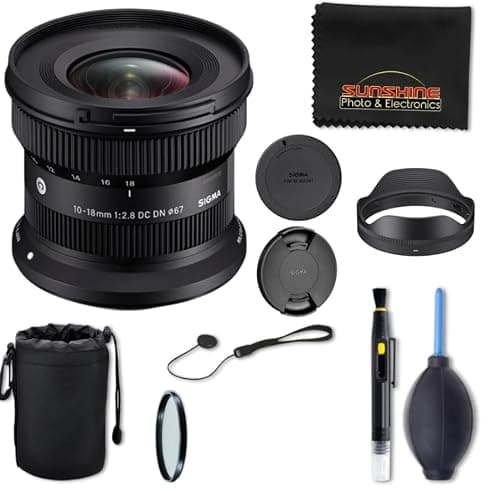
Sigma Sigma 10-18mm F2.8 DC DN
Sigma 10-18mm F2.8 DC DN

The fast ultra-wide zoom APS-C shooters have wanted: a constant f/2.8 across the whole range in a tiny body, wide enough for landscapes and interiors and bright enough for astro.

The best fast ultra-wide zoom for APS-C
8.0
$729.00Amazon
05
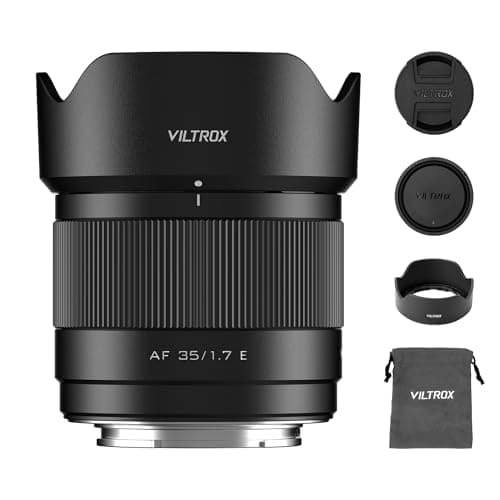
Viltrox Viltrox AF 35mm F1.7 Air
Viltrox AF 35mm F1.7 Air

The budget champion: an ultralight APS-C 35mm that costs a fraction of the alternatives yet delivers bright f/1.7 photos and autofocus that is perfectly good for everyday shooting.

The best budget 35mm prime
7.6
$143.20Amazon

#ad · Live prices from the Amazon Product API, as of November 21, 2026. Where we have no verified live price, we show none — we would rather leave a gap than print a number that has rotted.

In detail

The picks, in full

01
Sigma Sigma 16mm F1.4 DC DN

The best-value wide prime

Sigma 16mm F1.4 DC DN

16mm f/1.4 (≈24mm equivalent)Sony E mount (APS-C)Stepping-motor AF67mm filter thread
7.8/10

The value creator wide: a fast ≈24mm-equivalent f/1.4 that's brilliant for vlogging, low light and astro, at a price that undercuts the first-party options.

Sharpness
8
Autofocus
8
Aperture & bokeh
7
Build & size
7
Value
9

Pros

  • f/1.4 and the ≈24mm-equivalent view make it a versatile everyday wide — vlogging, interiors, street and night skies
  • Excellent sharpness and a bright aperture for a fraction of the cost of a first-party G lens
  • Fast, quiet autofocus that tracks faces reliably for talking to camera

Cons

  • Heavier and larger than Sony's own compact wide primes — it's dense in the hand
  • No aperture ring and no weather sealing, unlike the pricier Sony 15mm f/1.4 G

Don't buy this if…

…you want the lightest possible lens for arm's-length vlogging. It's a bit front-heavy for long handheld sessions — the Sony E 11mm f/1.8 is lighter and wider for selfie framing.

$414.00View on Amazon

Price as of November 21, 2026. Prices change — Amazon's is the one that counts.

#ad · we may earn a commission from this link to Sigma 16mm F1.4 DC DN

02
Viltrox Viltrox 13mm F1.4

The best-value fast ultra-wide for Fujifilm

Viltrox 13mm F1.4

13mm f/1.4 (≈20mm equiv)Fujifilm X mount (APS-C)STM autofocusFast ultra-wide
7.8/10

A rare thing on Fujifilm: a genuinely fast ultra-wide that does not cost a fortune. The ≈20mm-equivalent view and f/1.4 aperture make it a natural for astro, interiors and dramatic landscapes.

Sharpness
8
Autofocus
7
Aperture & bokeh
9
Build & size
7
Value
8

Pros

  • The ≈20mm-equivalent field of view is dramatically wide — superb for landscapes, interiors, architecture and vlogging
  • f/1.4 is exceptionally fast for an ultra-wide, so it excels at astrophotography and dim interiors where slow wides give up
  • Sharp across the frame with quiet STM autofocus, at a fraction of a first-party ultra-wide's price

Cons

  • Large and heavy next to Fujifilm's compact primes — it is a dense lens on a small body
  • No weather sealing, and ultra-wide framing exaggerates perspective, so it takes care to compose

Don't buy this if…

…you want an everyday walk-around lens. At ≈20mm equivalent it is a specialist wide — too wide for portraits or general shooting, where a 23mm or 33mm is far more natural.

$388.80View on Amazon

$486.0020% off

Price as of November 21, 2026. Prices change — Amazon's is the one that counts.

#ad · we may earn a commission from this link to Viltrox 13mm F1.4

03
Sony Sony E 15mm F1.4 G

The premium wide creator prime

Sony E 15mm F1.4 G

15mm f/1.4 (≈22.5mm equivalent)Sony E mount (APS-C)Aperture ring + click switchG-series optics
7.8/10

The premium creator prime: a fast, sharp 15mm with a clicked/de-clicked aperture ring that's as happy shooting stills as smooth, cinematic video.

Sharpness
9
Autofocus
8
Aperture & bokeh
7
Build & size
8
Value
7

Pros

  • f/1.4 is genuinely fast for a wide lens — bright in low light and capable of real background separation
  • An aperture ring with a click on/off switch gives tactile, smooth exposure control for video
  • G-series sharpness and quick, quiet autofocus in a still-compact, still-light package

Cons

  • Pricier than the Sigma 16mm f/1.4, which covers similar ground for less
  • The ≈22.5mm-equivalent view is a touch tight for the closest arm's-length selfie vlogging

Don't buy this if…

…you're on a budget and mainly want a wide vlogging prime. The Sigma 16mm f/1.4 gives you f/1.4 and a similar field of view for noticeably less money.

$848.00View on Amazon

$949.9911% off

Price as of November 21, 2026. Prices change — Amazon's is the one that counts.

#ad · we may earn a commission from this link to Sony E 15mm F1.4 G

04
Sigma Sigma 10-18mm F2.8 DC DN

The best fast ultra-wide zoom for APS-C

Sigma 10-18mm F2.8 DC DN

10-18mm f/2.8 (constant, ≈15-27mm equiv)Sony E mount (APS-C)Stepping-motor AFUltra-wide constant aperture
8.0/10

The fast ultra-wide zoom APS-C shooters have wanted: a constant f/2.8 across the whole range in a tiny body, wide enough for landscapes and interiors and bright enough for astro.

Sharpness
8
Autofocus
8
Aperture & bokeh
7
Build & size
8
Value
9

Pros

  • A constant f/2.8 across the 10-18mm (≈15-27mm equivalent) range is genuinely fast for an ultra-wide, so it works for astro and dim interiors
  • Ultra-wide framing for sweeping landscapes, architecture and vlogging, with the flexibility of a zoom
  • Remarkably small and light for a fast ultra-wide, with quick, quiet autofocus

Cons

  • APS-C only, with no stabilization — you lean on in-body IS or a gimbal for handheld video
  • Some distortion at the widest end that relies on in-camera correction, and it is pricier than a slow kit-style wide

Don't buy this if…

…you want the very brightest wide for astro or the strongest background blur. A fast wide prime like the Sigma 16mm f/1.4 opens wider still — the zoom trades some speed for framing flexibility.

$729.00View on Amazon

Price as of November 21, 2026. Prices change — Amazon's is the one that counts.

#ad · we may earn a commission from this link to Sigma 10-18mm F2.8 DC DN

05
Viltrox Viltrox AF 35mm F1.7 Air

The best budget 35mm prime

Viltrox AF 35mm F1.7 Air

35mm f/1.7Sony E mount (APS-C, 53mm equivalent)STM autofocus, 170gUltralight 'Air' series
7.6/10

The budget champion: an ultralight APS-C 35mm that costs a fraction of the alternatives yet delivers bright f/1.7 photos and autofocus that is perfectly good for everyday shooting.

Sharpness
7
Autofocus
7
Aperture & bokeh
8
Build & size
6
Value
10

Pros

  • One of the cheapest autofocus primes anyone makes, so it is an easy first prime
  • Remarkably light at 170g — the 'Air' series is built to shave grams, ideal for travel and gimbals
  • f/1.7 keeps indoor shots bright and blurs backgrounds nicely for the price

Cons

  • Plastic build with no aperture ring or weather sealing — it feels as inexpensive as it is
  • Covers APS-C only, so a full-frame E-mount body crops and you lose resolution
  • LensTip's lab test flags distinct vignetting in RAW files and autofocus accuracy that slips on older bodies

Don't buy this if…

…you shoot a full-frame Sony body, or you need weather sealing and the fastest autofocus for professional work. It is outstanding value for everyday APS-C shooting, but the image circle does not cover a full-frame sensor and a premium prime pulls ahead where it counts.

$143.20View on Amazon

$179.0020% off

Price as of November 21, 2026. Prices change — Amazon's is the one that counts.

#ad · we may earn a commission from this link to Viltrox AF 35mm F1.7 Air

The five, on the two numbers that decide it

LensMountEquivalent viewMax apertureRule-of-500 exposure
Sigma 16mm F1.4 DC DNSony E; RF, X and Z variants existAbout 24mmf/1.4About 20 seconds
Viltrox 13mm F1.4Fujifilm X (APS-C)About 20mmf/1.4About 25 seconds
Sony E 15mm F1.4 GSony E (APS-C)About 22.5mmf/1.4About 22 seconds
Sigma 10-18mm F2.8 DC DNSony E (APS-C)About 15-27mmf/2.8 constantAbout 33 seconds at the wide end
Viltrox AF 35mm F1.7 AirSony E, Nikon Z, Fujifilm X (APS-C)About 53mmf/1.7About 9 seconds

The exposure column is the rule of 500 applied to each equivalent focal length. Treat it as a starting point, not a law: it is a rough guide that predates high-resolution sensors, and pixel-peepers often prefer a stricter version. Shoot one frame, zoom in on a star, and shorten the exposure if it has visibly stretched.

1. Why f/1.4 matters more here than anywhere else

In daylight an extra stop of aperture is a convenience. At night it is the photograph. With your exposure capped by the Earth's rotation and your ISO capped by noise, aperture is the only remaining lever on how much light reaches the sensor. f/1.4 gathers four times as much light as f/2.8 and about six times as much as f/3.5 — which in practice is the difference between a sky full of stars and a gray frame with a dozen bright ones. That is the entire reason three of the five picks here are f/1.4 primes.

2. Why wider is better, up to a point

Going wider helps twice: it lengthens the exposure the rule of 500 allows, and it fits more of the sky and more foreground into the frame, which is what makes a night landscape rather than a star chart. The limit is composition. Past about a 20mm-equivalent view, a lot of night images become empty — a huge sky with nothing in the bottom third — so the widest lens is not automatically the best one. A 24mm equivalent is the sweet spot most people land on, which is where the Sigma 16mm sits.

3. Coma, and the thing listings never tell you

The optical defect that ruins astrophotography is coma: stars near the corners of the frame smearing into little wings or commas instead of staying as points. It is worst at the widest aperture, which is exactly where you want to shoot, and it is the reason two lenses with identical specifications can produce very different night skies. No manufacturer publishes a coma figure. What you can do is stop down one third to two thirds of a stop from maximum — f/1.8 on an f/1.4 lens — which usually cleans up the corners for a small cost in light, and check the corners of your own first frame before walking further into a field in the dark.

4. Manual focus is mandatory, so check the lens allows it comfortably

No autofocus system can focus on a star. The routine is: switch to manual focus, point at the brightest star you can find, magnify the live view as far as it goes, and turn the ring until the star is the smallest possible point. Then do not touch the lens again. Lenses with a usable, well-damped focus ring make this far less miserable in the cold, which is a real argument for the better-built options here. Our autofocus modes guide covers the switch, and camera settings the exposure habits.

5. The zoom case, and the budget case

The Sigma 10-18mm F2.8 DC DN is the one zoom worth considering: a constant f/2.8 across a 15-27mm equivalent range, which is two stops down on the f/1.4 primes but far more flexible for composing a foreground. If you shoot landscapes by day and stars occasionally, it is the better buy. At the other end, the Viltrox 35mm Air is here because a lot of people own one already: at about 53mm equivalent the rule of 500 gives you only around nine seconds, so you will be stacking frames or shooting constellations rather than a wide Milky Way arc — but f/1.7 means it genuinely records stars, which no kit lens does.

Mount notes and what else you need

The Sigma 16mm F1.4 is sold in Sony E, Canon RF, Fujifilm X and Nikon Z versions, each on its own listing — we price all four and go through LensTip-style measurements in the Sigma 16mm review. The Viltrox 13mm is Fujifilm X only. Beyond the lens, two things are not optional: a tripod sturdy enough to stand still for 20 seconds in a breeze, from best tripods, and a body whose high-ISO output you can live with, ranked in best cameras for low light. A wide, fast lens on a shaky tripod is a waste of a wide, fast lens.
How we picked

We do not run a testing lab

We compiled the manufacturers' published specifications and manuals, did the cost math, and scored each product against a published rubric. The scores are judgments from that documented research — they are notmeasurements we took, because we do not have a lab and we are not going to pretend we do. Where a number came from someone else's testing, we name and link them in Sources.

Questions

Frequently asked

What is the best lens for astrophotography?
The Sigma 16mm F1.4 DC DN, for most people on an APS-C body. It combines the roughly 24mm-equivalent field of view that lets you expose for about 20 seconds under the rule of 500 with an f/1.4 aperture that gathers four times the light of an f/2.8 lens, and it is sold in Sony E, Canon RF, Fujifilm X and Nikon Z. The Sony E 15mm F1.4 G is the premium alternative; the Sigma 10-18mm F2.8 is the flexible zoom one.
What aperture do I need for astrophotography?
f/2.8 is the practical floor and f/1.4 to f/1.8 is where it gets easy. The reason is arithmetic: your exposure length is capped by the Earth's rotation and your ISO is capped by noise, so aperture is the only lever left. f/1.4 gathers four times as much light as f/2.8 in the same exposure. A kit lens at f/3.5 is roughly an eighth of an f/1.4 lens, and raising ISO to compensate only amplifies noise alongside the stars.
Can I shoot the Milky Way with a kit lens?
You can record something, especially from a genuinely dark site with a sturdy tripod and stacked frames — but a kit zoom at f/3.5 is several stops short of what the subject needs, and the result will be noisy and thin. If you only ever do this once a year, try it before spending. If you want to do it properly, a fast wide prime is the one purchase that makes the difference. Our best wide-angle lenses covers the daylight uses of the same glass.
What is the rule of 500?
A rough guide to the longest exposure you can use before stars visibly streak: 500 divided by your equivalent focal length, in seconds. At a 24mm equivalent that is about 20 seconds; at 50mm equivalent, about 10. It predates high-resolution sensors, so treat it as a starting point — shoot one frame, magnify a star, and shorten the exposure if it has stretched into a line.
Is coma or sharpness more important for a star lens?
Coma, by a long way. Center sharpness is good on every lens here; what separates a good astro lens from a merely good lens is whether stars in the corners stay as points or smear into wings at the widest aperture. No manufacturer publishes a coma figure, so the practical answer is to stop down a third to two thirds of a stop from maximum and check the corners of your own first frame. The measured optical detail we do have on the Sigma is in the Sigma 16mm review.
Do I need a star tracker?
Not to start. A tracker removes the rule-of-500 limit entirely by rotating the camera with the sky, which is transformative — and it is a separate purchase, a separate learning curve and more than most of the lenses on this page cost. Get a fast wide lens, a solid tripod and a dark site first; those three cover the great majority of what people actually want to photograph. The tripod question is in best tripods.

Keep reading

Receipts

Sources

We do not run a testing lab, and we do not pretend to. Specs come from manufacturer sheets and manuals; where a figure came from someone else's measurement, we name and link them. Where we could not verify something, we say so on the page rather than quietly leaving it out. Read our full method.