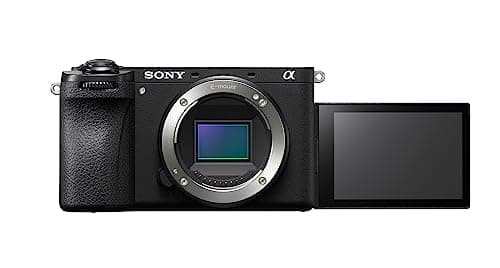
The best mirrorless camera under $2,000 is the Sony a6700. It is the only body in the band that combines in-body 5-axis stabilization, AI-based subject-recognition autofocus and oversampled 4K60 video, which means it is the one camera here with no obvious weakness. It is for the hybrid shooter who photographs and films and does not want to own two cameras. Our budget pick is the Sony a6400, the cheapest body with a live price under the ceiling and still a capable stills camera with real-time tracking autofocus. Prices come from the live price layer with an "as of" date; where there is no verified purchasable offer, we show no price.
Before the rankings, the honest warning: almost nobody reading this should spend the whole $2,000 on a body. Under $1,000 you are buying a camera that works; between $1,000 and $2,000 you are buying three specific features - in-body stabilization, a flagship autofocus processor, and oversampled video - and if you cannot name which of those you need, the money belongs in lenses instead. A $500 prime on a $800 body produces better photographs than a kit lens on a $1,900 one, every time.
This band is also where the price claims on cheaper pages stop being true. Two of the bodies here - the Nikon Z50 II and the Fujifilm X-S20 - have drifted above $1,000 since they launched, so this is the page that can state their price honestly. The band below is ranked in best mirrorless camera under $1,000, and the entry level in best budget mirrorless cameras.
What we required of a body to rank here
- A live price under $2,000 read from the price layer, not a launch price. A body with no verified purchasable offer is not in the band whatever it used to cost.
- It has to earn the step up from the band below. Every pick does something a sub-$1,000 body cannot: stabilize, recognize subjects, or oversample its video.
- A viewfinder and a native lens range. At this money a system with three lenses in it is not a system.
- No duplicate recommendations. Where two bodies serve the same buyer, only the better one is ranked.
The five, and what each one is for
| Body | Sensor | What it adds over a sub-$1,000 body | Main compromise |
|---|
| Sony a6700 | 26MP APS-C | IBIS, AI subject autofocus, oversampled 4K60 | No obvious weakness, and priced accordingly |
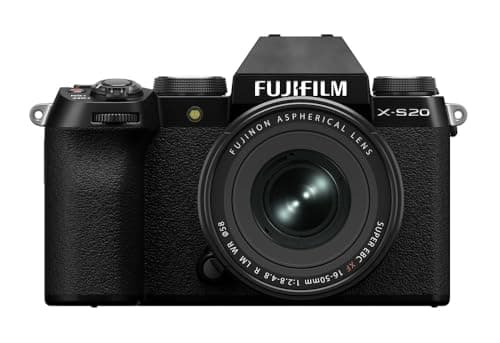
| Fujifilm X-S20 | 26MP APS-C | IBIS, 6.2K/4K video, large NP-W235 battery, film simulations | Closest to the ceiling; autofocus behind the Sony |
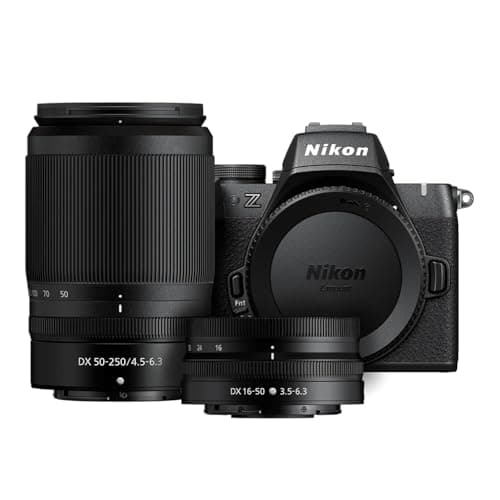
| Nikon Z50 II | 21MP APS-C | EXPEED 7 flagship autofocus processor | No in-body stabilization; lowest resolution here |
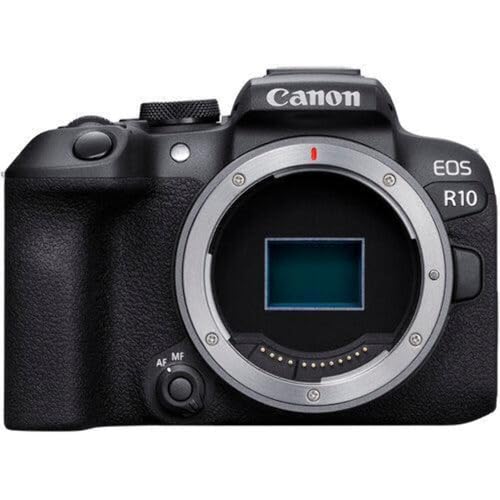
| Canon EOS R10 | 24MP APS-C | 15fps mechanical / 23fps electronic burst | No IBIS; thin RF-S lens range |
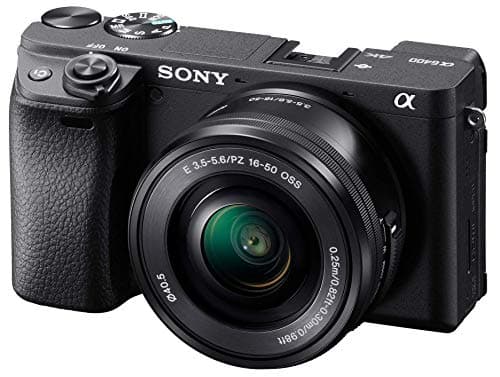
| Sony a6400 | 24MP APS-C | Real-time tracking AF, the deepest lens choice | Tilting screen only; no IBIS; oldest body here |
Why the Sony a6700 wins
Three features, and the fact that one camera has all three. In-body 5-axis stabilization makes handheld video usable without a gimbal and buys you two or three stops of shutter speed for stills in dim light. AI-based subject recognition means the autofocus knows it is looking at a person or an animal and holds the right part of it rather than the nearest edge. And oversampled 4K60 means the video is downsampled from more pixels than it outputs, which is visibly sharper than line-skipped 4K. Add 26 megapixels and Sony's mature E-mount lens range and there is nothing on this page it does not do.
The compromise is the price: it is not the cheapest route to any one of those features, only the cheapest route to all of them at once. If you only need stabilization, the X-S20 has it; if you only need autofocus, the Z50 II has the processor. Full detail is in the Sony a6700 review, and the generational comparison is Sony a6400 vs a6700.
If you shoot video and care how it looks: the Fujifilm X-S20
The X-S20 is the closest body to the ceiling and the one with the strongest video specification: 6.2K and 4K capture, in-body stabilization, and a large NP-W235 battery that means you are not changing cells every forty minutes. Fujifilm's film simulations are also a genuine workflow advantage rather than a gimmick - they produce a finished look in camera, which saves the editing step most people never get round to.
Its autofocus tracking is behind the a6700 on erratic subjects, and it is the most expensive camera on this page. Buy it if the output look and the battery matter more to you than the last word in autofocus. The review is Fujifilm X-S20 review.
If you shoot action: the Nikon Z50 II and the Canon R10
These two are in the band for the same reason and solve it differently. The Nikon Z50 IIcarries the EXPEED 7 processor from Nikon's professional bodies, which gives it subject-detection autofocus a class above its price, plus a deep grip and a viewfinder. The Canon EOS R10 answers with raw speed: 15 frames a second mechanically and 23 electronically, which is the highest burst rate here.
Neither has in-body stabilization, which is the feature you are mainly paying for in this band, and the Z50 II's 21 megapixels leave the least room to crop into a distant subject. Both are ranked properly in best mirrorless camera for sports, and their reviews are Nikon Z50 II review and Canon R10 review.
The budget pick: Sony a6400
The a6400 sits well under the ceiling and it is here to make a point: at this budget you can buy the cheapest body on the page and two good lenses, and that kit will outshoot the most expensive body on the page with one kit zoom. It has a 24-megapixel sensor, a viewfinder, real-time tracking autofocus that still works, and access to the widest native lens range of any system here.
What it lacks is everything this band is nominally about: no in-body stabilization, a tilting rather than articulating screen, and no oversampled video. If you film yourself, that screen is a real problem and the ZV-E10 or a newer body is the answer - alternatives to the Sony a6400 covers it. The review is Sony a6400 review.
What we would actually buy
At a $2,000 total budget: an a6400 plus the Sigma 18-50mm F2.8 and a 56mm prime, and we would not feel we had compromised. At $2,000 for a body alone, with lenses already owned: the a6700, because it is the only camera here that is not weak at something. The one case for spending the ceiling on a single body is video - if you film handheld and cannot carry a gimbal, in-body stabilization is not a luxury. The glass to put on any of these is ranked in best lens under $1,000 and best Sigma lenses.