Skip to content
Focal & Frame

Creator · Vlogging Cameras

The Best Vlogging Cameras Under $1,000

A thousand dollars is the budget where you stop compromising on the things that actually show up on screen: a screen you can see, a microphone jack, and autofocus that holds your face. Seven cameras with a live price under the line.

By Stephen V.Updated How we research
#ad

We earn a commission when you buy through our Amazon links, at no extra cost to you. It never decides our rankings — we say so when the cheaper pick is the better buy. How this works.

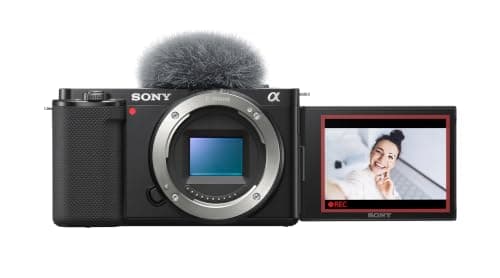
Sony Sony ZV-E10

Our #1 pick

Sony ZV-E10

The default first vlog camera: a fully articulating screen, class-leading eye autofocus, and both a mic input and a headphone jack — rare at this price.

Don't buy it if you walk and talk a lot without a gimbal. There's no in-body stabilization and the digital Active mode crops in hard — the DJI Osmo Pocket 3's built-in gimbal is far steadier for run-and-gun.

#ad · Live Amazon price as of November 21, 2026. No verified price → we show none.

The best vlogging camera under $1,000 is the Sony ZV-E10. It is the only camera in this price bracket that gives you a fully articulating screen, a microphone input and a headphone jack, on a 24MP APS-C sensor, with the deepest catalog of cheap wide lenses to grow into. If you would rather buy one sealed camera and never think about lenses, the Canon PowerShot V1 is the pick — a 22MP 1.4-inch sensor, a 16-50mm equivalent zoom and a built-in three-stop ND filter. Our cheapest pick is the DJI Osmo Pocket 3, which costs far less than the ceiling and is the only camera here with a mechanical gimbal inside it. Prices come from the live price layer with an "as of" date; where there is no verified price, we show none.

A thousand dollars is a genuinely useful line to draw, because it is the point where the compromises stop being about the picture and start being about preference. Below roughly $500 you are choosing which fundamental you can live without — a screen that faces you, a microphone socket, autofocus that does not drift. At this budget every camera below has the fundamentals, so the question becomes what kind of creator you are: one who will own four lenses in two years, or one who wants to switch a camera on and talk. Both answers are here and both are correct.

One thing worth saying before the rankings, because it is the mistake we see most often. Spending the whole $1,000 on a body is usually the wrong allocation. Every camera on this page has a built-in microphone that viewers will notice before they notice your sensor, and none of them ships with a card fast enough to be comfortable at 4K. If you are at the top of this budget, buy one bracket down and spend the difference on a wireless microphone and a fast card. That swap improves what people see and hear more than any sensor upgrade available for the same money.

The short answer

Quick picks

#ProductBest forScorePrice
01
Sony Sony ZV-E10
Sony ZV-E10

The default first vlog camera: a fully articulating screen, class-leading eye autofocus, and both a mic input and a headphone jack — rare at this price.

Video-first beginners who'll add lenses
8.4
$698.00Amazon
02
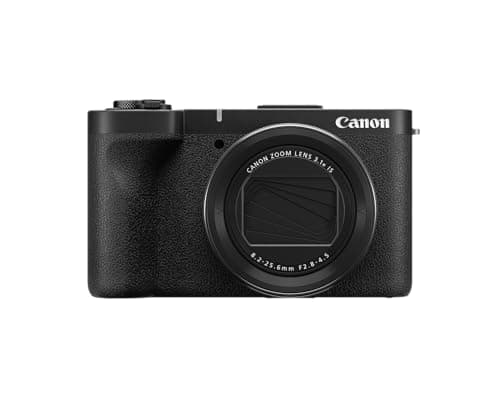
Canon Canon PowerShot V1
Canon PowerShot V1

Canon's compact creator answer: a larger-than-usual 1.4-inch sensor, a genuinely wide zoom, and a built-in ND filter.

Compact shooters who want a bigger sensor
7.6
$774.91Amazon
03
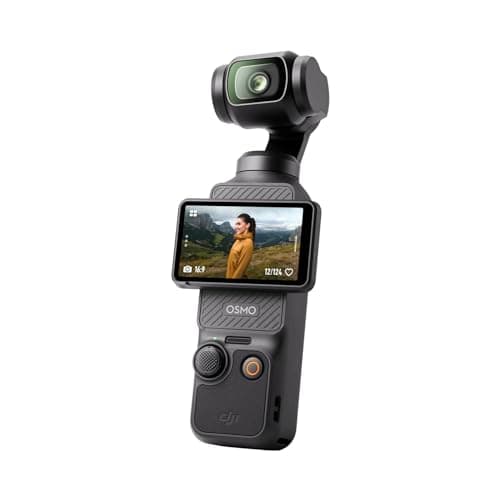
DJI DJI Osmo Pocket 3
DJI Osmo Pocket 3

A pocket camera with a real 3-axis gimbal built in — the steadiest walking footage here, no editing stabilization needed.

Run-and-gun walking vlogs
7.8
$373.00Amazon
04
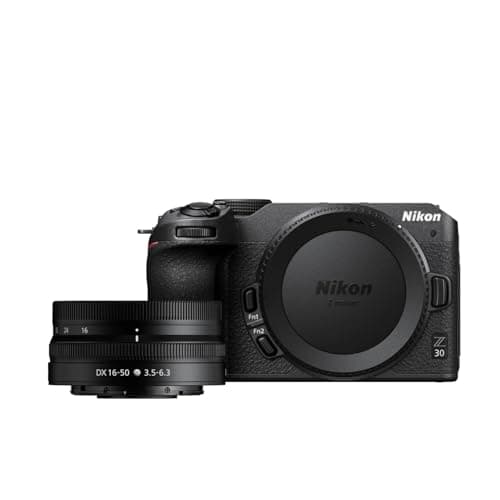
Nikon Nikon Z30
Nikon Z30

Nikon's vlog-first body handles beautifully at arm's length — uncropped 4K30 and the best grip here, minus a viewfinder.

Comfortable handheld vlogging
7.4
$596.95Amazon
05
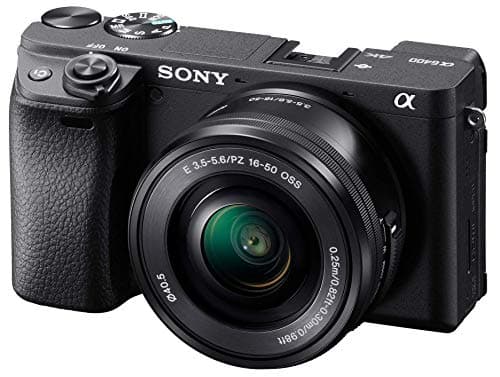
Sony Sony a6400
Sony a6400

One of the best autofocus systems at this price in a proper stills body — but the screen only tilts, which fights back when you vlog.

Hybrid shooters who lean stills
7.2
$802.74Amazon
06
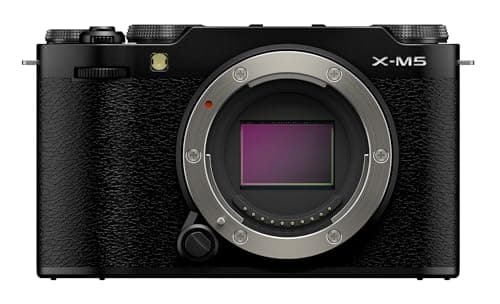
Fujifilm Fujifilm X-M5
Fujifilm X-M5

A tiny, cheap creator camera with Fujifilm's in-camera color and surprisingly serious video for the money.

Style-conscious budget creators
7.2
$899.00Amazon
07
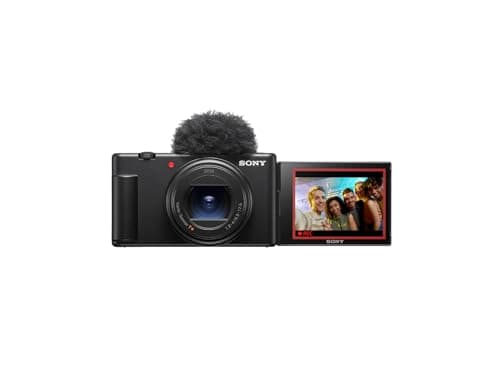
Sony Sony ZV-1 II
Sony ZV-1 II

A pocket all-in-one with a wide-to-normal zoom — no lenses to buy, just switch on and talk.

Grab-and-go vlogging without lenses
7.2
$898.00Amazon

#ad · Live prices from the Amazon Product API, as of November 21, 2026. Where we have no verified live price, we show none — we would rather leave a gap than print a number that has rotted.

In detail

The picks, in full

01
Sony Sony ZV-E10

Video-first beginners who'll add lenses

Sony ZV-E10

24MP APS-C4K30 (with crop)Fully articulating screenMic in + headphone out
8.4/10

The default first vlog camera: a fully articulating screen, class-leading eye autofocus, and both a mic input and a headphone jack — rare at this price.

Video quality
7
Autofocus
9
Screen & handling
8
Audio & inputs
9
Value
9

Pros

  • It has both a microphone input and a headphone jack, so you can record and monitor good audio — most rivals at this price give you one or neither
  • Sony's real-time eye AF is the best in the class and keeps your face locked while you move around
  • The E-mount has the deepest catalog of cheap wide primes to grow into, from Sony, Sigma and Viltrox

Cons

  • 4K30 is taken from a cropped region and shows noticeable rolling shutter (jello) on fast pans
  • No in-body stabilization, plus a small grip and battery, so it wants a gimbal or a wide lens for walking shots

Don't buy this if…

…you walk and talk a lot without a gimbal. There's no in-body stabilization and the digital Active mode crops in hard — the DJI Osmo Pocket 3's built-in gimbal is far steadier for run-and-gun.

$698.00View on Amazon

$799.9913% off

Price as of November 21, 2026. Prices change — Amazon's is the one that counts.

#ad · we may earn a commission from this link to Sony ZV-E10

02
Canon Canon PowerShot V1

Compact shooters who want a bigger sensor

Canon PowerShot V1

22MP 1.4-inch sensor16-50mm equiv. zoomBuilt-in 3-stop ND filter4K60 (4K30 uncropped)
7.6/10

Canon's compact creator answer: a larger-than-usual 1.4-inch sensor, a genuinely wide zoom, and a built-in ND filter.

Video quality
8
Autofocus
8
Screen & handling
8
Audio & inputs
7
Value
7

Pros

  • The 1.4-inch sensor is bigger than the 1-inch chips in rival compacts, so it holds up better in low light and blurs backgrounds more
  • A 16-50mm-equivalent zoom goes wide enough for handheld selfie framing, and the built-in ND filter tames bright sun for smooth shutter speeds
  • Canon's Dual Pixel autofocus and a flip-out screen make it an easy point-and-talk creator cam

Cons

  • Bigger and pricier than the pocketable 1-inch compacts, so it's less of a throw-in-a-pocket camera
  • No in-body stabilization: it leans on the lens's optical IS plus digital IS, and 4K60 comes with a 1.4x crop

Don't buy this if…

…you want the smallest possible pocket camera or the cheapest entry. The larger sensor and zoom add bulk and cost — the ZV-1F or Osmo Pocket 3 are truer pocket cameras.

$774.91View on Amazon

$829.007% off

Price as of November 21, 2026. Prices change — Amazon's is the one that counts.

#ad · we may earn a commission from this link to Canon PowerShot V1

03
DJI DJI Osmo Pocket 3

Run-and-gun walking vlogs

DJI Osmo Pocket 3

1-inch sensorBuilt-in 3-axis gimbal4K / 120fpsRotating touchscreen
7.8/10

A pocket camera with a real 3-axis gimbal built in — the steadiest walking footage here, no editing stabilization needed.

Video quality
8
Autofocus
7
Screen & handling
9
Audio & inputs
7
Value
8

Pros

  • The built-in mechanical 3-axis gimbal delivers glass-smooth walking footage that no in-body or digital stabilization can match
  • A 1-inch sensor, 4K up to 120fps, and a rotating touchscreen that flips to frame yourself
  • Tiny enough to actually carry every day, and it pairs seamlessly with DJI's wireless mics

Cons

  • The lens is fixed and moderately wide, and the small form factor means shorter battery life on long shoots
  • Autofocus and low-light latitude trail a proper APS-C body with a fast lens

Don't buy this if…

…you want interchangeable lenses, the shallowest background blur, or the best low-light image. It's a specialist run-and-gun tool, not a do-everything camera — pair it with an APS-C body if you need both.

$373.00View on Amazon

$439.0015% off

Price as of November 21, 2026. Prices change — Amazon's is the one that counts.

#ad · we may earn a commission from this link to DJI Osmo Pocket 3

04
Nikon Nikon Z30

Comfortable handheld vlogging

Nikon Z30

21MP APS-CUncropped 4K30Fully articulating screenNo viewfinder
7.4/10

Nikon's vlog-first body handles beautifully at arm's length — uncropped 4K30 and the best grip here, minus a viewfinder.

Video quality
7
Autofocus
8
Screen & handling
8
Audio & inputs
6
Value
8

Pros

  • One of the most comfortable small cameras to hold out at arm's length — the grip is genuinely good for long handheld takes
  • Uncropped 4K30 keeps your lens at its true wide field of view, unlike the cropped 4K on some rivals
  • A front tally lamp and a large record button make it easy to confirm you're actually rolling

Cons

  • No viewfinder and no in-body stabilization
  • Nikon's small Z DX lens range limits your cheap native wide options, and there's a mic input but no headphone jack

Don't buy this if…

…you also shoot a lot of stills in bright sun. With no viewfinder you're composing on a screen you can barely see outdoors — a body with an EVF like the R50 suits mixed shooting better.

$596.95View on Amazon

$696.9514% off

Price as of November 21, 2026. Prices change — Amazon's is the one that counts.

#ad · we may earn a commission from this link to Nikon Z30

05
Sony Sony a6400

Hybrid shooters who lean stills

Sony a6400

24MP APS-C4K30Real-time tracking AFEVF, tilting screen
7.2/10

One of the best autofocus systems at this price in a proper stills body — but the screen only tilts, which fights back when you vlog.

Video quality
7
Autofocus
9
Screen & handling
6
Audio & inputs
6
Value
8

Pros

  • Class-leading real-time tracking and eye AF that still holds up years after release
  • A built-in electronic viewfinder and a compact body make it a strong stills and travel camera
  • Opens the entire, enormous Sony E-mount lens catalog, first- and third-party

Cons

  • The screen tilts up rather than fully articulating, so a top-mounted mic or a tripod can block your view of yourself
  • No in-body stabilization, a mic input but no headphone jack, and dated, dense menus

Don't buy this if…

…you mainly film yourself. The tilt-up screen is blocked by a tripod or a shotgun mic — for solo vlogging the fully articulating ZV-E10 is the better tool.

$802.74View on Amazon

$999.9920% off

Price as of November 21, 2026. Prices change — Amazon's is the one that counts.

#ad · we may earn a commission from this link to Sony a6400

06
Fujifilm Fujifilm X-M5

Style-conscious budget creators

Fujifilm X-M5

26MP APS-C6K open-gate / 4KFilm simulation dialNo IBIS / no EVF
7.2/10

A tiny, cheap creator camera with Fujifilm's in-camera color and surprisingly serious video for the money.

Video quality
8
Autofocus
7
Screen & handling
7
Audio & inputs
6
Value
8

Pros

  • Film simulations plus a dedicated dial bake pleasing color into the file, so a lot of people skip editing entirely
  • Punches well above its price on video, including 6K open-gate capture and a proper vlogging flip screen
  • Genuinely pocketable and one of the cheapest routes into the Fujifilm X system

Cons

  • No in-body stabilization and no viewfinder
  • Small grip and battery, and Fujifilm's autofocus still trails Sony and Canon for face tracking

Don't buy this if…

…you need steady handheld walking footage or reliable tracking of a moving subject. Without IBIS and with weaker AF, it's happiest on a tripod or gimbal for static talking-head work.

$899.00View on Amazon

Price as of November 21, 2026. Prices change — Amazon's is the one that counts.

#ad · we may earn a commission from this link to Fujifilm X-M5

07
Sony Sony ZV-1 II

Grab-and-go vlogging without lenses

Sony ZV-1 II

20MP 1-inch sensor18-50mm equiv. zoom4K30Flip-out screen
7.2/10

A pocket all-in-one with a wide-to-normal zoom — no lenses to buy, just switch on and talk.

Video quality
7
Autofocus
8
Screen & handling
8
Audio & inputs
6
Value
7

Pros

  • The 18-50mm-equivalent zoom is wide enough for arm's-length selfie framing and long enough for a flattering talking-head, with nothing to swap
  • Pockets easily and includes a capable 3-capsule directional mic built in, plus a flip-out screen
  • Sony's autofocus and a background-defocus button carry over from the bigger ZV bodies

Cons

  • The 1-inch sensor gathers less light than the APS-C bodies, so it's noisier in dim rooms
  • There's a mic input but no headphone jack, and no in-body stabilization for walking shots

Don't buy this if…

…you shoot a lot in low light or want the shallow, cinematic background blur of a big sensor. A 1-inch compact can't match an APS-C body with a fast prime there.

$898.00View on Amazon

$1,049.9914% off

Price as of November 21, 2026. Prices change — Amazon's is the one that counts.

#ad · we may earn a commission from this link to Sony ZV-1 II

What we required of a camera to rank here

The ceiling is a live price under $1,000 for the camera body or the camera itself, read from the price layer rather than from a press release. Four things then decided the order, in this order of weight.

  1. A screen that faces you. If you cannot see your own frame you cannot tell whether you are in focus, lit, or even inside the shot. A fully articulating screen flips all the way round; a tilting screen points up and is blocked the moment a microphone or a tripod head is in the way. This is the most common reason a cheap camera turns out to be unusable for vlogging, and it is why the Sony a6400 — a better stills camera than most of this list — does not rank higher.
  2. Audio inputs. A microphone jack is the difference between usable sound and a channel nobody finishes watching. A headphone jack is rarer and more valuable than it looks, because without it you are recording blind and will only discover a dead transmitter in the edit. Exactly one camera here has both.
  3. Autofocus that holds a face. You are usually the subject, and you cannot watch the screen while you work. A system that finds an eye and stays on it is worth more than a megapixel count.
  4. Stabilization, honestly described. None of these bodies has in-body stabilization; what they have is optical stabilization in some lenses and digital stabilization that crops the frame to work. One camera on this list has a mechanical gimbal built in, and that is a different category of steady. Everything else needs a wide lens, a gimbal, or a shot that does not move.

How the seven compare

CameraSensor and lensScreenAudio inBest at
Sony ZV-E1024MP APS-C, interchangeableFully articulatingMic in + headphone outGrowing into a system
Canon PowerShot V122MP 1.4-inch, fixed 16-50mm equiv.Flip outMic inOne camera, no lenses to buy
DJI Osmo Pocket 31-inch, fixed lensRotating touchscreenDJI wireless pairingWalking shots
Nikon Z3021MP APS-C, interchangeableFully articulatingMic inLong handheld takes
Sony a640024MP APS-C, interchangeableTilts up onlyMic inStills as well as video
Fujifilm X-M526MP APS-C, interchangeableFully articulatingMic inColor straight out of camera
Sony ZV-1 II20MP 1-inch, fixed 18-50mm equiv.Flip outMic inPocketable zoom

Why the ZV-E10 wins a bracket it is nowhere near the top of

The ZV-E10 is not the most expensive camera on this page and it is not the newest. It wins because it is the only one that answers every requirement above without an asterisk. The screen articulates fully, so a shotgun microphone in the hot shoe does not blind you. There is a microphone input and a headphone jack, which means you can hear what you are actually recording rather than discovering a problem in the edit. Sony's real-time eye autofocus is still the stickiest system at this price. And it mounts E-mount glass, which is the largest cheap-lens catalog in the business — the reason a first lens purchase here costs less than it does on any other system.

The honest cons are specific. Its 4K30 is taken from a cropped region of the sensor and shows noticeable rolling shutter on fast pans, so whip-pans look like jelly. There is no in-body stabilization and the digital Active mode crops in hard, so walking footage wants a wide lens or a gimbal. The grip and the battery are small. We go through all of it in the Sony ZV-E10 review, and the brand-switch question is answered in alternatives to the Sony ZV-E10. Its price has also drifted upward over the past few months, which is worth knowing before you treat it as the bargain it once was — check the live number above.

If you never want to buy a lens: the Canon PowerShot V1

Interchangeable lenses are a feature until they are a bill. The V1 is the strongest one-and-done camera under this ceiling because its fixed zoom covers the two framings a creator actually uses — 16mm equivalent wide enough to hold at arm's length, 50mm equivalent long enough for a flattering talking head — and its sensor is a 1.4-inch type, physically larger than the 1-inch chips in the pocket compacts. The built-in three-stop ND filter is the detail that marks it as a camera designed by people who shoot video: it lets you keep a cinematic shutter speed outdoors without stopping the lens down to a pinhole.

What you give up is size, money and uncropped 4K60. It is bigger than a pocket camera, it is one of the pricier picks here, and DPReview's testing notes a 1.4x crop at 4K60; there is no in-body stabilization, only the lens's optical IS plus digital IS. Full detail is in the Canon PowerShot V1 review.

The cheapest pick, and what it is actually for: DJI Osmo Pocket 3

The Pocket 3 is the least expensive camera on this page by a wide margin, and we want to be precise about where that is not a compromise and where it is. Inside it is a mechanical three-axis gimbal — motors physically holding the lens level while you walk — which no in-body or digital stabilization on this list can approach. It has a 1-inch sensor, records 4K up to 120fps, has a screen that rotates to frame you, and pairs directly with DJI's wireless microphones. For walking, travel and talking-while-moving it beats every other camera here outright.

It is also a specialist. The lens is fixed and moderately wide, so you cannot reframe tighter for a flattering headshot or reach anything further away. Autofocus and low-light latitude trail an APS-C body with a fast prime. The battery is small. It is the cheapest pick on this page and the best buy for a particular job, not the best all-rounder — the full case is in the Osmo Pocket 3 review, the rest of the pocket class is in best compact vlogging cameras, and the cameras people leave it for are in alternatives to the Osmo Pocket 3.

If you film long handheld takes: the Nikon Z30

The Z30 is the camera on this list that is most comfortable to hold out at arm's length for a long time, which sounds like a small thing until you have shot a ten-minute piece to camera. The grip is genuinely good, its 4K30 is uncropped — so your lens keeps its true field of view instead of narrowing — and a front tally lamp plus a large record button mean you can confirm you are actually rolling without squinting.

It has no viewfinder, which makes composing stills in bright sun a guessing game, no in-body stabilization, and a microphone input but no headphone jack. Nikon's Z DX lens range is also the smallest of the four systems represented here, so your cheap-wide options are thinner than they are on E-mount. It is the least expensive interchangeable-lens route on this page, and it also leads our best budget vlogging camerasranking's APS-C section.

If you shoot stills too: the Sony a6400 — with one warning

The a6400 has the best autofocus-to-price ratio in this whole bracket and a proper electronic viewfinder, which nothing else on this page offers. As a travel and stills camera it is the strongest thing here. We rank it fifth for one reason: its screen tilts up rather than articulating out, so the moment you put a shotgun microphone in the hot shoe or mount it on a tripod, you cannot see yourself. For a channel where you are the subject, that is a daily problem, not a spec-sheet footnote.

It also has no in-body stabilization, a microphone input but no headphone jack, and famously dense menus. If you are weighing it against the newer bodies — or against switching brands entirely — that comparison is laid out in alternatives to the Sony a6400, and against its own successor in Sony a6400 vs a6700.

If you would rather not edit: the Fujifilm X-M5

The X-M5 is the shortcut for creators whose real constraint is time. Fujifilm's film simulations, on a dedicated dial, bake a finished-looking color response into the file, and plenty of people post straight off the card. It is 26MP APS-C, it captures 6K open-gate for people who crop a vertical frame out of a horizontal one, and it is small enough to carry daily.

It has no in-body stabilization and no viewfinder, the grip and battery are small, and Fujifilm's autofocus still trails Sony and Canon for face tracking — which matters precisely because you are the one who cannot watch the screen. It is happiest on a tripod or a gimbal for static talking-head work.

If you want a zoom in a pocket: the Sony ZV-1 II

The ZV-1 II is the only camera here that genuinely goes in a jacket pocket and still has a zoom — 18-50mm equivalent, wide enough for a selfie frame and long enough for a flattering headshot, with nothing to swap. It carries a three-capsule directional microphone and the background-defocus button from Sony's bigger ZV bodies.

It is the closest pick to the ceiling, close enough that a small price move would put it over the line, so check the live number before you plan around it. Its 1-inch sensor gathers less light than the APS-C bodies above it, there is a microphone input but no headphone jack, and no stabilization worth the name for walking. The two Sony compacts are separated in Sony ZV-1 II vs ZV-1F.

What we would do with $1,000, specifically

For most people starting a channel: the ZV-E10 body, one cheap wide prime, a wireless microphone and a fast card, all inside the thousand. That kit looks and sounds better than the most expensive body on this page used bare, because it fixes audio and framing rather than chasing sensor specifications. The lens that pairs with it is covered in best lenses for vlogging, and if you have more to spend on glass than on the body, the band above the budget primes is ranked in best lens under $1,000.

For a creator who already knows they want one camera and no decisions: the PowerShot V1 or, if walking shots dominate your footage, the Pocket 3 plus a microphone. For someone who shoots as many photographs as videos, the a6400 — and read the screen warning above twice before you commit. If your budget is really the bracket below this one, start with best vlogging cameras for beginners; the stills-first equivalent of this page is best mirrorless cameras under $1,000.
How we picked

We do not run a testing lab

We compiled the manufacturers' published specifications and manuals, did the cost math, and scored each product against a published rubric. The scores are judgments from that documented research — they are notmeasurements we took, because we do not have a lab and we are not going to pretend we do. Where a number came from someone else's testing, we name and link them in Sources.

Questions

Frequently asked

What is the best vlogging camera under $1,000?
The Sony ZV-E10. It is the only camera in this bracket with a fully articulating screen, a microphone input and a headphone jack together, it uses a 24MP APS-C sensor, and it mounts the cheapest catalog of wide lenses of any system here. Its weak points are a cropped 4K30 with visible rolling shutter and no in-body stabilization — the detail is in the Sony ZV-E10 review.
Is there a good vlogging camera under $500?
One, in our rankings: the DJI Osmo Pocket 3, which is the cheapest camera on this page and the only one with a gimbal built in. Everything else we rank sat above $500 when we last read live prices. If $500 is a hard ceiling, the honest options are the Pocket 3, a used body, or waiting for a sale — the least expensive new picks are ranked in best budget vlogging cameras.
Should I spend the whole $1,000 on the camera?
We would not. A camera at the top of this bracket using its built-in microphone sounds worse than a cheaper camera with a wireless microphone clipped to your shirt, and viewers abandon a video for bad audio long before they abandon it for a soft image. Budget for a microphone and a card fast enough for 4K from the start.
Do any of these cameras have in-body stabilization?
No. Under $1,000 you get optical stabilization in some lenses and digital stabilization that crops the frame, and the DJI Osmo Pocket 3 gets a mechanical gimbal instead. In-body stabilization arrives in the bracket above this one — the Fujifilm X-S20 is the usual first body to have it. For steady walking footage with an interchangeable-lens camera, a gimbal for mirrorless costs less than moving up a price class.
Interchangeable lens or fixed lens at this budget?
Fixed if you want to buy once and stop thinking; interchangeable if you expect to film in small rooms, at night, or close up, because those are problems a lens fixes and a body cannot. The practical test: if you cannot name a second lens you would buy in the next year, the PowerShot V1 or the ZV-1 II will probably make you happier. If you can, the ZV-E10 plus that lens beats either of them — see best lenses for vlogging.
How current are the prices on this page?
Every price is pulled from the live price layer and stamped with the date it was read, shown above the rankings. Nothing here is a remembered or launch price, and where a camera has no verified purchasable offer we show no price rather than a stale one. The ZV-1 II in particular sits close enough to the $1,000 line that it can cross it between refreshes.

Keep reading

Receipts

Sources

We do not run a testing lab, and we do not pretend to. Specs come from manufacturer sheets and manuals; where a figure came from someone else's measurement, we name and link them. Where we could not verify something, we say so on the page rather than quietly leaving it out. Read our full method.