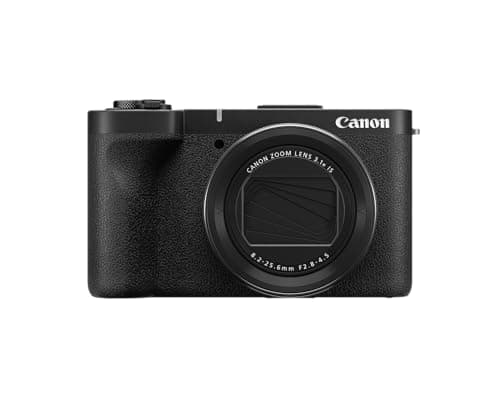
The strongest alternative to a DJI Osmo Pocket 3 is the Canon PowerShot V1: a compact creator camera with a 1.4-inch sensor — larger than the Pocket's — a 16-50mm equivalent zoom, a built-in three-stop ND filter and a flip-out screen. That is the pick if what you want is better image quality and the ability to reframe without moving your arm. If you want the cheapest alternative, it is the Sony ZV-1F. And the honest headline first: every camera on this page costs more than the Pocket 3 does. If price is why you are looking, the live prices below will show you that plainly, and the answer may well be to buy the DJI. Prices come from the live price layer with an "as of" date; where there is no verified price, we show none.
What the Pocket 3 is known for is one thing no camera here can copy. DJI publishes a 1-inch sensor, 4K recording at up to 120fps, a two-inch screen that rotates to frame you, and — the part that matters — a mechanical three-axis gimbal built into the body. That gimbal is not software smoothing applied to a cropped frame; it is motors physically holding the lens level while you walk. Nothing in this ranking has one, which is why walking footage out of a Pocket 3 looks like it came off a slider and footage from everything else looks handheld. It also pairs directly with DJI's wireless microphones, and it is small enough to carry daily. Our Osmo Pocket 3 review is where we go through all of that in detail.
So why would anyone look elsewhere? Three honest reasons. The lens is fixed and moderately wide, so you cannot zoom in for a flattering talking-head or reach anything further away. The 1-inch sensor and the autofocus trail a proper APS-C body with a fast lens once the light drops. And it is a specialist: a camera built around smooth motion, which is a narrower job than "one camera for everything". If any of those is the thing blocking you, the five below each fix one of them — and each gives up the gimbal to do it. That is the whole trade, stated once: you are swapping stabilization for sensor, zoom or lens choice.
How each alternative matches up
| Alternative | Matches the Pocket 3 on | Beats the Pocket 3 on | Gives up |
|---|
| Canon PowerShot V1 | One-piece creator camera, flip screen, no lenses to buy | Sensor size (1.4-inch), a 16-50mm equivalent zoom, built-in ND filter | The mechanical gimbal, and true pocket size |
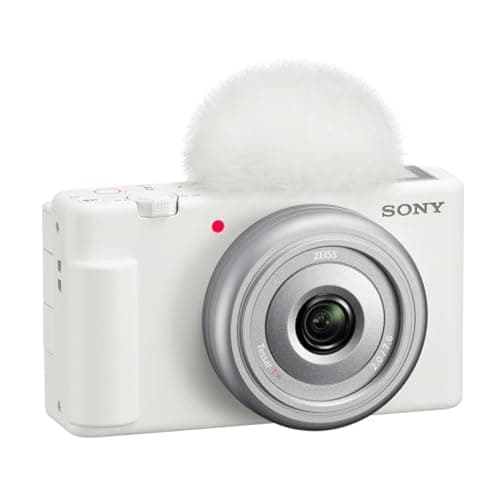
| Sony ZV-1F | Fixed wide lens, flip screen, point-and-talk simplicity | Nothing on specification — it is the cheapest alternative here | The gimbal, any zoom, and the faster hybrid autofocus of the ZV-1 II |
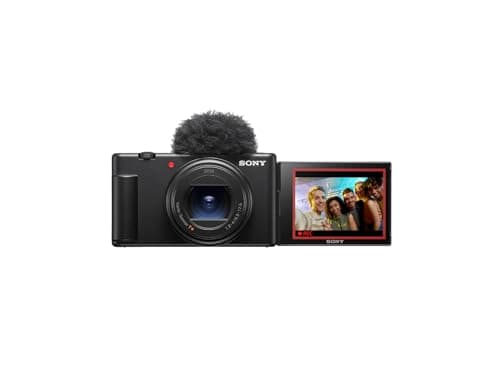
| Sony ZV-1 II | 1-inch sensor, pocketable body, flip-out screen | An 18-50mm equivalent zoom and a three-capsule directional mic | The gimbal; no in-body stabilization for walking shots |
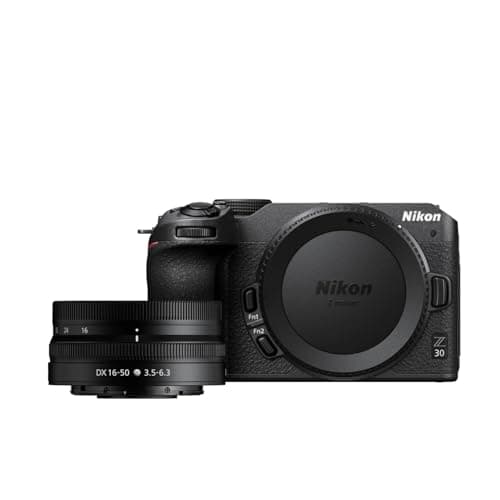
| Nikon Z30 | Creator-first body with a fully articulating screen | APS-C sensor, interchangeable lenses, uncropped 4K30, a real grip | The gimbal, pocketability, and 4K above 30fps |
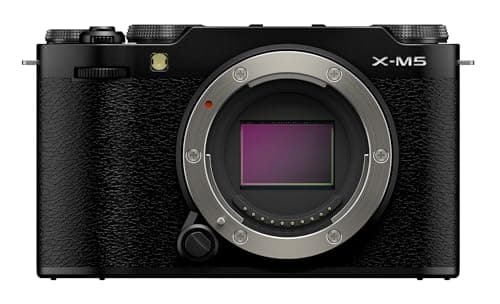
| Fujifilm X-M5 | Small, light creator camera with a vlogging flip screen | 26MP APS-C, 6K open-gate capture, a film-simulation dial | The gimbal; autofocus tracking is behind Sony and Canon |
If image quality is what you are missing: the Canon PowerShot V1
The V1 is the closest thing here to a straight upgrade, because it answers the Pocket 3's two real limits at once. Its sensor is a 1.4-inch type — physically bigger than the 1-inch chip in the DJI and in the Sony compacts — so it holds detail better as the light drops and separates a subject from its background more convincingly. And it has a genuine 16-50mm equivalent zoom: wide enough to hold at arm's length, long enough to pull in for a flattering headshot without walking. The built-in three-stop ND filter is the detail that gives it away as a camera designed by people who shoot video, because it lets you keep a cinematic shutter speed in bright sun without stopping the lens down to a pinhole.
What you give up, besides the gimbal, is size and money. It is bigger than a pocket camera and it costs more, and it has no in-body stabilization — it leans on the lens's optical IS plus digital IS, and DPReview's testing notes that 4K60 arrives with a crop. For a walking vlog it will not match the DJI and no amount of digital smoothing changes that. For a sit-down channel, b-roll and travel stills it is the better camera. Full detail in our Canon PowerShot V1 review, and against the Sony compact in Canon PowerShot V1 vs Sony ZV-1 II.
If the price is the problem: the Sony ZV-1F, with a caveat
We will be straightforward, because this is the query people actually type. The Pocket 3 is the cheapest camera in this comparison, and we do not rank anything that undercuts it while doing a similar job. The ZV-1F is the least expensive alternative, and it is a good simple camera: a 20MP 1-inch sensor, a fixed 20mm-equivalent wide lens that suits arm's length framing, a flip screen and Sony's face tracking. Flip, record, talk.
Be clear about the corners cut to reach its price. The lens is wide-only with no zoom, so you cannot reframe tighter. It uses contrast-detect autofocus rather than the faster hybrid system in the ZV-1 II. There is no headphone jack, and no stabilization worth the name for walking. If your reason for leaving the Pocket 3 is purely money, our honest advice is to compare the two numbers on this page before you decide — and the direct head-to-head is in Osmo Pocket 3 vs Sony ZV-1F.
If you want a zoom in a pocketable body: the Sony ZV-1 II
The ZV-1 II is the Pocket 3's closest match on form factor — a 1-inch sensor in something that genuinely goes in a jacket pocket — with the one thing the DJI cannot do: an 18-50mm equivalent zoom, wide enough for a selfie frame and long enough for a flattering talking-head, with nothing to swap. It carries a three-capsule directional microphone, a flip-out screen and the background-defocus button from Sony's bigger ZV bodies.
It is the most expensive of the three compacts here, it has no in-body stabilization, and the 1-inch sensor is the same size class as the Pocket's — so this is a zoom-and-handling upgrade, not an image-quality one. The two Sonys are separated in Sony ZV-1 II vs ZV-1F, and the whole pocket class is ranked in best compact vlogging cameras.
If you have outgrown fixed lenses: the Z30 and the X-M5
Both of these are a different answer to the question: stop buying a sealed camera and start buying a system. An APS-C sensor is several times the area of a 1-inch type, which is the single biggest lever on low-light performance and background blur, and an interchangeable mount means a fast prime for interiors or a wide zoom for travel instead of whatever the camera was born with.
The Nikon Z30 is the one to pick for comfort: uncropped 4K30, a fully articulating screen, a front tally lamp and one of the best grips on any small camera for long handheld takes. It has no viewfinder and no stabilization, and Nikon's Z DX lens range is the smallest of the four systems. The Fujifilm X-M5 is the one to pick for output: 26MP, 6K open-gate capture and a film-simulation dial that bakes in a look so you can post without editing — at the cost of autofocus tracking that trails Sony and Canon, which matters when you are the subject and cannot watch the screen.
Neither has in-body stabilization, so if you move while filming you are back to needing a gimbal for mirrorless— and a body plus lens plus gimbal is a bigger, heavier, more expensive kit than the thing you were replacing. That is the honest arithmetic of leaving a Pocket 3 behind. If the interchangeable-lens route is where you are heading, the same question asked about Sony's creator body is in alternatives to the Sony ZV-E10, and best lens under $500 is what the first real lens costs in each system.
The option that is not a camera
One route deserves naming because it is often the right one: keep the Pocket 3 for motion and add what it lacks. A wireless microphone fixes audio, which is the thing viewers notice before image quality; a light fixes the low-light weakness more cheaply than a bigger sensor does. Plenty of creators end up carrying a Pocket 3 for walking shots and a larger body for everything else, and that pairing costs less than replacing the DJI with a camera that only half-covers what it did. The whole creator setup is costed out in our YouTube starter kit.