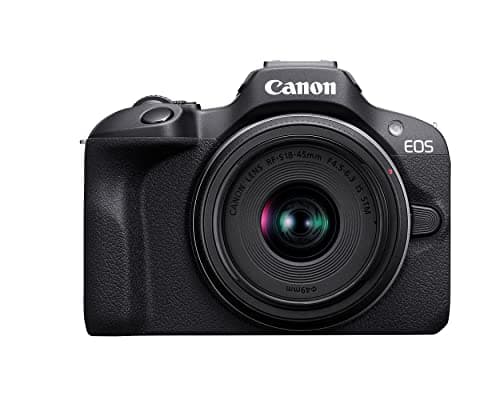
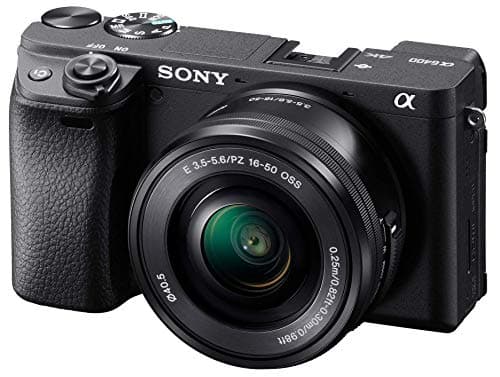
The best alternative to the Canon EOS R50 is the Sony a6400. It matches the R50's 24-megapixel APS-C class, adds an electronic viewfinder and real-time tracking autofocus, and sits on Sony E - the deepest native lens range of any system a beginner can buy into. It is for the first-camera buyer who wants the picture quality the R50 promised and does not want to be short of lenses in two years. Our budget pick is the Canon EOS R100, the cheapest body here with a live price and the way to stay inside the Canon RF system for the least money. Prices come from the live price layer with an "as of" date; where there is no verified purchasable offer, we show no price at all.
First, what Canon publishes and what the R50 is actually known for, because this page is not an argument against it. Canon lists the R50 as a 24-megapixel APS-C body with uncropped 4K30, Dual Pixel CMOS AF II, an electronic viewfinder and a fully articulating screen, in one of the smallest and lightest bodies in its class. It is our top pick in best mirrorless cameras for beginners and it earns that: the autofocus is the easiest of any brand to trust, and the colors out of camera need less work than anyone else's. Our full write-up is the Canon R50 review.
There are three reasons people look for an alternative anyway. The first is availability: the R50's listing currently shows no verified purchasable offer, so we cannot quote a price for it, and a camera you cannot buy is not a recommendation. The second is the lens range - Canon's RF-S line-up is the thinnest of the four systems, which is a real constraint on a first camera you expect to grow into. The third is price: there are cheaper routes into a similar camera. Every pick below is matched to one of those three.
The three reasons to look past the R50, and what each one points at
- Availability. We gate every price on the price layer, and the R50 shows no buyable offer at the moment. If it comes back, it is still an excellent camera - but the five non-Canon-R50 bodies below all carry a live price today.
- Lens range. Canon RF-S has the fewest native options of the four systems on this site, and Canon has been slow to license third-party autofocus lenses for it. Sony E has the most; Fujifilm X and Nikon Z sit in between. See camera lens mounts explained.
- Price.If what you wanted from the R50 was "a good first camera" rather than "a Canon", two bodies here cost less.
The six alternatives
| Body | Sensor / video | Why it is an R50 alternative | What you give up vs the R50 |
|---|
| Sony a6400 | 24MP APS-C, 4K30 | Same class, has a viewfinder, deepest lens range | Tilting screen, not fully articulating |
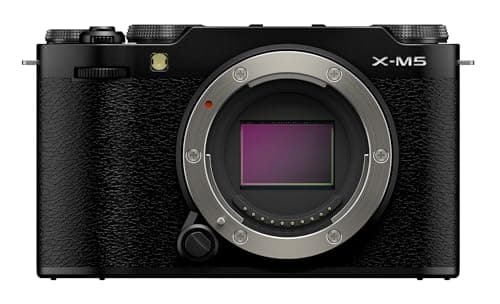
| Fujifilm X-M5 | 26MP APS-C, 6K open-gate / 4K | More resolution and a film-simulation dial | No viewfinder and no in-body stabilization |
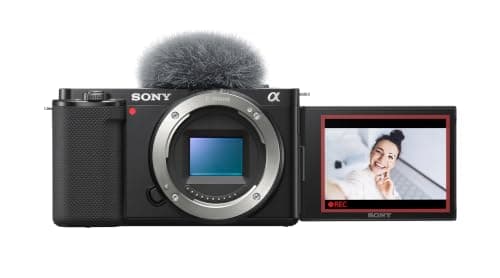
| Sony ZV-E10 | 24MP APS-C, 4K30 with crop | Built for filming yourself; mic in and headphone out | No viewfinder; 4K is cropped |
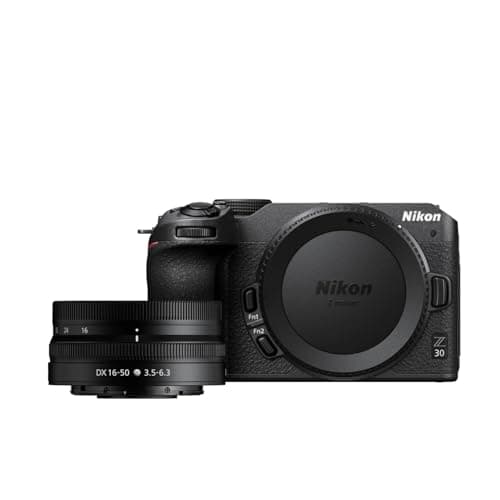
| Nikon Z30 | 21MP APS-C, uncropped 4K30 | The best grip in the class, articulating screen | No viewfinder; thin DX lens range |
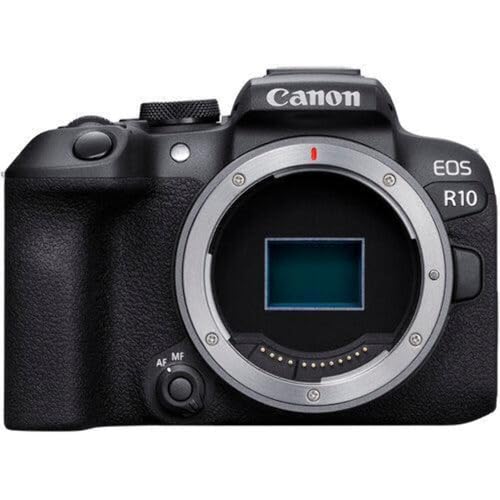
| Canon EOS R10 | 24MP APS-C, uncropped 4K30 | Stay on RF and gain 15fps/23fps burst and a better grip | Costs more; still the thin RF-S lens range |
| Canon EOS R100 | 24MP APS-C, cropped 4K24 | The cheapest way into Canon RF | Fixed screen - no good for filming yourself - and cropped 4K |
Why the Sony a6400 is the first answer
It is the closest like-for-like swap. 24 megapixels on APS-C, 4K30, an electronic viewfinder the R50 also has and most of its rivals do not, and real-time tracking autofocus that holds a face or an eye as reliably as Canon's. What tips it is the lens range behind it: Sony E has been open to third-party makers for years, which is why Sigma, Tamron and Viltrox all build for it and why a $179 autofocus prime exists on this mount and not on Canon's. For a first camera, that is the difference between a system and a dead end.
What you give up is the screen. The a6400's tilts up rather than flipping out to the side, so it clears the hot shoe awkwardly and is worse than the R50's for filming yourself. It is also the oldest design here. The review is Sony a6400 review, and if the screen is the dealbreaker, read alternatives to the Sony a6400.
If you want a different look: the Fujifilm X-M5
The X-M5 is the alternative for someone who was buying the R50 for its colors. Fujifilm's film simulations are selected on a physical dial and produce a finished look straight out of camera, which is the same appeal Canon's color science has, arrived at differently. It also has a 26-megapixel sensor and 6K open-gate capture, both ahead of the R50 on paper.
The costs are specific: there is no viewfinder and no in-body stabilization, so you compose on the screen and stabilize in the lens or on a gimbal. The review is Fujifilm X-M5 review.
If you film yourself: the Sony ZV-E10 or the Nikon Z30
Both of these drop the viewfinder and spend the money on the things a creator actually uses. The ZV-E10has a fully articulating screen, a microphone input and a headphone output, and Sony's product-showcase autofocus mode that snaps focus to an object you hold up - the single most useful autofocus feature on any camera at this price for anyone filming to camera. Its 4K is cropped, which makes a wide lens more necessary than it should be.
The Nikon Z30is the one to handle if you can: the deepest grip in the class, uncropped 4K30 and an articulating screen, and it is comfortable to hold out at arm's length for a whole take. Nikon's DX lens range is thin, though not as thin as Canon's RF-S. Both are ranked in best vlogging cameras for beginners, and the reviews are Sony ZV-E10 review and Nikon Z30 review.
If you want to stay with Canon: the R10, and the R100 as the budget pick
There is a good reason to stay inside RF - Canon's autofocus and color are genuinely easier to live with than anyone else's - and two ways to do it. The EOS R10 is the upgrade: the same uncropped 4K30 and articulating screen as the R50 plus 15 frames a second mechanically and 23 electronically, and a deeper grip. It costs more than the R50 did, and it inherits the same thin lens range.
The EOS R100 is the budget pick and the cheapest body on this page with a live price. It keeps the 24-megapixel sensor and the RF mount, and we will be plain about what it cuts: the screen is fixed, so it is the wrong camera if you ever want to see yourself while filming, and its 4K is cropped to 24 frames a second. As a cheap stills camera for someone committed to Canon it is honest value. The reviews are Canon R10 review and Canon R100 review, and the head-to-head with the R50 is Canon R50 vs R100.
Two cases where we would still wait for the R50
If you specifically want a viewfinder and a fully articulating screen in the smallest possible body, nothing on this page gives you all three - the a6400 has the viewfinder and the wrong screen, the ZV-E10 and Z30 have the screen and no viewfinder. And if you already own Canon RF glass, switching mounts costs more than waiting does. The straight comparison most R50 buyers end up making is Sony ZV-E10 vs Canon R50.