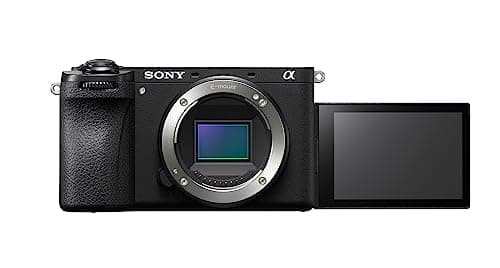
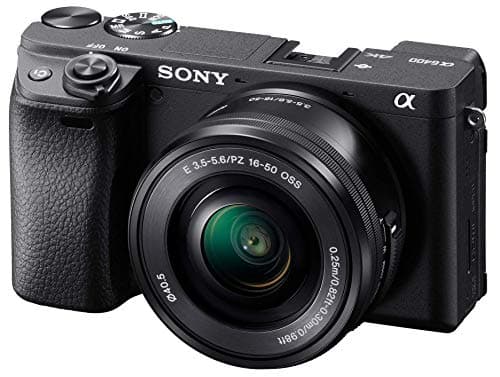
The best portrait camera for most people here is the Sony a6400 — not because it is the most capable body on the page, but because it is the cheapest route to the combination that actually makes a portrait. It has Sony's real-time eye autofocus, it has a viewfinder, and it sits on the one mount where the best-value portrait prime in existence, the Sigma 56mm F1.4 DC DN, costs a fraction of what a camera does. Spend the saving on that lens. A portrait shot on an older body with an 85mm-equivalent f/1.4 prime beats the same portrait shot on a newer body with a kit zoom every single time, and it is not close.
That is the honest shape of this question, and it is why this page spends as much time on lenses as on cameras. A portrait is a face in focus, separated from its background, in colors you do not have to fight in editing. The lens does the separation. The camera does the focusing and the colors. So the ranking below weighs eye-detection autofocus, the files a body produces without post-processing, whether you get a viewfinder to compose through, and — heavily — what the cheapest genuinely fast prime costs on that lens mount.
How this page was made: we have not shot portrait sessions on all five of these bodies. The specifications are Sony's, Fujifilm's, Nikon's and Canon's own published documents, and the behavioral findings come from reviewers who tested the cameras and published results — each named and linked in Sources. Scores follow our rubric and are informed judgments, not measurements we took. Prices are read live and stamped with the time we read them.
The four things that decide a portrait
1. Eye autofocus, and whether it holds. A portrait is in focus on the eye or it is a reject. Every body here can detect a face; what separates them is whether the camera stays locked on the near eye when your subject turns their head, looks down, or walks toward you at f/1.4, where the sharp zone is a couple of centimeters deep. This is the one spec where the newer bodies are genuinely, visibly better, and it is the reason autofocus carries the most weight in the scores below.
2. The file you get before you edit.Skin is the hardest thing in photography to render pleasantly, and the brands do it differently. Fujifilm's film simulations exist precisely for this and are the main reason people switch to the system; Canon's default color is warm and widely liked for faces; Sony's is the most neutral, which is a gift if you edit every frame and a chore if you do not. None of these is wrong — but if you want to hand someone a JPEG an hour after the shoot, it matters more than resolution.
3. A viewfinder. Portraits are the one genre where you are composing a person rather than a scene, and holding the camera to your eye changes how you work: it steadies the body, it hides your face so the subject looks at a camera rather than at you reading a screen, and it stays usable in bright sun where a rear screen washes out. Four of these five have one. The one that does not is ranked anyway, for a reason we give plainly.
4. What a fast prime costs on this mount. The portrait look — the blurred background, the subject lifted off it — comes from a long-ish focal length at a wide aperture. On APS-C that means something in the 50-85mm range at f/1.4 to f/1.8, which maps to roughly 75-125mm in full-frame terms. Mounts differ enormously here, and that difference is worth more money than any body gap on this page. Our best portrait lenses ranking is the companion to this one, and if you only read one of the two, read that.
The focal-length arithmetic, once
All five bodies here are APS-C, so a lens frames tighter than its number suggests — 1.5x on Sony, Nikon and Fujifilm, 1.6x on Canon. A 56mm lens on the a6400 frames like an 84mm on full frame, which is almost exactly the classic portrait length. A 50mm on the Canon R10 frames like an 80mm, which is the same idea. A 35mm on any of them frames like a 50mm, which is a fine environmental-portrait length but will not give you the compressed, flattering look people mean when they say "portrait lens". If that arithmetic is new, crop factor explained covers it in one page.
Who we did not rank, and why
Three bodies this site covers are missing from the list below, and the reasons are all availability or value rather than capability. The Fujifilm X-S20 would otherwise be a strong contender on skin tones and is the only body in our registry with in-body stabilization besides the a6700 — but the only live listing we can read is a lens kit priced far above the body-only cameras ranked here, so recommending it would mean sending you to the expensive way to get the same photograph. The Canon EOS R50 and R100 have no buyable offer we can read a price from at the time of writing. And the Sony ZV-E10 is excluded on merit rather than price: it has no viewfinder and it is built for talking to a lens rather than photographing someone else. If your plan is self-portraits and creator content, it is the right camera and our creator camera ranking is the right page.
The short answer
Quick picks
| # | Product | Best for | Score | Price |
|---|
| 01 | Sony a6400Still one of the best autofocus systems you can buy at this price, in a compact body with a proper viewfinder. | Stills shooters who want a viewfinder | | $807.74·Amazon |
| 02 | Sony a6700Sony's flagship APS-C body finally adds in-body stabilization and AI-driven autofocus to the crop line — the a6400 grown up, at a step-up price. | The step-up APS-C Sony | | $1,498.00·Amazon |
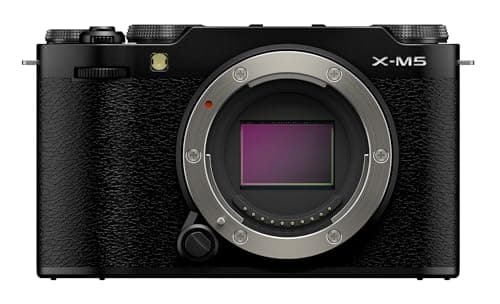
| 03 | Fujifilm X-M5A tiny, cheap creator camera with Fujifilm's colors and surprisingly serious video for the money. | Style-conscious budget creators | | $899.00·Amazon |
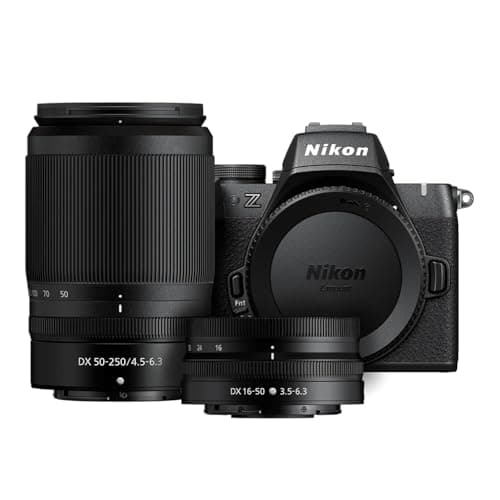
| 04 | Nikon Z50 IIFlagship-grade autofocus in a beginner body — the Z50 II borrows the EXPEED 7 brain from Nikon's flagship cameras. | The best autofocus for the money | | $1,346.95·Amazon |
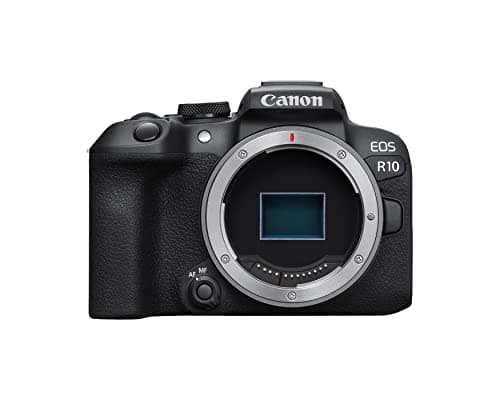
| 05 | Canon EOS R10The fast one. If you shoot kids, pets or sport, the R10's burst speed and tracking punch well above its price. | Action, sport and pets | | $1,099.00·Amazon |
#ad · Live prices from the Amazon Product API, as of November 5, 2026. Where we have no verified live price, we show none — we would rather leave a gap than print a number that has rotted.
In detail
The picks, in full
Stills shooters who want a viewfinder
Sony a6400
24MP APS-C4K30Real-time tracking AFEVF, tilting screen
Still one of the best autofocus systems you can buy at this price, in a compact body with a proper viewfinder.
- Image quality
- 8
- Autofocus
- 9
- Video
- 7
- Handling
- 7
- Value
- 8
Pros
- +Class-leading real-time tracking and eye AF that still holds up years after release
- +Compact, pocketable-with-a-prime body with a built-in electronic viewfinder
- +Access to the entire, enormous Sony E-mount lens catalog, first- and third-party
Cons
- −No in-body stabilization, and the screen tilts rather than fully articulating (it flips up, not out to the side)
- −The menu system is dated and dense compared with Canon's and Nikon's
Don't buy this if…
…you're vlogging yourself. The screen tilts up and is blocked by a tripod or top-mounted mic — the ZV-E10's fully articulating screen is the better tool for that job.
The step-up APS-C Sony
Sony a6700
26MP APS-C sensorIn-body 5-axis stabilization4K60 oversampled videoAI-based subject autofocusSony E mount (APS-C)
Sony's flagship APS-C body finally adds in-body stabilization and AI-driven autofocus to the crop line — the a6400 grown up, at a step-up price.
- Image quality
- 9
- Autofocus
- 10
- Video
- 9
- Handling
- 8
- Value
- 7
Pros
- +AI-based subject recognition tracks people, animals and birds with a tenacity that outclasses every cheaper body in this class
- +In-body 5-axis stabilization steadies handheld stills and smooths walking video — the piece the a6400 never had
- +A fully articulating screen and a modernized menu fix the two things owners complained about most on older Sony APS-C bodies
Cons
- −Costs meaningfully more than the a6400 and the entry-level bodies — this is the premium APS-C option, not a budget pick
- −The deep, enthusiast-grade feature set is more camera than an absolute first-timer needs on day one
Don't buy this if…
…you are a first-time buyer on a tight budget, or you shoot mostly stills in good light. Much of what you pay for — IBIS, 4K60, AI tracking — goes untouched at that level, and the a6400 covers the basics for far less.
Style-conscious budget creators
Fujifilm X-M5
26MP APS-C6K open-gate / 4KFilm simulations dialNo IBIS / no EVF
A tiny, cheap creator camera with Fujifilm's colors and surprisingly serious video for the money.
- Image quality
- 8
- Autofocus
- 8
- Video
- 8
- Handling
- 7
- Value
- 8
Pros
- +Fujifilm's film simulations plus a dedicated dial make lovely color effortless — no editing required
- +Punches above its price on video, including 6K open-gate capture and a proper vlogging flip screen
- +Genuinely pocketable and one of the best-value routes into the Fujifilm X system
Cons
- −No in-body stabilization and no viewfinder
- −Small grip and battery — it's a camera you accessorize for a long shoot
Don't buy this if…
…you need stabilized handheld video or a viewfinder. The X-M5 trims both to hit its size and price; the X-S20 adds IBIS and an EVF if you want them.
The best autofocus for the money
Nikon Z50 II
21MP APS-CEXPEED 7 processorUncropped 4K30Deep grip + EVF
Flagship-grade autofocus in a beginner body — the Z50 II borrows the EXPEED 7 brain from Nikon's flagship cameras.
- Image quality
- 8
- Autofocus
- 10
- Video
- 8
- Handling
- 9
- Value
- 8
Pros
- +The EXPEED 7 processor brings subject-detection autofocus straight from the Z8/Z9 — genuinely a class above at this price
- +The chunkiest, most confident grip of any camera here; it feels like a bigger camera than it is
- +Bright, large viewfinder and a dedicated Picture Control button for quick color looks
Cons
- −21MP is the lowest resolution in this group — fine for almost everyone, but less cropping room than the 24–26MP rivals
- −Nikon's Z DX native lens lineup is small, though FTZ-adapted F-mount glass fills the gap cheaply
Don't buy this if…
…you want the deepest choice of tiny, cheap native lenses. Nikon's Z DX range is the thinnest of the big four; you'll lean on adapters sooner.
Action, sport and pets
Canon EOS R10
24MP APS-C15fps mechanical / 23fps electronicUncropped 4K30EVF + articulating screen
The fast one. If you shoot kids, pets or sport, the R10's burst speed and tracking punch well above its price.
- Image quality
- 8
- Autofocus
- 9
- Video
- 8
- Handling
- 8
- Value
- 8
Pros
- +Burst speeds (up to 23fps electronic) that used to cost three times as much — it nails moving subjects
- +Same excellent Dual Pixel AF II and subject tracking as its pricier RF siblings
- +Uncropped 4K30 oversampled from 6K, plus a cropped 4K60 for slow motion
Cons
- −No in-body stabilization, so handheld video leans on the lens or a gimbal
- −Shares the R50's thin native RF-S lens problem
Don't buy this if…
…you mainly shoot static subjects and video. You'd be paying for burst speed you won't use — the R50 covers everything else for less.
Why the a6400 wins a page it does not top on specs
On paper the a6700 beats it everywhere: newer 26MP back-illuminated sensor, a dedicated AI processing unit for subject recognition, five-axis in-body stabilization the a6400 does not have. Both are real advantages and the a6700 is the better camera. The a6400 wins here because of what the price difference buys on the lens side. At the prices we read while writing this page, the gap between the two bodies was enough to cover the Sigma 56mm F1.4 DC DN outright — so the a6400 buyer walks away with a camera and the portrait lens, while the a6700 buyer has a better camera and a kit zoom that cannot make the photograph they came for.
That is not a trick of the arithmetic; it is the central fact about portrait gear. Depth of field at 84mm-equivalent and f/1.4 is a thing no camera body can manufacture. Autofocus generations improve in increments. Buy the lens.
The a6400 also has the specs that matter least glamorously and most often: real-time eye autofocus for people and animals, a 2.36M-dot viewfinder, a screen that flips up 180 degrees if you need to be in the frame, and Sony's published autofocus sensitivity down to -2 EV, which is roughly a candlelit room. DPReview's conclusion on it still calls the autofocus class-leading for the money. Its honest costs are a cramped menu system, no in-body stabilization, and a body design that is now several years old. For portraits specifically, none of those three changes a photograph.
When to buy the a6700 instead
Three situations, all genuine. If you shoot portraits in dim rooms without flash, the back-illuminated sensor and in-body stabilization are worth real money — we rank it first on best cameras for low light for exactly that reason. If you shoot video portraits or interviews, the a6700's oversampled 4K and much faster sensor readout are a different class of tool. And if your subjects are children or animals rather than adults who hold a pose, the newer subject recognition is the single most useful upgrade on this page. Already own a fast prime? Then the lens argument above does not apply to you, and the a6700 is simply the better camera.
The skin-tone argument, and who should listen to it
The Fujifilm X-M5 is third here and it is the body we would pick if the goal were to deliver finished photographs with no editing at all. Its 26.1MP X-Trans sensor and Fujifilm's film simulations produce portrait files that look intentional straight out of the camera, and at 355g with battery and card it is the one body here a subject does not find intimidating. That combination is worth more than it sounds: a relaxed face photographed on a small camera beats a tense one photographed on a good camera.
The costs are specific and you should weigh them honestly. There is no viewfinder, which for portraits is a bigger loss than for most genres. There is no in-body stabilization. And the X-mount's portrait primes are good but none of them is the bargain the Sigma 56mm is on E-mount — Fujifilm's own XF 50mm f/2 and the third-party options cost more for the equivalent look. If you have already decided you want Fujifilm colors, none of that will dissuade you, and it should not: read our X-M5 review and buy it with a fast prime rather than the zoom.
Nikon and Canon: good cameras, thinner lens shelves
The Nikon Z50 II is ranked fourth on a body that deserves better. Its EXPEED 7 processor is the same generation Nikon puts in cameras several times the price, it has the best viewfinder in this group, Nikon publishes autofocus detection down to -9 EV, and the dedicated Picture Control button makes its color profiles genuinely quick to work with. The problem is the shelf: Nikon's DX prime range is thin, and the cheap fast option most people land on is the full-frame Z 40mm f/2, which frames like a 60mm and is an f/2 rather than an f/1.4. The cheapest genuinely fast prime on the mount is the third-party Viltrox AF 35mm F1.7 Air, and at 53mm equivalent that is a normal lens rather than a portrait one. Neither is wrong; neither is an 84mm-equivalent f/1.4 either. See best Nikon Z lenses for the current state of that mount.
The Canon EOS R10 is fifth and it is the pick for somebody who likes Canon's warm default color on faces. Dual Pixel CMOS AF II with eye detection is excellent, and the RF 50mm f/1.8 STM is the cheapest honest portrait prime in this entire comparison — on the R10's 1.6x sensor it frames like an 80mm, which is right in the pocket. What holds the R10 back is everything around that one lens: Canon's RF-S prime range is nearly empty, Canon has restricted third-party autofocus lenses on the mount, there is no in-body stabilization, and at this week's prices the body costs more than the a6400 ranked first. Our best Canon RF lenses page is honest about how narrow the choice is.
What to buy with the camera
A portrait kit is three things, and two of them are not the camera. The body, one fast prime in the 50-56mm range for APS-C, and a way to control light — which at the beginner end means a reflector or a window, not a strobe. If you are starting from nothing, our beginner camera kit lists the whole set in buying order, and kit lens vs prime explains in pictures why the prime is not optional for this genre.
One more thing worth more than any upgrade on this page: shoot at a wide aperture but not always the widest. At f/1.4 on an 84mm-equivalent lens, the depth of focus at portrait distance is thin enough that one eye is sharp and the other is not. That look is a choice, not a default. f/2 to f/2.8 keeps both eyes and still throws the background away, and it is where most of the portraits you admire were actually taken. If the relationship between aperture, distance and blur is still fuzzy, the exposure triangle is the page to read next.
How we picked
We do not run a testing lab
We compiled the manufacturers' published specifications and manuals, did the cost math, and scored each product against a published rubric. The scores are judgments from that documented research — they are notmeasurements we took, because we do not have a lab and we are not going to pretend we do. Where a number came from someone else's testing, we name and link them in Sources.
Questions
Frequently asked
What is the best mirrorless camera for portraits?+
For most people the Sony a6400, because it has real-time eye autofocus and a viewfinder and sits on the mount with the best-value portrait prime — the Sigma 56mm F1.4 DC DN, which frames like an 84mm on its sensor. The Sony a6700 is the better camera if you already own a fast lens or shoot in dim rooms, and the Fujifilm X-M5 is the pick if you want finished skin tones without editing.
Do I need a full-frame camera for portraits?+
No. Full frame gives you about one extra stop of background blur at the same framing and aperture, which is a real but small difference — and an APS-C body with an f/1.4 prime out-blurs a full-frame body with an f/4 zoom comfortably. The money is better spent on the lens. We work through the trade in
do I need full frame?What focal length is best for portraits on APS-C?+
Something between 50mm and 85mm, which on a 1.5x sensor frames like 75mm to 128mm. The classic answer is a 56mm (84mm equivalent) because it compresses features flatteringly without forcing you to stand across the room. A 35mm frames like a 50mm and is a good environmental-portrait lens; anything wider than that starts distorting a face at close range.
Does in-body stabilization help with portraits?+
Less than you would think. IBIS steadies your hands, not your subject — and a person blinks, sways and breathes, so the shutter speed in a portrait is usually set by the subject rather than by camera shake. Only the a6700 has it here. It is genuinely useful for video portraits and for very dim rooms; for stills it is near the bottom of the list of things to pay for. See
image stabilization explained.
Which camera brand has the best skin tones?+
Fujifilm, by reputation and by design - its film simulations were built for exactly this, which is why the X-M5 is ranked here despite having no viewfinder. Canon's default rendering is warm and widely liked for faces. Sony's is the most neutral of the three, which is an advantage if you edit every photograph and a nuisance if you want to deliver JPEGs straight from the card. All three are fine; the difference is how much editing you want to do.
Is 24 megapixels enough for portraits?+
Comfortably, including for prints larger than most people ever order. Every body on this page is between 20.9MP and 26MP, and the differences between them are invisible in a finished portrait. Resolution only becomes the deciding factor if you crop heavily or retouch skin at extreme magnification, and neither is a beginner problem. Autofocus accuracy and lens quality decide a portrait long before pixel count does.
Can I shoot portraits with a kit lens?+
You can, and plenty of good portraits have been. But a kit zoom is typically f/3.5-5.6, which is two to three stops slower than a portrait prime, so the background stays recognizable instead of melting away and you need more light to keep the shutter speed up. If your budget allows one upgrade after the body, this is the one.
Kit lens vs prime shows the difference.
Why is the Sony ZV-E10 not on this list?+
Because it has no viewfinder and it is designed for filming yourself rather than photographing someone else. It is an excellent camera at what it does, and if your portraits are self-portraits or creator content it is the one to look at — see
our ZV-E10 review. For photographing other people, the bodies ranked above give you a viewfinder for similar money.
What about the Fujifilm X-S20? It has IBIS and Fujifilm colors.+
It does, and on capability it would rank high here. We left it off because the only listing we can read a live price from is a lens kit priced well above every body-only camera ranked above - so it is currently the expensive route to a photograph the cheaper bodies also make. If a sensible body-only listing appears, it belongs on this page.
Do I need a flash for portraits?+
Not to start. Window light is free, soft and better than any on-camera flash, and a cheap reflector to bounce it back into the shadow side of a face will do more for your portraits than a speedlight you have not learned to use. We do not rank flashes yet. For video portraits and interviews, continuous LED light is the equivalent answer and we do rank those.
Receipts
Sources
- DPReview — Sony a6400 review: conclusion (autofocus findings, viewfinder, handling)
- DPReview — Sony a6700 review (26MP BSI sensor, AI processing unit and subject recognition, 5-axis IBIS, oversampled 4K)
- Fujifilm — X-M5 specifications (26.1MP X-Trans CMOS 4, film simulations, no IBIS, 355g with battery and card)
- Nikon — Z50II official specifications (20.9MP DX sensor, EXPEED 7, AF detection range -9 to +19 EV, viewfinder)
- Canon Asia — EOS R10 specifications (24.2MP APS-C, Dual Pixel CMOS AF II, in-body stabilization: No)
- Sony — Interchangeable-lens cameras (published specifications)
- Fujifilm X Series — Cameras (published specifications)
- Nikon USA — Mirrorless cameras (published specifications)
- Canon USA — Mirrorless cameras (published specifications)
We do not run a testing lab, and we do not pretend to. Specs come from manufacturer sheets and manuals; where a figure came from someone else's measurement, we name and link them. Where we could not verify something, we say so on the page rather than quietly leaving it out. Read our full method.