Skip to content
Focal & Frame

Creator · Vlogging Cameras

The Best Travel Vlogging Cameras

Pocketable, lightweight cameras built to travel, ranked on size, stabilization and the all-in-one convenience that means you actually bring them.

By Stephen V.Updated How we research
#ad

We earn a commission when you buy through our Amazon links, at no extra cost to you. It never decides our rankings — we say so when the cheaper pick is the better buy. How this works.

For travel the DJI Osmo Pocket 3 is the camera to pack: it slips into a jacket pocket, its built-in 3-axis gimbal turns handheld walking footage glass-smooth, and it is an all-in-one you can pull out and shoot with in seconds — exactly what you want when you are moving through a new place. If you want a single, more versatile camera that still travels light, the Canon PowerShot V1 pairs a bigger sensor and a real zoom with a built-in ND filter for bright destinations. The rest of this list matches a travel camera to how you move and how much you want to carry.

A travel camera lives or dies on one thing: whether it is small and simple enough that you actually bring it and actually use it. The most capable camera in the world is worthless on the shelf at your hotel, and the best travel footage is the footage you were light enough to stop and capture. So this list leans hard on size, on stabilization for the walking-and-filming that travel is full of, and on all-in-one convenience — a fixed lens and a body that needs nothing else means one less bag, one less decision, and one less thing to lose on the road.

That focus is why the ranking looks different from a pure image-quality list. Every camera here is pocketable or close to it, and every one is a fixed-lens all-in-one except the Fujifilm X-M5, which earns its place on sheer image quality despite asking you to carry a lens. We weighted stabilization and size most heavily, then framing flexibility for capturing both yourself and the places you visit, then how the sensor copes with the wildly varied light travel throws at you — bright beaches, dim churches, blue-hour streets.

One honest note on the trade you are making. None of these replaces an interchangeable-lens camera for outright image quality or low-light latitude; a compact is a deliberate compromise that swaps some image quality for the near-certainty that the camera is in your bag when the moment happens. For most travelers that is the right trade. If you would rather carry a little more for better stills and video, our best travel mirrorless cameras cover that end, and our best compact vlogging cameras go deeper on the pocketable category as a whole.

The short answer

Quick picks

#ProductBest forScorePrice
01
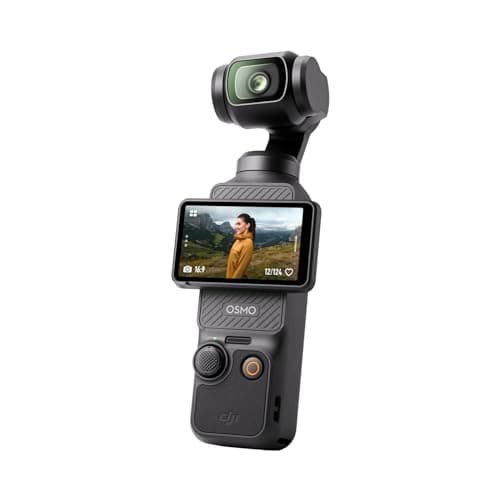
DJI DJI Osmo Pocket 3
DJI Osmo Pocket 3

A pocket camera with a real 3-axis gimbal built in — the steadiest walking footage here, no editing stabilization needed.

Run-and-gun walking vlogs
7.8
$439.00Amazon
02
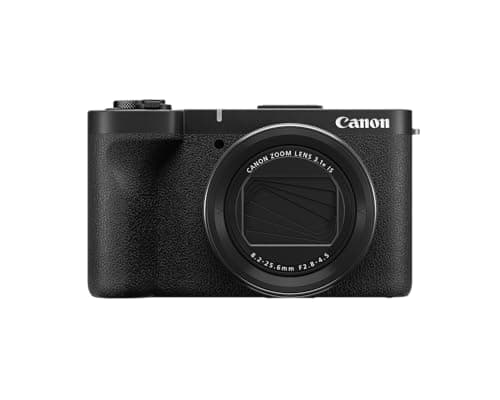
Canon Canon PowerShot V1
Canon PowerShot V1

Canon's compact creator answer: a larger-than-usual 1.4-inch sensor, a genuinely wide zoom, and a built-in ND filter.

Compact shooters who want a bigger sensor
7.6
$939.95Amazon
03
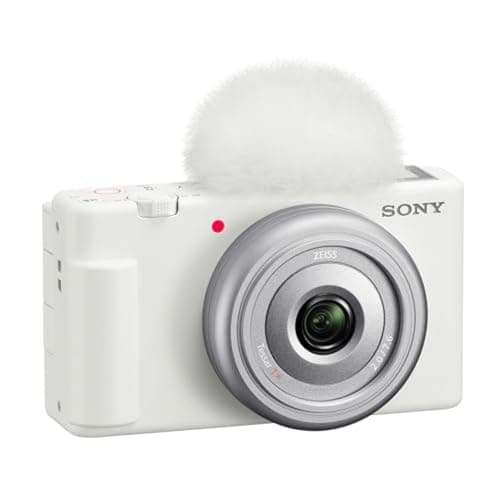
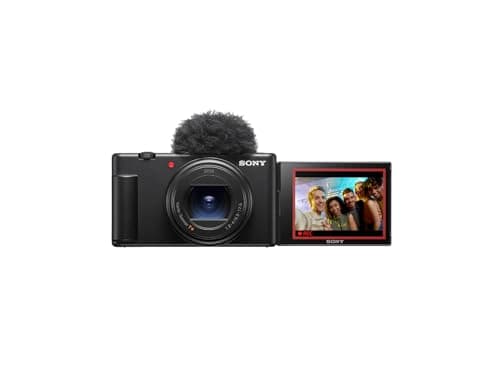
Sony Sony ZV-1 II
Sony ZV-1 II

A pocket all-in-one with a wide-to-normal zoom — no lenses to buy, just switch on and talk.

Grab-and-go vlogging without lenses
7.2
$948.00Amazon
04
Sony Sony ZV-1F
Sony ZV-1F

The cheapest way into a Sony vlog camera — a fixed wide lens, a flip screen, and not much to think about.

Cheapest simple pocket vlogger
6.8
$598.00Amazon
05
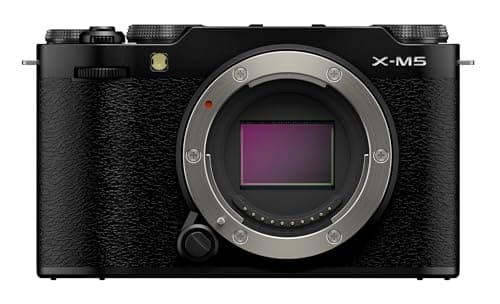
Fujifilm Fujifilm X-M5
Fujifilm X-M5

A tiny, cheap creator camera with Fujifilm's in-camera color and surprisingly serious video for the money.

Style-conscious budget creators
7.2
$1,259.95Amazon

#ad · Live prices from the Amazon Product API, as of Sep 4, 2026. Where we have no verified live price, we show none — we would rather leave a gap than print a number that has rotted.

In detail

The picks, in full

01
DJI DJI Osmo Pocket 3

Run-and-gun walking vlogs

DJI Osmo Pocket 3

1-inch sensorBuilt-in 3-axis gimbal4K / 120fpsRotating touchscreen
7.8/10

A pocket camera with a real 3-axis gimbal built in — the steadiest walking footage here, no editing stabilization needed.

Video quality
8
Autofocus
7
Screen & handling
9
Audio & inputs
7
Value
8

Pros

  • The built-in mechanical 3-axis gimbal delivers glass-smooth walking footage that no in-body or digital stabilization can match
  • A 1-inch sensor, 4K up to 120fps, and a rotating touchscreen that flips to frame yourself
  • Tiny enough to actually carry every day, and it pairs seamlessly with DJI's wireless mics

Cons

  • The lens is fixed and moderately wide, and the small form factor means shorter battery life on long shoots
  • Autofocus and low-light latitude trail a proper APS-C body with a fast lens

Don't buy this if…

you want interchangeable lenses, the shallowest background blur, or the best low-light image. It's a specialist run-and-gun tool, not a do-everything camera — pair it with an APS-C body if you need both.

$439.00View on Amazon

$499.0012% off

Price as of Sep 4, 2026. Prices change — Amazon's is the one that counts.

#ad · we may earn a commission from this link to DJI Osmo Pocket 3

02
Canon Canon PowerShot V1

Compact shooters who want a bigger sensor

Canon PowerShot V1

22MP 1.4-inch sensor16-50mm equiv. zoomBuilt-in ND filter4K30
7.6/10

Canon's compact creator answer: a larger-than-usual 1.4-inch sensor, a genuinely wide zoom, and a built-in ND filter.

Video quality
8
Autofocus
8
Screen & handling
8
Audio & inputs
7
Value
7

Pros

  • The 1.4-inch sensor is bigger than the 1-inch chips in rival compacts, so it holds up better in low light and blurs backgrounds more
  • A 16-50mm-equivalent zoom goes wide enough for handheld selfie framing, and the built-in ND filter tames bright sun for smooth shutter speeds
  • Canon's Dual Pixel autofocus and a flip-out screen make it an easy point-and-talk creator cam

Cons

  • Bigger and pricier than the pocketable 1-inch compacts, so it's less of a throw-in-a-pocket camera
  • There's a mic input but no in-body stabilization, so walking footage leans on digital IS or a gimbal

Don't buy this if…

you want the smallest possible pocket camera or the cheapest entry. The larger sensor and zoom add bulk and cost — the ZV-1F or Osmo Pocket 3 are truer pocket cameras.

$939.95View on Amazon

Price as of Sep 4, 2026. Prices change — Amazon's is the one that counts.

#ad · we may earn a commission from this link to Canon PowerShot V1

03
Sony Sony ZV-1 II

Grab-and-go vlogging without lenses

Sony ZV-1 II

20MP 1-inch sensor18-50mm equiv. zoom4K30Flip-out screen
7.2/10

A pocket all-in-one with a wide-to-normal zoom — no lenses to buy, just switch on and talk.

Video quality
7
Autofocus
8
Screen & handling
8
Audio & inputs
6
Value
7

Pros

  • The 18-50mm-equivalent zoom is wide enough for arm's-length selfie framing and long enough for a flattering talking-head, with nothing to swap
  • Pockets easily and includes a capable 3-capsule directional mic built in, plus a flip-out screen
  • Sony's autofocus and a background-defocus button carry over from the bigger ZV bodies

Cons

  • The 1-inch sensor gathers less light than the APS-C bodies, so it's noisier in dim rooms
  • There's a mic input but no headphone jack, and no in-body stabilization for walking shots

Don't buy this if…

you shoot a lot in low light or want the shallow, cinematic background blur of a big sensor. A 1-inch compact can't match an APS-C body with a fast prime there.

$948.00View on Amazon

$1,049.9910% off

Price as of Sep 4, 2026. Prices change — Amazon's is the one that counts.

#ad · we may earn a commission from this link to Sony ZV-1 II

04
Sony Sony ZV-1F

Cheapest simple pocket vlogger

Sony ZV-1F

20MP 1-inch sensorFixed 20mm equiv. wide4K30Flip-out screen
6.8/10

The cheapest way into a Sony vlog camera — a fixed wide lens, a flip screen, and not much to think about.

Video quality
6
Autofocus
7
Screen & handling
7
Audio & inputs
6
Value
8

Pros

  • The fixed 20mm-equivalent wide lens is ideal for arm's-length selfie vlogging with room to spare in the frame
  • About as simple as a real camera gets: flip the screen, hit record, and Sony's face tracking does the rest
  • Pocketable and the least expensive route into Sony's ZV vlog line

Cons

  • The lens is fixed and wide-only — there's no zoom, so you can't reframe tighter for a flattering headshot
  • It uses contrast-detect autofocus rather than the faster hybrid system in the ZV-1 II, and there's no headphone jack

Don't buy this if…

you want any framing flexibility or the fastest autofocus. The single wide focal length and slower focus are the corners cut to hit the price — the ZV-1 II adds a zoom and better AF for more.

$598.00View on Amazon

Price as of Sep 4, 2026. Prices change — Amazon's is the one that counts.

#ad · we may earn a commission from this link to Sony ZV-1F

05
Fujifilm Fujifilm X-M5

Style-conscious budget creators

Fujifilm X-M5

26MP APS-C6K open-gate / 4KFilm simulation dialNo IBIS / no EVF
7.2/10

A tiny, cheap creator camera with Fujifilm's in-camera color and surprisingly serious video for the money.

Video quality
8
Autofocus
7
Screen & handling
7
Audio & inputs
6
Value
8

Pros

  • Film simulations plus a dedicated dial bake pleasing color into the file, so a lot of people skip editing entirely
  • Punches well above its price on video, including 6K open-gate capture and a proper vlogging flip screen
  • Genuinely pocketable and one of the cheapest routes into the Fujifilm X system

Cons

  • No in-body stabilization and no viewfinder
  • Small grip and battery, and Fujifilm's autofocus still trails Sony and Canon for face tracking

Don't buy this if…

you need steady handheld walking footage or reliable tracking of a moving subject. Without IBIS and with weaker AF, it's happiest on a tripod or gimbal for static talking-head work.

$1,259.95View on Amazon

Price as of Sep 4, 2026. Prices change — Amazon's is the one that counts.

#ad · we may earn a commission from this link to Fujifilm X-M5

How to choose a camera you will actually travel with

The best travel camera is a balance the spec sheet is bad at capturing: enough capability to be worth bringing, little enough bulk that you always do. It is tempting to buy the most powerful camera you can afford and promise yourself you will carry it everywhere; in practice, weight and hassle win, the big camera stays behind, and you shoot the trip on your phone anyway. A camera built for travel avoids that trap by being small, simple and self-contained, so the decision to bring it is never a decision at all. Once you accept that framing, these five separate on a handful of practical points — how small they are, how steady their footage is, how flexible their framing is, and how well they cope with unfamiliar light — and we ranked them in roughly that order of importance.

Size and weight: the spec that decides it

For travel, small is not a nice-to-have; it is the whole point. A camera that disappears into a jacket pocket or the top of a day bag comes out for the fleeting moments — a street scene, a meal, a view — that a camera buried in a backpack misses. The DJI Osmo Pocket 3 is the smallest here and the ZV-1F and ZV-1 II are close behind, all genuinely pocketable. The Canon PowerShot V1 is a step larger to fit its bigger sensor and zoom, still bag-friendly but less of a pocket camera, and the Fujifilm X-M5 is the biggest once you add a lens. If you will carry the camera all day, every gram and millimeter you save is a reason you will actually use it.

Stabilization for walking and filming

Travel vlogging is mostly done on the move — walking a market, following a trail, panning across a viewpoint — and that is exactly where small cameras usually struggle. The Osmo Pocket 3 solves it outright with a real motorized 3-axis gimbal that holds the shot level while you walk, delivering smooth footage nothing else this size can match without a separate stabilizer. The fixed-lens Sony and Canon compacts rely on digital stabilization, which steadies handheld shots at the cost of a slight crop, and the X-M5 has no in-body stabilization at all, so it wants a gimbal or a steady grip for walking work. If your trips are full of walking-and-filming, that alone can decide the camera. To steady a body you already own instead, see our best travel gimbals.

All-in-one convenience versus interchangeable lenses

On the road, fewer pieces is a feature. A fixed-lens all-in-one — the Osmo Pocket 3, ZV-1F, ZV-1 II and PowerShot V1 — is a complete camera in one small object: nothing to swap, nothing extra to pack, nothing to drop while changing a lens on a windy overlook. The Fujifilm X-M5 is the exception and the trade-off: it takes lenses, which means better image quality and real flexibility, but also a bag with glass in it and decisions to make while you travel. For a lot of travelers the all-in-one convenience is worth more than the image-quality gain, which is why the fixed-lens cameras rank high here despite the X-M5's stronger sensor.

Framing: filming yourself and the places you go

Travel footage is two things at once — you talking to the camera, and the place around you — and your lens has to serve both. A wide-only camera like the ZV-1F is great for arm's-length selfie framing but cannot reach out to pull in a distant subject or tighten up for a flattering headshot. A zoom, as on the ZV-1 II and the V1, lets you go wide for a sweeping scene and then push in for detail or a closer talking-head without moving, which is genuinely useful when you cannot always walk closer. The Osmo Pocket 3 is fixed and moderately wide, tuned to work with its gimbal rather than to reframe. If you want to capture places as much as yourself, a zoom earns its keep; for pure selfie vlogging, wide is fine. For technique that flatters you on camera, see our guide to filming yourself.

Handling the light travel throws at you

Travel means light you do not control — harsh midday sun on a beach, a dim cathedral, a neon street at dusk — and this is where sensor size and a couple of small features matter. A bigger sensor gathers more light and keeps footage cleaner after dark: the V1's 1.4-inch chip and the X-M5's APS-C sensor hold up better in dim conditions than the 1-inch sensors in the Osmo Pocket 3, ZV-1F and ZV-1 II. In bright sun the V1's built-in ND filter is a quiet travel superpower, cutting the light so you can keep a natural-looking shutter speed without your video going harsh and stuttery. All of these shoot beautifully in good light; the differences show up at the edges of the day, so weight sensor size if your trips run into the evening.

Battery, storage and charging on the road

The trade for a small body is a small battery, and travel is unforgiving about it — a dead camera at golden hour is a shot you do not get back. Plan for it: carry a spare battery or a compact power bank, and lean on USB-C charging so you can top up from the same brick that charges your phone. The Osmo Pocket 3 in particular works its small cell hard during heavy 4K and gimbal use, so power is worth planning around. Storage is the other quiet cost — 4K files fill cards fast, and you do not want to be deleting footage to make room mid-trip — so pack a roomy, fast card, and a spare if the trip is long. None of this costs much; forgetting it costs you shots.

Which of these five suits your trip

  • You walk and film your way through a trip: the DJI Osmo Pocket 3. The pocket size and built-in gimbal make it the most complete travel vlogging tool here.
  • You want one versatile camera for everything: the Canon PowerShot V1. A bigger sensor, a real zoom and a built-in ND filter handle varied travel light, if you accept a little more size.
  • You want a pocket zoom for places and people: the Sony ZV-1 II. A flexible wide-to-normal zoom in a truly pocketable body.
  • You want the cheapest, simplest thing to pack: the Sony ZV-1F. A fixed wide lens and reliable face tracking, with almost nothing to set.
  • You want the best image and will carry a lens: the Fujifilm X-M5. The strongest sensor and in-camera color of the group, in exchange for less all-in-one convenience.

Audio and the rest of the travel kit

Travel is noisy — wind, traffic, crowds — so audio deserves a thought even on a light setup. The built-in mics here are fine for quiet moments, but the fastest upgrade to how professional your travel footage sounds is a small wireless microphone, and the Osmo Pocket 3 in particular pairs cleanly with DJI's wireless mics for narration over a busy scene. Start with our best microphones for vlogging. And if outright 4K detail matters to you as much as portability, cross-reference our best 4K vlogging cameras, which weighs the same cameras on how clean and detailed their footage is.
How we picked

We do not run a testing lab

We compiled the manufacturers' published specifications and manuals, did the cost math, and scored each product against a published rubric. The scores are judgments from that documented research — they are notmeasurements we took, because we do not have a lab and we are not going to pretend we do. Where a number came from someone else's testing, we name and link them in Sources.

Questions

Frequently asked

What is the best travel vlogging camera in 2026?
For most travelers, the DJI Osmo Pocket 3 — it is pocket-sized, its built-in gimbal makes walking footage smooth without a separate stabilizer, and it is ready to shoot in seconds. If you want one more versatile camera with a bigger sensor and a zoom, the Canon PowerShot V1 is the all-rounder. For the wider pocketable category, see our best compact vlogging cameras.
What size camera is best for travel?
The smallest one that still does what you need. A camera that fits a jacket pocket or the top of a day bag comes out for the moments a bulkier camera in a backpack misses, so pocketability is one of the most important travel features. The DJI Osmo Pocket 3, Sony ZV-1F and ZV-1 II are the most pocketable here; the Canon PowerShot V1 and Fujifilm X-M5 are larger but offer more image quality and flexibility in return.
Do I need a gimbal for travel vlogging?
Not if you buy a camera with stabilization built in. The DJI Osmo Pocket 3 has a motorized 3-axis gimbal inside it, so walking footage is smooth with nothing to add. The other cameras here use digital stabilization, which helps but is not as steady; if you want buttery walking shots from a camera you already own, a separate gimbal is worth it — see our best travel gimbals.
Is a 1-inch sensor good enough for travel?
In good light, yes — the 1-inch sensors in the Osmo Pocket 3, ZV-1F and ZV-1 II shoot clean, sharp video outdoors and in well-lit spaces, which covers most of a typical trip. They fall behind in dim conditions like interiors and night streets, where the Canon PowerShot V1's larger 1.4-inch sensor or the Fujifilm X-M5's APS-C sensor hold up better. If your travel runs into the evening, lean toward the bigger sensor.
Can one camera handle both travel vlogging and photos?
Yes. All of these shoot stills as well as video, so a single travel camera can cover clips and photos. The Canon PowerShot V1 and Fujifilm X-M5, with their larger sensors, take the strongest stills of the group, while the Osmo Pocket 3 is video-first but still grabs usable photos. If stills matter as much as video on your trips, also look at our best travel mirrorless cameras.

Keep reading

Receipts

Sources

We do not run a testing lab, and we do not pretend to. Specs come from manufacturer sheets and manuals; where a figure came from someone else's measurement, we name and link them. Where we could not verify something, we say so on the page rather than quietly leaving it out. Read our full method.