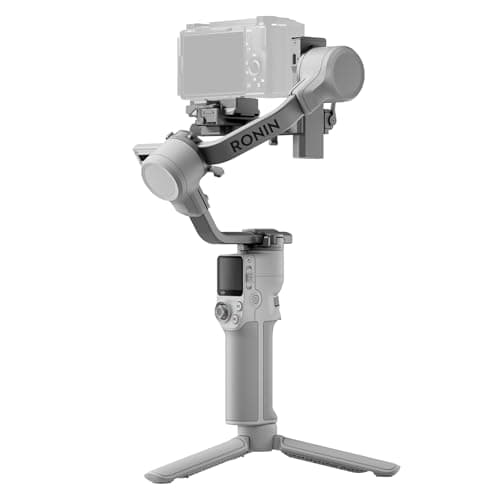
The best travel gimbal for a mirrorless camera is the DJI RS 4 Mini: it is the lightest full-feature gimbal most creators will actually pack, it folds down small, and its automatic axis locks let you rebalance in a hotel room in under a minute. If you want more payload headroom for a body-and-zoom travel kit — or a safe pick when DJI is hard to buy where you are landing — the Zhiyun Weebill 3E is the value hedge. But before either, ask the honest travel question first: is the lightest thing to pack no gimbal at all?
Travel changes what matters about a gimbal. At home, payload and battery win the arguments; on the road, the two numbers that decide everything are weight and folded size, because you carry the thing all day and you have to fit it into the one bag you are willing to fly with. A gimbal that is a joy on a studio shoot but stays in the hotel because it is too heavy to sling through a market stabilizes nothing. So this ranking leads with portability — grams in the hand and centimeters in the pack — and treats payload as the floor your rig has to clear, not the headline.
The honest caveat we put at the top of every gimbal page matters double when you are packing light: if your camera has in-body image stabilization (IBIS) and you shoot mostly slow, static travel footage — an establishing shot, a locked-off skyline, a careful handheld pan across a plaza — a modern IBIS body with a stabilized lens may hold it cleanly on its own, and the lightest thing in your bag is no gimbal. A gimbal earns its place in a carry-on when you want real motion: walking through a souk, following a subject down a staircase, a smooth reveal as you round a corner. If that is the trip you are filming, read on; if it is not, spend the weight allowance on a better lens instead.
One more thing that shapes this list specifically for travelers: DJI's availability in the US has been uncertain at times, and trying to replace a gimbal abroad in a hurry is worse. So, as on every page here, each DJI pick is paired with a Zhiyun or Hohem alternative that packs and performs comparably — if the Mini is out of stock the week you fly, you are never stranded. The full context is in Zhiyun vs DJI, and the broader picks live in best gimbals for mirrorless.
How to choose a travel gimbal for a mirrorless camera
Buy for the trip you actually take, not the shoot you imagine. The order of priorities flips on the road: weight and packed size come first, then just enough payload headroom for the small kit you fly with, then battery and charging, then how fast you can rebalance in a cramped hotel room. Here is how each one shakes out.
Weight first — the gimbal you will actually pack
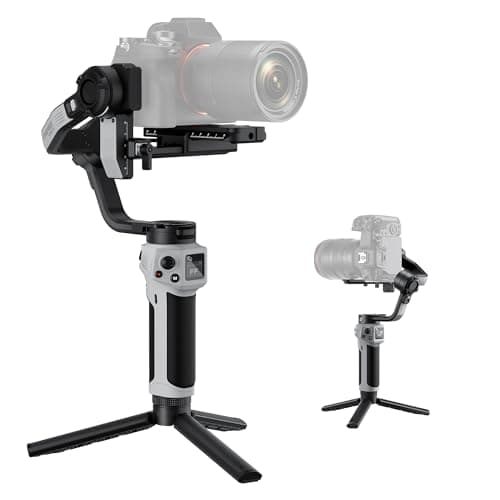
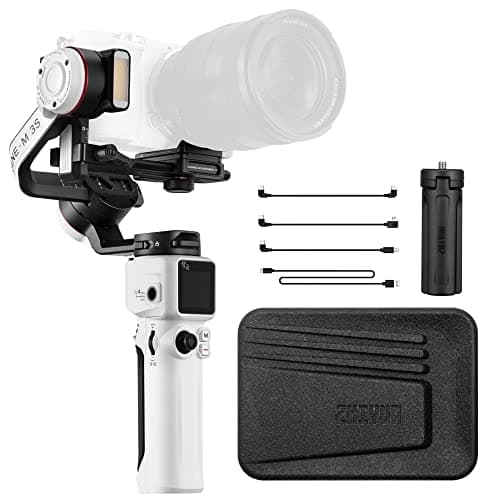
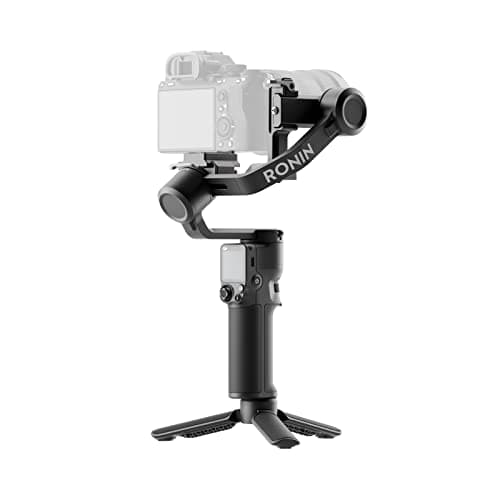
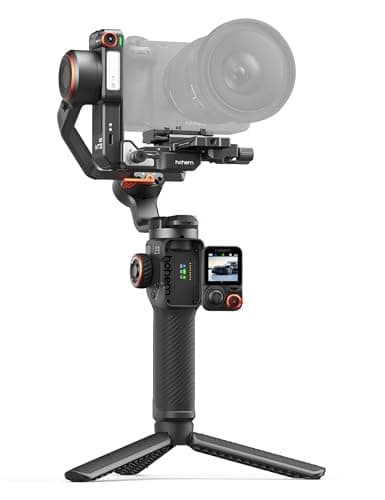
On the road, grams are not a spec-sheet abstraction — they are the reason a gimbal comes with you or gets left in the room. The RS 4 Mini leads the full-feature field at roughly 890g, light enough to sling all day and to justify the space in a carry-on. The RS 3 Mini is lighter still at about 795g — the lightest DJI here — and the Zhiyun Crane M3S has the smallest body of the group at around 0.7kg, though it is built to carry lighter loads. The Weebill 3E and the Hohem MT3 Pro are a little more substantial, and they earn that weight with payload and features rather than pure portability. As a rule, buy the lightest gimbal that still clears your rig's weight with headroom: the featherweight you actually pack beats the capable one you leave behind.
Folded size — will it fit the bag you fly with
Weight tells you whether you will carry it; folded size tells you whether it fits the bag you are willing to fly with. Every pick here folds down for transport, but they do not pack the same. The RS 4 Mini and RS 3 Mini collapse into a flat, wedge-like shape that slides into a backpack divider or a packing cube without a fight, and the compact Crane M3S is the smallest to stow. The Weebill 3E folds to a tidy form, which is impressively small for its payload but still the bulkiest of the group. Before you buy, picture the actual bag: a mirrorless body, a lens or two, a charger and the folded gimbal all have to share it, and a shape that packs flat wins over one that fights your other gear.
Payload headroom for a small body and a prime
Payload is still the floor your rig has to clear, even when weight is your headline. The classic travel setup is a compact mirrorless body and one fast prime, and that combination sits comfortably under the ~2kg rating on the RS 4 Mini, the RS 3 Mini and the Crane M3S — plenty of margin for smooth footage. If your travel kit is a body plus a do-everything travel zoom, that heavier combination is happier on the Weebill 3E's ~3kg rating, which buys real headroom so the motors are not straining as you walk. The Hohem MT3 Pro sits between them at a 2.5kg rating, though at about 1,070g it is also one of the heavier gimbals here to pack. Whatever you fly with, weigh your body with the heaviest lens you are actually bringing on the trip, then pick a gimbal rated comfortably above that — running one at its limit on the road drains the battery faster and produces the shaky footage you brought it to avoid.
Battery and charging on the road
You will not be near a wall of chargers on the road, so how a gimbal sips power matters. All of these top up over USB-C, which means one power bank can keep your gimbal, your phone and often your camera alive through a long day of shooting. On paper the runtimes vary widely: Hohem rates the MT3 Pro at about 20 hours balanced and stationary, the Weebill 3E is rated for up to 16 hours, and DJI quotes 13 hours stationary for the RS 4 Mini, while the compact Crane M3S trades some endurance for its small frame. Every one of those figures drops once the gimbal is working. None of that is a dealbreaker for a typical few-hours-a-day travel shoot, but if you film from sunrise scenes to blue hour, pack a power bank and top up over lunch rather than counting on a single charge to last the whole day.
Quick balancing matters more when you are traveling
At home you balance a gimbal once on a table and forget it. Traveling, you rebalance constantly — every time you swap a lens, pull the camera for a stills grab, or repack — often perched on a hotel bed with the light fading. That is where setup speed quietly becomes the most important travel feature. The RS 4 Mini's second-generation automatic axis locks are the standout: they fold the arms and hold the axes for you, so rebalancing takes under a minute and travels well. The Hohem MT3 Pro's second-generation vertical switch flips the camera to portrait without taking it off the gimbal, which is handy when you are shooting for both YouTube and vertical social video. The RS 3 Mini is the one caveat — it lacks the newer automatic locks, so balancing asks for a little more patience, the trade-off for its lower, frequently-discounted price.
The availability hedge, packed for travel
This site pairs every DJI pick with a Zhiyun or Hohem alternative on purpose, and that hedge is worth even more when you travel. DJI's availability in the US has been uncertain at times, and trying to replace a gimbal abroad — in an unfamiliar market, on a deadline — is a genuinely bad afternoon. If the RS 4 Mini or RS 3 Mini is hard to buy the week you fly, the Zhiyun Weebill 3E and Crane M3S pack and perform comparably, and the Hohem MT3 Pro is the non-DJI option with built-in AI tracking. You lose nothing by taking the alternative — see the cheaper options in best budget gimbals.
Do not forget the rest of the travel kit
A gimbal is only part of a travel kit, and some shots it simply cannot do. A light travel tripod earns its place for the long exposures, night skylines and time-lapses a gimbal is not built for, and it doubles as a stand for pieces to camera — see our pick of the best travel tripods. Match the gimbal to a body that is worth carrying, too: the lighter your camera, the more of this ranking opens up, and our best mirrorless for travel guide flags the bodies that pack down without giving up IBIS. Get the whole kit light and you will actually use all of it.