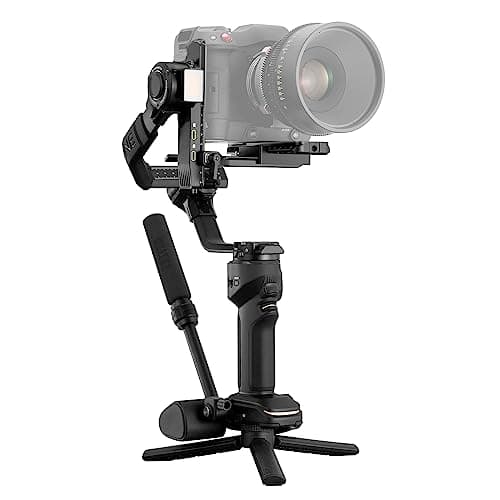
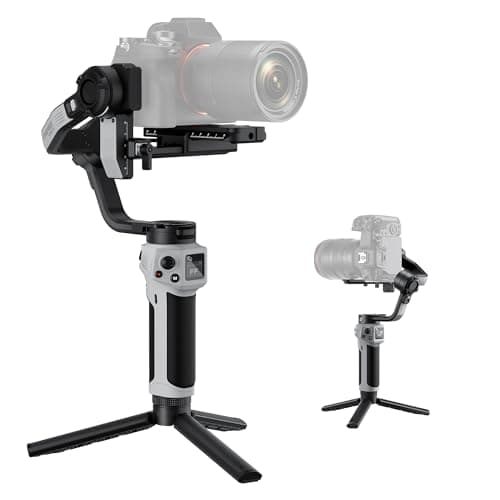
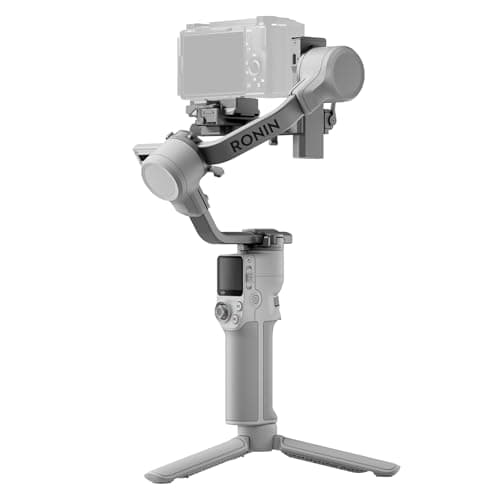
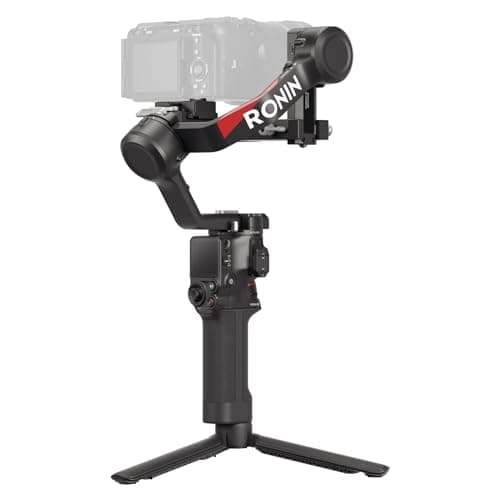
For most DSLR owners the DJI RS 4 is the gimbal to buy: roughly 3kg of payload swallows a mid-size DSLR with a fast zoom, and its automatic axis locks make balancing a heavier rig far less of a chore. If your setup is heavier still, the Zhiyun Crane 4 has the most payload headroom here. Gimbals are mount-agnostic — the motors do not care whether the camera has a mirror in it. What they care about is weight, and that is where a DSLR differs from the compact mirrorless bodies most of this site covers.
Here is the arithmetic that decides everything on this page. A compact mirrorless body with a small prime is often under 700g. A mid-size DSLR body with a constant-aperture zoom is frequently 1.6kg to 2.2kg, and a full-size body with a fast telephoto goes well past that. A gimbal rated to 2kg — which covers most of the popular compact stabilizers, including the DJI Mini line — is therefore marginal or unusable for a DSLR, no matter how good it is. Payload headroom is not a nice-to-have here; it is the entire specification.
One honest note before the picks. If you are still choosing a camera rather than stabilizing one you own, a modern mirrorless body will be lighter, will often have in-body stabilization that reduces how much you need a gimbal at all, and will let you buy a cheaper, smaller stabilizer. Our mirrorless vs DSLR guide covers that decision honestly, including when a used DSLR is still the smart-money buy. This page is for the person who already has the heavier camera and wants smooth footage out of it.
How to choose a gimbal for a heavy camera
Weigh the rig first — actually weigh it
Put your camera on a kitchen scale with the heaviest lens you own or plan to buy, and add anything that lives on the camera permanently: a microphone, a cage, a top handle, a battery grip. That total is the number that matters. Then choose a gimbal rated comfortably above it — not equal to it. A 2.1kg rig on a 2.2kg-rated gimbal is a gimbal fighting for its life: the motors strain, the battery drains faster, and the footage comes out shakier than the specification implies. Aim for at least 25 percent of headroom.
Balance takes longer with a heavy camera
Balancing is the process of positioning the camera so each axis stays put with the motors off. It is quick with a light body and genuinely fiddly with a heavy one, because small errors produce large torques. This is why the automatic axis locks and fine-tune balancing knobs on the DJI models matter more here than they do on a compact rig: they hold the arms while you work and let you adjust in millimeters rather than shoves.
Long lenses need lens support
If your telephoto has a tripod collar, use it — mount the lens to the gimbal plate rather than the camera body. A long lens hanging off a camera that is bolted to the plate puts a bending load on the lens mount and makes the whole rig nose-heavy and impossible to balance properly. Most fast telephotos ship with a collar for exactly this reason.
Battery, and why heavier rigs drain faster
A gimbal's battery life figure assumes a balanced load well within its rating. Run closer to the ceiling and the motors work harder and the runtime drops. On a heavier setup, plan for a shorter day than the specification promises and carry a power bank. This is another argument for buying more payload than you strictly need.
Do you need a gimbal at all?
The honest question we ask on every gimbal page. Older DSLRs generally have no in-body stabilization, so the answer here is more often yes than it is for a modern mirrorless owner — but it still depends on how you shoot. If your footage is tripod-based interviews, locked-off product shots or slow pans, a good fluid-head tripod will serve you better than a gimbal and cost less. A gimbal is for genuine movement: walking, tracking, reveals and orbits. Our stabilization explainer covers what each system actually fixes.
What about the newer DJI RS 5?
DJI launched the RS 5 in January 2026 at a $569 list price, and it is the newer full-size Ronin: roughly 50 percent more peak motor torque than the RS 4, up to 14 hours of runtime on the standard grip, and the same 3kg tested payload (Daily Camera News). It is a genuine successor and it is stocked in the US, so you should know it exists before you order the older model.
We have left the RS 4 at the top anyway, because the one specification this page is about did not move. The RS 5 carries exactly what the RS 4 carries and weighs more doing it — DJI quotes 1.46kg with the grip and plates attached, against roughly 1.3kg for the RS 4 — so the extra money buys torque margin and battery life, not capacity for a heavier camera. Check both live prices before you commit: if they land close together, take the RS 5 for the runtime; while the RS 4 is clearly the cheaper of the two, it is the better-value way to hold a DSLR steady.
Why we hedge every DJI pick
DJI makes the most polished gimbals in the category and we recommend them. But DJI's availability in the US has been uncertain at times, so every DJI pick on this site is paired with a Zhiyun alternative that does the same job — here that is the Crane 4 and the Weebill 3E. If a DJI model is hard to buy the week you are shopping, you lose nothing by taking the hedge.
Budget for the rest of the rig too
Smooth footage is only half of good video. A shotgun microphone and a fast 4K-rated SD card will do as much for your finished work as the stabilizer does, and both cost a fraction of the gimbal.