Skip to content
Focal & Frame

Glass · Lenses

Best Lenses for the Canon EOS R50

The R50 is a better camera than its kit lens lets it look. Here is the order to buy in, what each lens actually changes, and the 1.6x crop math that decides which ones are worth it.

By Stephen V.Updated How we research
#ad

We earn a commission when you buy through our Amazon links, at no extra cost to you. It never decides our rankings — we say so when the cheaper pick is the better buy. How this works.

Sigma Sigma 30mm F1.4 DC DN (RF-mount)

Our #1 pick

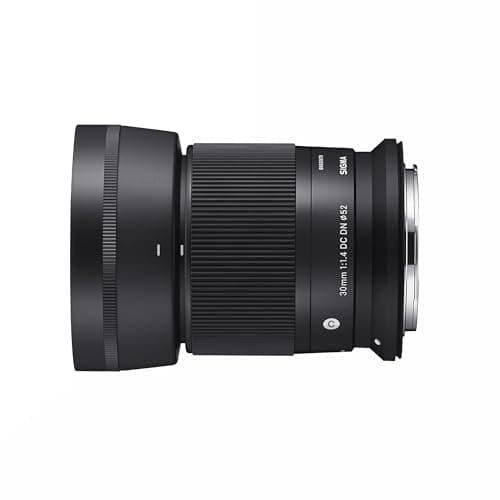
Sigma 30mm F1.4 DC DN (RF-mount)

The fast normal prime Canon's own RF-S range still does not include. Sigma put it on sale for RF on 5 December 2024 at $369, and it is the cheapest way to get real background blur out of an R50, R10, R100 or R7.

Don't buy it if you shoot a full-frame Canon body, or you want one lens to cover a range. This is a fixed 30mm for crop-sensor RF cameras — for flexibility you would keep the RF-S kit zoom alongside it.

#ad · Live Amazon price as of November 22, 2026. No verified price → we show none.

The first lens to buy for a Canon EOS R50 is the Sigma 30mm F1.4 DC DN in RF mount. Canon does not sell a fast RF-S prime of any focal length, so this is the cheapest way to get an f/1.4 aperture - and the blurred backgrounds and usable indoor photos that come with it - onto an R50 without an adapter. It frames like a 48mm normal lens on the R50's 1.6x crop, which is the angle of view most people picture when they imagine a proper camera photo. Our budget pick is the Canon RF 50mm F1.8 STM, the cheapest lens here and the one that changes a kit-lens photo the most per dollar, as long as you can live with its 80mm-equivalent reach. Prices come from the live price layer with an "as of" date; where there is no verified purchasable offer, we show no price.

The R50 ships with the RF-S 18-45mm F4.5-6.3 IS STM. That lens is small, stabilized and genuinely competent in daylight, and it is also the reason most R50 photos look like phone photos: at f/6.3 on the long end it gathers very little light and separates a subject from its background barely at all. Nothing about the R50's 24MP sensor or its Dual Pixel CMOS AF II autofocus is the limiting factor. The glass in front of them is. Our full write-up of the body is the Canon EOS R50 review.

Two facts decide every pick below. First, the R50 is an APS-C camera with a 1.6x crop factor, so every focal length frames tighter than the number on the barrel - a 50mm behaves like an 80mm, a 30mm like a 48mm, a 16mm like a 26mm. Canon's crop is 1.6x where Sony, Nikon and Fujifilm use 1.5x, which is why advice written for those systems lands slightly wrong here; crop factor explained covers the arithmetic. Second, the R50 has no in-body stabilization, so a lens with optical stabilization is doing work the camera cannot do for itself - which matters far more for handheld video than for stills. One R50 feature that does change which lenses are worth owning is its electronic viewfinder: it makes a long lens usable in bright sun, which a screen-only body does not. The bodies that have one are ranked in best mirrorless cameras with a viewfinder.

The short answer

Quick picks

#ProductBest forScorePrice
01
Sigma Sigma 30mm F1.4 DC DN (RF-mount)
Sigma 30mm F1.4 DC DN (RF-mount)

The fast normal prime Canon's own RF-S range still does not include. Sigma put it on sale for RF on 5 December 2024 at $369, and it is the cheapest way to get real background blur out of an R50, R10, R100 or R7.

The fast prime Canon RF-S lacks
8.0
$344.00Amazon
02
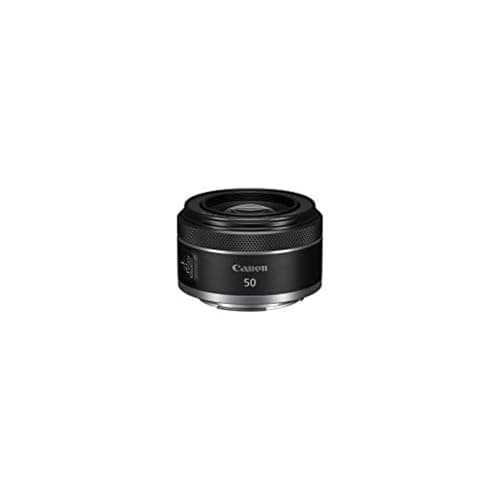
Canon Canon RF 50mm F1.8 STM
Canon RF 50mm F1.8 STM

The default first upgrade for any Canon mirrorless owner: tiny, sharp, genuinely cheap, and it gives your photos the soft-background 'real camera' look a kit lens can't.

The best nifty fifty for Canon
8.0
$199.00Amazon
03
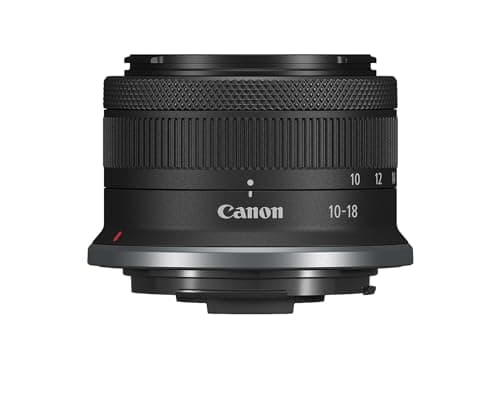
Canon Canon RF-S 10-18mm F4.5-6.3 IS STM
Canon RF-S 10-18mm F4.5-6.3 IS STM

The ultra-wide every Canon APS-C owner should consider: tiny, stabilized, and wide enough for big landscapes and tight rooms — you just trade away aperture speed to get there.

The best ultra-wide for Canon APS-C
6.0
Check price →
04
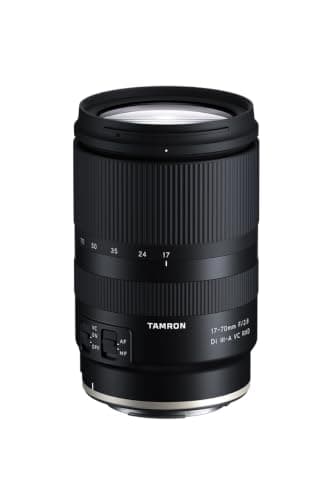
Tamron Tamron 17-70mm F2.8 (Canon RF)
Tamron 17-70mm F2.8 (Canon RF)

The first fast standard zoom an R10, R50 or R100 can take without an adapter. On Canon's 1.6x crop it frames a little tighter: roughly 27-112mm.

Canon RF-S owners who want f/2.8
7.2
$699.00Amazon
05
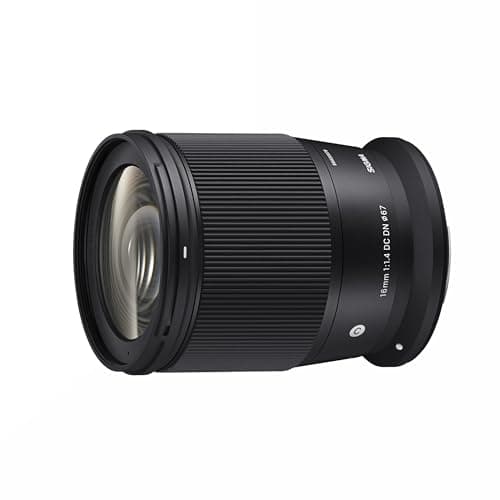
Sigma Sigma 16mm F1.4 DC DN (RF-mount)
Sigma 16mm F1.4 DC DN (RF-mount)

The wide fast prime Canon's own RF-S range does not contain. Sigma put it on sale for RF on 23 January 2025 at a $489 list price, and it frames like a 26mm on Canon's 1.6x crop.

The wide fast prime Canon RF-S lacks
7.6
$414.00Amazon
06
Canon Canon RF-S 18-150mm F3.5-6.3 IS STM
Canon RF-S 18-150mm F3.5-6.3 IS STM

The one-lens travel companion for Canon APS-C: an 8.3x zoom that goes from wide to real telephoto so you rarely swap glass — convenience is the whole point, and it delivers it.

The best all-in-one zoom for Canon APS-C
6.0
$539.99Amazon

#ad · Live prices from the Amazon Product API, as of November 22, 2026. Where we have no verified live price, we show none — we would rather leave a gap than print a number that has rotted.

In detail

The picks, in full

01
Sigma Sigma 30mm F1.4 DC DN (RF-mount)

The fast prime Canon RF-S lacks

Sigma 30mm F1.4 DC DN (RF-mount)

30mm f/1.4 (≈48mm equivalent on Canon's 1.6x crop)Canon RF mount (APS-C only)285g, φ69.0 × 71.3mm, 52mm filterStepping-motor AF, Servo AF supported
8.0/10

The fast normal prime Canon's own RF-S range still does not include. Sigma put it on sale for RF on 5 December 2024 at $369, and it is the cheapest way to get real background blur out of an R50, R10, R100 or R7.

Sharpness
8
Autofocus
8
Aperture & bokeh
8
Build & size
8
Value
8

Pros

  • Canon sells no fast RF-S prime at all, so on an R50, R10, R100 or R7 this is the only f/1.4 normal lens you can buy without an adapter
  • Sigma says it wrote a control algorithm with AF drive and communication speed tuned specifically for RF mount, and the lens supports Servo AF and in-camera aberration correction on cameras that offer it
  • At 285g and 71.3mm long it stays balanced on Canon's small APS-C bodies, and it takes the same cheap 52mm filters as the other mount versions

Cons

  • No optical stabilization, and Canon's cheap RF-S bodies (R100, R50, R10) have no in-body stabilization either — handheld video leans on digital IS or a gimbal
  • APS-C only: mount it on a full-frame RF body and the camera drops to the cropped APS-C area automatically
  • Its $369 launch list sat above the Sony E version's long-standing $339 list price, and no mount version of this lens has weather sealing

Don't buy this if…

…you shoot a full-frame Canon body, or you want one lens to cover a range. This is a fixed 30mm for crop-sensor RF cameras — for flexibility you would keep the RF-S kit zoom alongside it.

$344.00View on Amazon

$419.0018% off

Price as of November 22, 2026. Prices change — Amazon's is the one that counts.

#ad · we may earn a commission from this link to Sigma 30mm F1.4 DC DN (RF-mount)

02
Canon Canon RF 50mm F1.8 STM

The best nifty fifty for Canon

Canon RF 50mm F1.8 STM

50mm f/1.8Canon RF mount (full-frame)STM stepping-motor AFCompact and light (~160g)
8.0/10

The default first upgrade for any Canon mirrorless owner: tiny, sharp, genuinely cheap, and it gives your photos the soft-background 'real camera' look a kit lens can't.

Sharpness
8
Autofocus
7
Aperture & bokeh
7
Build & size
8
Value
10

Pros

  • Renders a soft, blurred background at f/1.8 that instantly separates your subject from the clutter behind them
  • One of the smallest, lightest lenses you can buy for the system — it barely adds weight and disappears in a bag
  • A control ring lets you dial in aperture, ISO or exposure compensation without diving into menus

Cons

  • The STM focus motor can hunt and buzz in low light, and focus breathing is visible on video
  • Build is mostly plastic with a plastic mount — it feels as inexpensive as it is

Don't buy this if…

…you shoot an APS-C Canon body (an R50, R10 or R100) and want the classic 50mm 'normal' look. On those the 50mm frames like an 80mm short telephoto, so a wider lens gets you closer to a true nifty-fifty view.

$199.00View on Amazon

$239.0017% off

Price as of November 22, 2026. Prices change — Amazon's is the one that counts.

#ad · we may earn a commission from this link to Canon RF 50mm F1.8 STM

03
Canon Canon RF-S 10-18mm F4.5-6.3 IS STM

The best ultra-wide for Canon APS-C

Canon RF-S 10-18mm F4.5-6.3 IS STM

10-18mm f/4.5-6.3 (≈16-29mm equiv)Canon RF-S mount (APS-C)Optical Image StabilizerCompact & light
6.0/10

The ultra-wide every Canon APS-C owner should consider: tiny, stabilized, and wide enough for big landscapes and tight rooms — you just trade away aperture speed to get there.

Sharpness
7
Autofocus
7
Aperture & bokeh
3
Build & size
6
Value
7

Pros

  • The 10-18mm range (≈16-29mm equivalent) opens up sweeping landscapes, interiors and wide vlogging shots a kit lens cannot reach
  • Optical stabilization and very light weight make it easy to shoot handheld and steady for video
  • Remarkably compact for an ultra-wide zoom — it stays out of the way in a small bag

Cons

  • The f/4.5-6.3 aperture is slow, so it struggles in low light and blurs backgrounds very little
  • Some distortion and softening at the extreme wide end that relies on in-camera correction

Don't buy this if…

…you shoot in dim light or want strong background separation. The variable f/4.5-6.3 aperture is this lens's real limit — a fast wide prime like the RF 16mm f/2.8 gathers far more light, though it is not as wide on crop bodies.

Check price on Amazon →

No buyable offer at the last price check (November 22, 2026). We show nothing rather than a stale number.

#ad · we may earn a commission from this link to Canon RF-S 10-18mm F4.5-6.3 IS STM

04
Tamron Tamron 17-70mm F2.8 (Canon RF)

Canon RF-S owners who want f/2.8

Tamron 17-70mm F2.8 (Canon RF)

17-70mm f/2.8 constant (≈27-112mm on Canon's 1.6x crop)Canon RF mount (APS-C / RF-S)530g, 117.3mm long67mm filter, VC stabilization
7.2/10

The first fast standard zoom an R10, R50 or R100 can take without an adapter. On Canon's 1.6x crop it frames a little tighter: roughly 27-112mm.

Sharpness
8
Autofocus
8
Aperture & bokeh
6
Build & size
6
Value
8

Pros

  • Canon's native RF-S zooms are all variable-aperture kit lenses, so this is the only constant-f/2.8 standard zoom that mounts natively on an RF-S body
  • Tamron publishes a slightly narrower angle of view for the RF version (77°0' to 21°52' against 80°37' to 23°17') because Canon's APS-C crop is 1.6x, not 1.5x — more reach, slightly less wide
  • The shortest of the four versions at 117.3mm, and VC covers the missing in-body IS on the R10, R50 and R100

Cons

  • The 1.6x crop costs you the widest end: 27mm equivalent is noticeably less wide than the 25.5mm the other three mounts give
  • Newly released on RF (on sale July 2, 2026), so there is less owner feedback on this version than on the five-year-old Sony E one

Don't buy this if…

…you want the widest possible view on a Canon crop body — the 27mm-equivalent wide end is the weakest of the four mounts, and a dedicated wide prime or the RF-S 10-18mm covers that job far better.

$699.00View on Amazon

$749.007% off

Price as of November 22, 2026. Prices change — Amazon's is the one that counts.

#ad · we may earn a commission from this link to Tamron 17-70mm F2.8 (Canon RF)

05
Sigma Sigma 16mm F1.4 DC DN (RF-mount)

The wide fast prime Canon RF-S lacks

Sigma 16mm F1.4 DC DN (RF-mount)

16mm f/1.4 (≈26mm equivalent on Canon's 1.6x crop)Canon RF mount (APS-C only)67mm filter, 25cm close focusStepping-motor AF, Servo AF supported
7.6/10

The wide fast prime Canon's own RF-S range does not contain. Sigma put it on sale for RF on 23 January 2025 at a $489 list price, and it frames like a 26mm on Canon's 1.6x crop.

Sharpness
8
Autofocus
8
Aperture & bokeh
8
Build & size
7
Value
7

Pros

  • Canon builds no fast RF-S prime of any focal length, so on an R50, R10, R100 or R7 this is one of very few ways to get an f/1.4 wide without an adapter
  • Sigma says it wrote an AF drive and communication-speed algorithm specifically for RF mount, and the lens supports Servo AF and in-camera aberration correction on bodies that offer it
  • Sigma publishes a dust- and splash-resistant mount seal on every version except the old EF-M one

Cons

  • At around 405-420g it is heavier than the small Canon bodies it suits, so an R50 or R100 ends up front-heavy in the hand
  • No optical stabilization, and the cheap RF-S bodies have no in-body stabilization either — handheld video leans on digital IS or a gimbal
  • Its $489 RF list price is the highest of any mount version of this lens, and the 67mm filter thread costs more to fit than the 52mm of Sigma's 30mm

Don't buy this if…

…you shoot a full-frame Canon body, or what you actually want is a normal rather than a wide angle of view. On RF the Sigma 30mm F1.4 is cheaper, lighter and the more natural first prime.

$414.00View on Amazon

$539.0023% off

Price as of November 22, 2026. Prices change — Amazon's is the one that counts.

#ad · we may earn a commission from this link to Sigma 16mm F1.4 DC DN (RF-mount)

06
Canon Canon RF-S 18-150mm F3.5-6.3 IS STM

The best all-in-one zoom for Canon APS-C

Canon RF-S 18-150mm F3.5-6.3 IS STM

18-150mm f/3.5-6.3 (≈29-240mm equiv)Canon RF-S mount (APS-C)8.3x all-in-one zoomOptical Image Stabilizer
6.0/10

The one-lens travel companion for Canon APS-C: an 8.3x zoom that goes from wide to real telephoto so you rarely swap glass — convenience is the whole point, and it delivers it.

Sharpness
6
Autofocus
7
Aperture & bokeh
3
Build & size
6
Value
8

Pros

  • The 18-150mm range (≈29-240mm equivalent) covers wide scenes, portraits and distant subjects in a single lens — ideal for travel
  • Optical stabilization steadies both handheld stills and video, especially at the long end
  • Compact and light for its enormous range, so it stays on the camera all day

Cons

  • The variable f/3.5-6.3 aperture is slow, limiting low-light use and background blur
  • Image quality is a step behind a prime or a fast zoom — the compromise every superzoom makes for its reach

Don't buy this if…

…you care most about image quality or low-light shooting. A superzoom trades sharpness and aperture for convenience — a fast prime like the RF 50mm f/1.8 takes visibly better photos in dim light.

$539.99View on Amazon

$569.995% off

Price as of November 22, 2026. Prices change — Amazon's is the one that counts.

#ad · we may earn a commission from this link to Canon RF-S 18-150mm F3.5-6.3 IS STM

How we ranked these six

The order is not best glass first. It is biggest change to your photographs per dollar, on this specific camera, judged on four things:

  1. How much light it gathers that the kit lens cannot. The RF-S 18-45mm runs f/4.5-6.3. An f/1.4 prime gathers roughly three and a half stops more light at the wide end and about four at the long end - that is the difference between a sharp indoor photo and a blurred one, with no editing involved.
  2. Whether it fits the mount natively.The R50 takes RF and RF-S lenses directly. Canon's own RF-S range is all variable-aperture zooms, and its cheap RF primes are full-frame designs, so the native fast-prime gap is filled only by Sigma's RF-mount APS-C lenses. Everything on this page mounts without an adapter.
  3. What the 1.6x crop does to it. A full-frame RF lens works perfectly on the R50, it just frames 1.6x tighter. That turns the RF 50mm into a short telephoto and the RF 16mm into a mild wide - useful, but not what the numbers suggest.
  4. Whether it stabilizes. The R50 has no in-body stabilization. Three of the six picks have optical stabilization in the lens; three do not. For handheld video that is the single most consequential line on the spec sheet - see image stabilization explained.

The six lenses, and what each one is for

LensFrames like (1.6x crop)Stabilized?What it is for
Sigma 30mm F1.4 DC DN (RF)About 48mm - a normal lensNoThe everyday prime: indoor light, blurred backgrounds, people
Canon RF 50mm F1.8 STMAbout 80mm - short telephotoNoThe cheapest route to portrait-style background blur
Canon RF-S 10-18mm F4.5-6.3 IS STMAbout 16-29mm - ultra-wideYes (optical)Rooms, landscapes, arm's-length vlogging
Tamron 17-70mm F2.8 (Canon RF)About 27-112mmYes (VC)One lens all day, at a constant f/2.8
Sigma 16mm F1.4 DC DN (RF)About 26mm - wideNoWide and fast at once: night streets, interiors, astro
Canon RF-S 18-150mm F3.5-6.3 IS STMAbout 29-240mmYes (optical)Travel reach without changing lenses

1. Sigma 30mm F1.4 DC DN (RF) - the lens Canon does not make

Sigma put its APS-C F1.4 primes on sale for RF mount on 5 December 2024, the 30mm at a $369 list price. That date matters more than it looks: before it, an R50 owner who wanted a fast prime had to adapt EF glass or go without. This is a native RF lens with Servo AF support and in-camera aberration correction on bodies that offer it, and Sigma says it wrote the AF drive and communication-speed algorithm specifically for the mount.

On the R50 it frames at about 48mm, which is the single most useful angle of view there is - close enough to how you see a scene that you stop thinking about the lens. At 285g and 71.3mm long it balances on a body this small, and it takes cheap 52mm filters. Our full write-up, across all the mounts it is sold in, is the Sigma 30mm F1.4 review.

The honest cons: it has no optical stabilization, and neither does the R50, so handheld video leans on the camera's digital IS or a gimbal. It is APS-C only, so it is a dead end if you ever move to a full-frame RF body. And its $369 launch list sat above the $339 the same lens has long carried in Sony E - you are paying a small premium for the mount. No version of it has weather sealing.

2. Canon RF 50mm F1.8 STM - the budget pick

This is the cheapest lens on the page and the usual first upgrade for anyone on Canon mirrorless, for a good reason: at f/1.8 it renders the soft, separated background that makes a photo look like it came from a camera rather than a phone, and it weighs about 160g. Its control ring sets aperture, ISO or exposure compensation without opening a menu.

The catch is specific to the R50, and it is the reason this is our budget pick rather than our first pick: on a 1.6x crop body a 50mm frames like an 80mm. That is a short telephoto. It is excellent for head-and-shoulders portraits and it is awkward indoors, where you will keep backing into a wall. If you want one prime to live on the camera, the Sigma 30mm is the right focal length and this is the right price. Build is mostly plastic including the mount, and the STM motor can hunt and buzz in dim light with visible focus breathing on video.

3. Canon RF-S 10-18mm F4.5-6.3 IS STM - the view the kit lens cannot reach

The kit lens starts at 18mm, about 29mm equivalent. This one starts at 10mm, about 16mm equivalent, and that gap is the difference between photographing a room and photographing a corner of it. It is designed for Canon APS-C, it is genuinely tiny, and it has optical stabilization the R50 badly needs for handheld video. Held at arm's length it also gets your whole head and the background behind you into frame, which is why it is a common R50 vlogging choice.

What you pay for that is light. At f/4.5-6.3 this is a slow lens: it is weak after dark, and it blurs a background very little at any setting. There is distortion and corner softening at the widest end that relies on in-camera correction. Buy it for the angle of view, not for image quality, and do not expect it to replace a prime indoors. The whole native Canon range is ranked in best Canon RF lenses.

4. Tamron 17-70mm F2.8 (Canon RF) - the one-lens answer

Tamron brought the 17-70mm F2.8 Di III-A VC RXD to RF mount on 2 July 2026, and it is the only constant-f/2.8 standard zoom that mounts natively on an RF-S body. On the R50 it covers roughly 27-112mm, so a room, a street scene and a head-and-shoulders portrait without a lens change, all at f/2.8, with VC stabilization filling in for the stabilization the R50 does not have. If you want to stop thinking about lenses, this is the pick.

Two honest costs. The 1.6x crop takes the widest end away: 27mm equivalent is noticeably less wide than the 25.5mm the Sony E version gives, and Tamron publishes the narrower angle of view for the RF version for exactly that reason. And it is 530g and 117.3mm long on a camera built to be light - that is more than the camera weighs, and it will feel front-heavy. It is also the newest of the four mount versions, so there is less owner feedback on this one than on the five-year-old Sony E original. The full write-up is the Tamron 17-70mm review, and the straight head-to-head with the cheaper Sigma is Sigma 18-50mm vs Tamron 17-70mm - note that the Sigma 18-50mm F2.8 is made in RF but currently shows no verified purchasable offer, which is why it is not a pick here.

5. Sigma 16mm F1.4 DC DN (RF) - wide and fast at the same time

Sigma shipped this one for RF on 23 January 2025 at a $489 list price, and it does something no other lens on this page does: it is wide and it is fast. At about 26mm equivalent with an f/1.4 aperture it covers a night street, a dim interior or a star field, none of which the RF-S 10-18mm can do at f/4.5. Sigma publishes a dust- and splash-resistant mount seal on it, and it supports Servo AF on bodies that offer it.

It is the wrong first prime for most R50 owners, though, and we would not pretend otherwise. At roughly 405-420g it is heavier than the Sigma 30mm and makes a small body front-heavy, its 67mm filter thread costs more to fit than the 52mm of the 30mm, and its RF list price is the highest of any mount version of this lens. There is no stabilization. Buy it second, when you know you shoot wide. Details are in the Sigma 16mm F1.4 review.

6. Canon RF-S 18-150mm F3.5-6.3 IS STM - reach, in one lens

An 8.3x zoom covering about 29-240mm equivalent, stabilized, and light for the range. On a trip where changing lenses means missing the shot, that convenience is the entire argument, and it is a real one. It also replaces the kit lens outright rather than sitting alongside it.

The trade is the same one every superzoom makes and it is worth stating plainly: f/3.5-6.3 is slow, so it is weak indoors and after dark and separates subject from background only slightly, and its image quality sits a step behind a prime or a fast zoom at every focal length. If picture quality matters more to you than reach, the RF 50mm at a third of the price takes visibly better photographs in dim light. A cheap telephoto alternative, if reach is all you want, is in best telephoto lenses for beginners.

Which one first? Three common R50 setups

If you mostly photograph people, indoors and out: Sigma 30mm F1.4 first, then the RF 50mm F1.8 when you want tighter portraits. Two primes, both cheap, and you can leave the kit lens at home.

If you film yourself: RF-S 10-18mm first, because the wide angle of view and the optical stabilization are both things the R50 cannot supply on its own. Add the Sigma 30mm for the sit-down, better-looking shots. If the picture is now the better half of your videos, the microphone is the next thing to fix - alternatives to the Rode Wireless GO ranks the clip-on kits.

If you want to stop owning lenses: the Tamron 17-70mm F2.8, and accept the weight. It is the only pick here that makes the kit lens, a portrait prime and a short telephoto all redundant at once.

One thing worth knowing before you spend: the R50 body itself has repeatedly had no verified purchasable offer on its usual listing, so if you do not own one yet, read alternatives to the Canon R50 before you commit to the RF-S mount. If you already own the camera, that is settled and this page is the better use of your money - kit lens vs prime explains why the first prime is usually the biggest single upgrade a beginner can make.
How we picked

We do not run a testing lab

We compiled the manufacturers' published specifications and manuals, did the cost math, and scored each product against a published rubric. The scores are judgments from that documented research — they are notmeasurements we took, because we do not have a lab and we are not going to pretend we do. Where a number came from someone else's testing, we name and link them in Sources.

Questions

Frequently asked

What is the best lens for the Canon EOS R50?
The Sigma 30mm F1.4 DC DN in RF mount. Canon sells no fast RF-S prime at all, so this is the cheapest native route to an f/1.4 aperture on an R50, and at about 48mm equivalent it is the most generally useful angle of view. The cheapest worthwhile upgrade instead is the Canon RF 50mm F1.8 STM, which frames like an 80mm short telephoto on this body. Full details in the Sigma 30mm review.
Does the Canon R50 take RF lenses as well as RF-S lenses?
Yes. Every RF lens mounts and works on the R50; the 1.6x crop simply frames it tighter, so an RF 50mm behaves like an 80mm and the RF 16mm like a 26mm. RF-S lenses are the ones designed for the smaller APS-C image circle, which is why they are smaller and cheaper. The arithmetic is in crop factor explained.
Is a 50mm lens good on the Canon R50?
It is good at one job. The 1.6x crop makes a 50mm frame like an 80mm, which is flattering for head-and-shoulders portraits and too tight for groups, interiors or anything in a small room. If you want a single do-everything prime, a 30mm is the focal length that behaves like a normal lens on this camera.
Does the Canon R50 have in-body image stabilization?
No. Nothing in Canon's cheap RF-S line - R50, R10 or R100 - has in-body stabilization, so stabilization has to come from the lens or from the camera's digital IS, which crops the frame. Three of the six picks here stabilize optically: the RF-S 10-18mm, the RF-S 18-150mm and the Tamron 17-70mm. For handheld video that is the specification to check first.
What is the best cheap lens for the Canon R50?
The Canon RF 50mm F1.8 STM, which is the least expensive pick on this page and still the biggest visible change to a kit-lens photo per dollar. Just plan around its 80mm-equivalent framing. Other cheap options across every mount are ranked in best lens under $200.
Should I buy a lens or upgrade the camera?
On an R50, the lens, almost always. The sensor and the Dual Pixel CMOS AF II autofocus are not what is holding your photos back - the f/4.5-6.3 kit zoom is. A $200 prime changes your pictures more than a $1,000 body with the same lens on the front. Kit lens vs prime works through the comparison.

Keep reading

Receipts

Sources

We do not run a testing lab, and we do not pretend to. Specs come from manufacturer sheets and manuals; where a figure came from someone else's measurement, we name and link them. Where we could not verify something, we say so on the page rather than quietly leaving it out. Read our full method.