The best camera microphone under $100 is the DJI Mic Mini. Two ultralight clip-on transmitters and a camera receiver for under three figures is a genuinely new thing in this price band, and putting the mic on the person rather than on the camera is the step that makes video sound finished. That is the pick for interviews, pieces to camera and anything filmed from further away than arm's length. The Hollyland Lark M2 is the one to buy instead if you also film on a phone, because it ships with a USB-C receiver as well as a camera receiver. Our budget pick is the Movo VXR10 — the cheapest microphone here and the cheapest real upgrade over anything built into a camera. Every price is read live from the price layer and date-stamped.
The reason to care about this at all: a camera's built-in microphone is a compromise twice over. It is omnidirectional, so it collects the room — the hum, the traffic, the reflections off a bare wall — in equal measure with the voice you want. And it is bolted to the camera body, so it hears every touch of the focus ring and every shift of your grip as a thump. Any of the four microphones here fixes one of those problems; the two wireless kits fix both at once.
A word on what $100 does and does not buy. It buys you the microphone in the right place. It does not buy you 32-bit float recording, the feature that makes a take that clipped into distortion recoverable afterwards rather than ruined; that starts around twice this budget. For planned filming where you can set a level and check it, that is a fair trade. For moments you only get once, it is worth saving up.
The four, on the specs that decide it
| Mic | Type | In the box | Power | Published range |
|---|
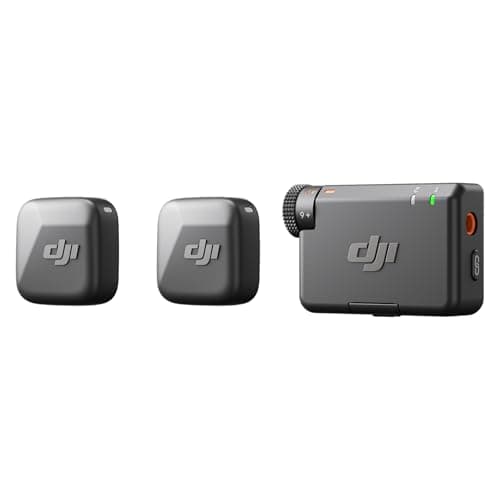
| DJI Mic Mini | Wireless clip-on | 2 transmitters, 1 camera receiver | Rechargeable | Up to about 400m, line of sight |
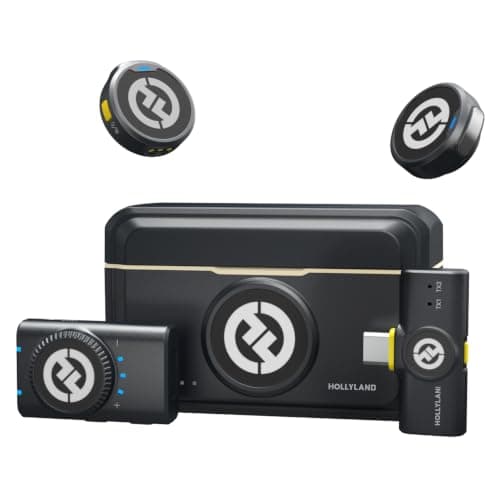
| Hollyland Lark M2 | Wireless clip-on | 2 transmitters, camera and USB-C receivers | Rechargeable | Up to about 300m, line of sight |
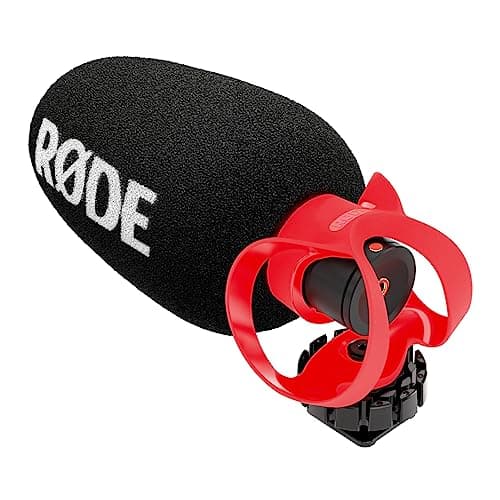
| Rode VideoMicro II | Wired shotgun | Mic, 3.5mm and USB-C outputs, two windshields | Plug-in power — nothing to charge | n/a (on-camera) |
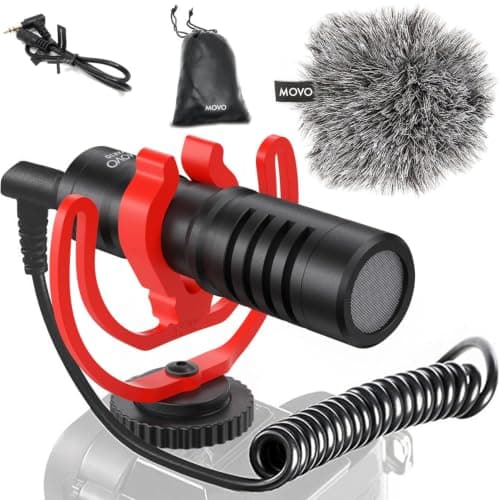
| Movo VXR10 | Wired shotgun | Mic, TRS and TRRS cables, foam and furry windscreens | Passive — nothing to charge | n/a (on-camera) |
1. Wireless or wired — the only question that really matters
Everything else is detail. A wired shotgun sits on the hot shoe, so the microphone is exactly as far from the voice as the camera is. Frame tight and that is fine; widen the shot and the voice falls back into the room with it. A wireless clip-on puts a transmitter on the speaker, so the sound stays close whatever the camera does — and it lets you film someone walking, or two people in one shot, which a shotgun simply cannot do. If you ever film anything other than yourself at arm's length, buy wireless. Full reasoning in lavalier vs shotgun mic.
2. How many receivers, and what they plug into
This is where the two wireless kits differ most and where the listings are easiest to misread. Both ship two transmitters, so two people can be miked. The Mic Mini kit here includes one camera receiver. The Lark M2 camera kit includes a camera receiver and a USB-C receiver, so the same microphones work on a phone without buying an adapter — which matters a lot if half your filming is vertical video on a phone. Check the exact kit configuration before you order either: both brands sell single-transmitter and phone-only versions at lower prices from near-identical product pages.
3. Transmitter weight, because people take mics off
A clip-on that is heavy or bulky gets removed, and a microphone in a pocket is worthless. Both wireless kits here are built around that: the Mic Mini transmitters are about 10g, the Lark M2 about 9g, both light enough to clip to a shirt without the fabric sagging. That is a real specification difference from older wireless kits, where a 30-40g transmitter needed a sturdy collar or a belt clip.
4. What you give up versus the $200 kits
Three things, all worth naming. Recording safety: the Rode Wireless GO III records 32-bit float onboard each transmitter, which makes a clipped take fixable; neither mic here does. Backup recording in general: a kit that records internally survives a dropout, where these rely on the radio link. And inputs: the pricier Rode takes an external lavalier on a locking connector, so you can hide the microphone. If any of that matters to your work, read best wireless microphones before you spend here.
5. Why both wired options are still on the list
Because nothing can go wrong with them. No pairing, no batteries, no radio interference, no forgetting to turn a transmitter on — a wired shotgun is plugged in and working. For a desk-based channel, a tight vlog or a camera that lives on a tripod, the Rode VideoMicro II is the lowest-risk microphone on this page, and the Movo does most of the same work for less. Their ranked field is best shotgun microphones, and if your footage is shot on a phone, the shortlist changes again in best mics for phone video.
Setting levels, once you have one
Whichever you buy, the one habit that protects a recording is leaving headroom: aim for the loudest moments to peak around two-thirds up the meter, not at the top. Digital audio clips hard and unrecoverably at the ceiling, and a recording that is slightly too quiet can be lifted afterwards. Wind is the other avoidable disaster — fit the furry windshield outdoors, every time, even on a day that feels still.