The short answer: buy the Hollyland Lark M2 Camera Kit. Hollyland's published kit contents put both a camera receiver and a USB-C receiver in the same box, which means one purchase covers a phone today and a mirrorless body later — and its transmitters are about 9g, so they genuinely disappear on a collar. If you want the best-protected recording instead of the best value, the Rode Wireless GO (Gen 3) is the pick; Rode's own product page lists universal compatibility with cameras, smartphones and computers, plus digital and analog outputs. And if you simply want the cheapest thing that beats your phone, Rode's VideoMicro II plugs into a USB-C port with no battery to charge at all. Everything below is a kit this site already ranks, and the prices are live.
Here is the problem you are actually solving. A phone microphone is a tiny omnidirectional capsule sitting at the bottom edge of the handset, pointed at nothing in particular. It hears your voice, the road, the fridge compressor and the room's reverb at roughly equal weight, and it hears all of that from wherever the phone happens to be — which, if you are filming yourself, is several feet away. Distance is the killer: every time you double the distance between a mouth and a microphone, the voice arrives quieter while the room stays exactly as loud as it was. That ratio is what makes phone audio sound like a phone.
Nothing you do in an editor fixes it. Noise reduction removes hiss, not reverb, and raising the level raises the room along with the voice. The only real fix is to move the microphone to within a few inches of the mouth, which is the entire reason a clip-on wireless transmitter costs what it does. A $60 lav two inches from your chin beats a $2,000 shotgun across the room, every single time.
The connector decides which mic you can buy
This is the part phone buyers get wrong, so take thirty seconds on it. Look at the port on the bottom of your phone.
A USB-C portis the good case. A USB-C receiver or a USB-C microphone is a digital connection — the microphone does its own analog-to-digital conversion and hands the phone finished audio, which bypasses the phone's own preamp entirely. Nothing to pair, nothing to set, no adapter.
A Lightning portneeds an adapter, and the adapter is usually sold separately: DJI's own Mic 3 FAQ documents exactly that for its kit. Budget for it before you buy, and buy the manufacturer's own part rather than a generic one, because a Lightning accessory has to carry an authentication chip to work at all.
A 3.5mm headphone jack — if your phone still has one — is the case to be careful about. A phone jack is a four-conductor TRRS socket, while almost every microphone ships with a three-conductor TRS plug, and putting a TRS plug into a TRRS socket produces silence rather than an error message. That is a $5 adapter, and it is the single most common reason a brand-new microphone appears not to work.
What each kit actually gives you
Every number below is from the manufacturer's published specification or its own kit contents list. We did not test any of these — see how we pick.
| Kit | What it is | Phone connection | Published headline specs |
|---|
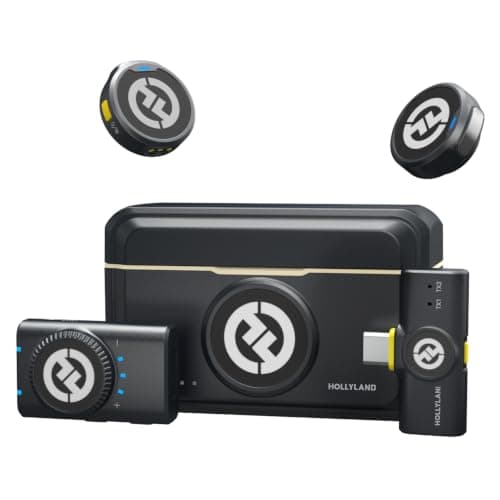
| Hollyland Lark M2 (Camera Kit) | 2 clip-on transmitters, camera receiver + USB-C receiver | USB-C receiver included in the box | ~9g transmitters, 48kHz/24-bit, up to ~300m line of sight, ~10h per transmitter |
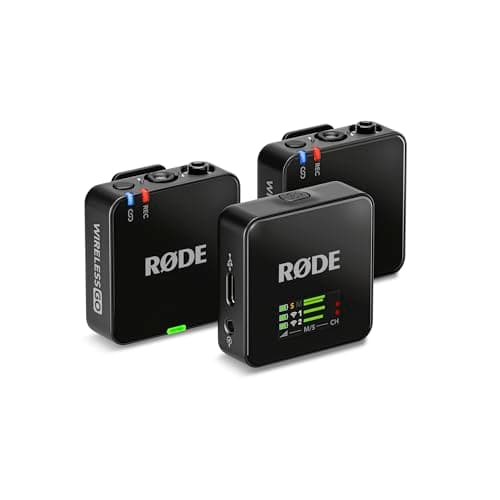
| Rode Wireless GO (Gen 3) | 2 transmitters + 1 receiver | Rode lists cameras, smartphones and computers, with digital and analog outputs; transmitters also pair to iOS over Bluetooth in the RØDE Capture app with no receiver at all | 32-bit float onboard recording, GainAssist automatic level control, hours of internal backup per transmitter |
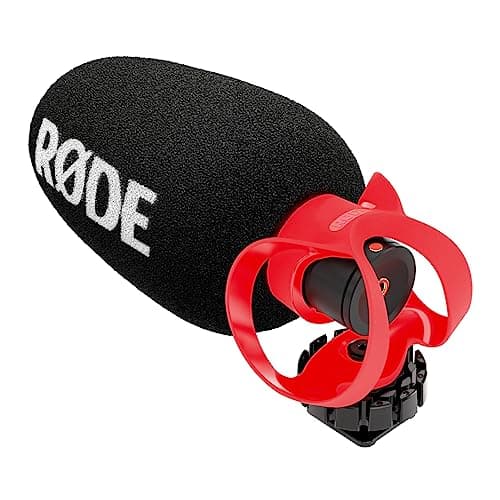
| Rode VideoMicro II | One tiny directional shotgun, no radio | 3.5mm or USB-C output, powered by the phone | Cardioid pattern, no battery (plug-in power), foam + furry windshield and shock mount included |
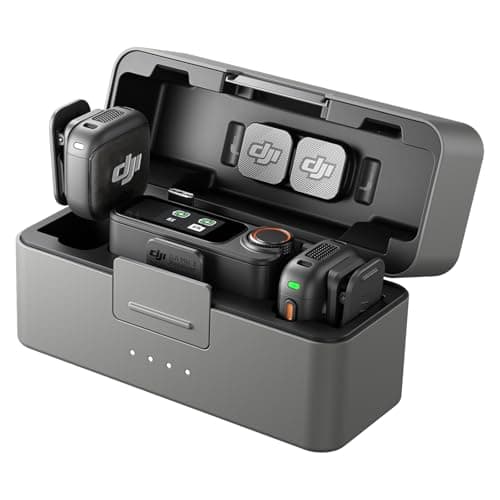
| DJI Mic 3 | 2 transmitters + receiver + charging case | Receiver connects to a phone; DJI's FAQ states the Lightning adapter is sold separately | Dual-file 32-bit float internal recording, adaptive gain, up to 400m line of sight, scales to 4 transmitters |
Read the third column before the fourth. A kit that needs a part you do not own is more expensive than its price tag, and a kit that ships the receiver you need is cheaper than its price tag.
The short answer
Quick picks
| # | Product | Best for | Score | Price |
|---|
| 01 | Hollyland Lark M2 (Camera Kit)The value wireless kit. Two of the smallest clip-on transmitters going, plus both a camera receiver and a USB-C receiver in one box, for well under the flagship money. | The best value wireless lav | | $88.00·Amazon |
| 02 | Rode Wireless GO IIIThe audio-quality step up. Two transmitters with 32-bit float onboard recording and automatic level control — the most bulletproof recording of the whole GO line. | The best all-round creator mic | | $169.99·Amazon |
| 03 | Rode VideoMicro IIThe tiniest real shotgun here. A pocketable cardioid that runs on plug-in power, ships with a foam and a furry windshield, and turns a phone or camera into a proper directional mic. | The smallest grab-and-go shotgun | | $80.00·Amazon |
| 04 | DJI Mic 3The most forgiving wireless kit, a generation on. Two transmitters, a receiver and a charging case, with dual-file 32-bit float recording and gain that sets itself. | Beginners who want levels handled for them | | $259.00·Amazon |
#ad · Live prices from the Amazon Product API, as of October 16, 2026. Where we have no verified live price, we show none — we would rather leave a gap than print a number that has rotted.
In detail
The picks, in full
The best value wireless lav
Hollyland Lark M2 (Camera Kit)
2 transmitters + camera & USB-C receivers48kHz / 24-bit audioUp to ~300m range (line of sight)~9g magnetic-clip transmitters
The value wireless kit. Two of the smallest clip-on transmitters going, plus both a camera receiver and a USB-C receiver in one box, for well under the flagship money.
- Sound quality
- 8
- Ease of use
- 9
- Build
- 7
- Versatility
- 9
- Value
- 10
Pros
- +The transmitters are among the tiniest and lightest here, so they hide on a collar and clip on magnetically in a second
- +The camera kit includes both a camera receiver and a USB-C receiver, so one purchase covers your mirrorless body and a phone or laptop
- +Long battery life and effective background-sound reduction that punch well above the price
Cons
- −There is no 32-bit float, so you still set sensible levels before you roll rather than rescuing them later
- −The companion app and accessory range are less mature than DJI's or Rode's
Don't buy this if…
…you want a 32-bit-float safety net or the deepest first-party lavalier and mount range. The DJI Mic 3 handles levels for you, and the Rode systems have the widest accessory catalog.
The best all-round creator mic
Rode Wireless GO III
2 transmitters + 1 receiver32-bit float onboard recordingGainAssist automatic level controlLarge internal recording backup per TX
The audio-quality step up. Two transmitters with 32-bit float onboard recording and automatic level control — the most bulletproof recording of the whole GO line.
- Sound quality
- 10
- Ease of use
- 9
- Build
- 9
- Versatility
- 9
- Value
- 7
Pros
- +32-bit float onboard recording makes clipped or too-quiet audio recoverable in the edit — a genuine safety net
- +GainAssist rides your levels automatically, so beginners rarely clip a loud moment or lose a quiet one
- +Hours of internal backup recording on each transmitter means a dropout never costs you the take
Cons
- −Pricier than the value picks, and the standard box does not include a charging case
- −The transmitters are a touch larger than the tiny Hollyland and DJI Mic Mini clips
Don't buy this if…
…you want the smallest, cheapest kit or a charging case in the box. The DJI Mic Mini and Hollyland Lark M2 pack smaller for less, and the DJI Mic 3 bundles a charging case.
The smallest grab-and-go shotgun
Rode VideoMicro II
Cardioid shotgun3.5mm + USB-C outputNo battery (plug-in power)Tiny and light
The tiniest real shotgun here. A pocketable cardioid that runs on plug-in power, ships with a foam and a furry windshield, and turns a phone or camera into a proper directional mic.
- Sound quality
- 7
- Handling & noise rejection
- 7
- Ease of use
- 9
- Build
- 7
- Value
- 9
Pros
- +Small and light enough to live in a jacket pocket or sit on a compact camera without unbalancing it
- +Comes with a foam and a furry windshield plus a shock mount, so it is ready for outdoors out of the box
- +No battery to manage — it powers itself from the camera or phone and works over 3.5mm or USB-C
Cons
- −A cardioid pattern is less directional than the supercardioid shotguns above, so it rejects the room a little less
- −No onboard gain, safety channel or controls — it is a plug-in-and-go mic, not a feature set
Don't buy this if…
…you need tighter directionality or a fuller, broadcast-style sound. The VideoMic GO II and NTG reach further and isolate the front better; the Micro II trades some of that for pure pocketability.
Beginners who want levels handled for them
DJI Mic 3
2 transmitters + 1 receiver + charging caseDual-file 32-bit float internal recordingAdaptive gain + two-level noise cancelingUp to 400m range (line of sight)
The most forgiving wireless kit, a generation on. Two transmitters, a receiver and a charging case, with dual-file 32-bit float recording and gain that sets itself.
- Sound quality
- 10
- Ease of use
- 10
- Build
- 8
- Versatility
- 10
- Value
- 8
Pros
- +Dual-file 32-bit float recording keeps two internal safety copies per transmitter, so a clipped or too-quiet moment is recoverable twice over
- +Adaptive gain control rides your levels for you — the single biggest cause of ruined beginner audio, handled in the box
- +Scales further than anything else here: up to four transmitters and eight receivers, so a two-person kit can grow into a multi-camera setup
Cons
- −Not compatible with Mic 2 transmitters or receivers, so Mic 2 owners cannot mix the two generations
- −The 16g transmitters clip and hold well, but the magnet can drag on very light fabric
- −The transmitters have no 3.5mm input, so you cannot plug in a separate lavalier mic to hide under clothing — the built-in mic on the visible unit is the only option
Don't buy this if…
…you want the cheapest route to clean wireless sound. The DJI Mic Mini and Hollyland Lark M2 cost a fraction of this and still sound excellent — what you pay for here is the safety net, not the microphone.
Wireless lav or on-phone shotgun?
The two shapes solve different problems and the choice is not about money. A wireless lavalier puts the capsule on the speaker, so the speaker can be anywhere — walking, across a room, on the other side of a counter — and still sound close. That is the right shape for talking to camera, interviews, pieces to camera in public, and anything where you are not standing right behind the phone. A directional shotgun on the phone keeps the capsule with the camera and simply aims it, so it rejects the sides and the rear but cannot defeat distance. That is the right shape for filming something in front of you — a product on a table, a demo, a performance — and for the case where you want one small object in a pocket instead of a system to charge and pair.
A useful rule: if the microphone will be further from the mouth than the length of your forearm, you want the wireless one. The lavalier vs shotgun guide works through the edge cases, and the full camera-focused rankings live on best wireless microphones and best shotgun mics.
Three settings that matter more than the microphone
Record in your camera app, not a separate recorder app, unless you are happy syncing audio to picture afterwards. Both of the wireless kits above hand the phone a normal audio input, so the stock camera app records the microphone and the video together in one file.
Check the level before the take, not after.The Wireless GO (Gen 3)'s GainAssist and the Mic 3's adaptive gain exist precisely because setting levels is the thing beginners get wrong, and both of those kits additionally keep 32-bit float copies on the transmitter so a clipped moment is recoverable. The Lark M2 and the VideoMicro II do not do that for you, so with those two, say a loud sentence and a quiet one and look at the meter first.
Put the windshield on outdoors, always. Wind noise is not hiss and it does not come out in the edit — it is the capsule being physically overloaded, and the only cure is the foam or fur that stops air reaching it. This is why the VideoMicro II shipping with both a foam and a furry windshield is a bigger deal than it sounds.
Where to clip a lavalier
About a hand's width below the chin, on the centre line, with the capsule pointing up at the face. Too low and the voice goes thin; too high and every breath hits the capsule. Clip it to something that does not move independently of the body — a shirt placket or a lapel edge, not a loose scarf or a jacket that swings — and route any cable so fabric cannot rub the capsule, because clothing rustle is the one noise that is genuinely unfixable afterwards.
Does a phone mic help livestreams too?
Yes, and more than it helps recorded video, because a livestream has no edit to hide behind. A USB-C receiver shows up to a streaming app as a normal input, so the same kit works for a live stream from the phone. If you are streaming from a camera instead, the setup is different enough to have its own page: best cameras for live streaming.
When the phone is not the right camera at all
Worth saying honestly, on a page about phone accessories: adding a microphone is the single biggest quality jump available to a phone filmmaker, and it is bigger than the jump from a phone to a cheap camera. Do it first. But the ceiling is real — a phone cannot give you shallow depth of field at a distance, clean low light, or a lens you can change, and once you want those, you want a camera. The honest comparison is in camera vs phone, and the kits above all keep working when you get there, which is exactly why we rank the Lark M2 Camera Kit first: it is already both.
How we picked
We do not run a testing lab
We compiled the manufacturers' published specifications and manuals, did the cost math, and scored each product against a published rubric. The scores are judgments from that documented research — they are notmeasurements we took, because we do not have a lab and we are not going to pretend we do. Where a number came from someone else's testing, we name and link them in Sources.
Questions
Frequently asked
What is the best microphone for iPhone video?+
For most people the Hollyland Lark M2 Camera Kit, because Hollyland's published kit contents include a USB-C receiver as well as a camera receiver — so a phone works out of the box and a camera works later without a second purchase. If you want automatic level control and 32-bit float recovery, the Rode Wireless GO (Gen 3) is the step up. Check the live prices above before deciding; the gap between them moves.
Do I need an adapter to use a microphone with my phone?+
It depends on the port. A USB-C phone with a USB-C receiver or USB-C microphone needs nothing. A Lightning phone needs an adapter, usually sold separately - DJI's own Mic 3 FAQ says so explicitly. And a phone with a 3.5mm headphone jack needs a TRS-to-TRRS adapter, because the phone socket has four conductors and nearly every microphone plug has three.
Why does my new microphone not work when I plug it into the headphone jack?+
Almost always the TRS/TRRS mismatch. Count the black rings on the plug: three rings (four conductors) is what a phone expects, two rings (three conductors) is what a camera microphone has. A small TRS-to-TRRS adapter fixes it. If you are on a USB-C phone, skip the jack entirely and use a USB-C connection - it is a digital path and it bypasses the phone's own preamp.
Is a wireless lavalier better than a shotgun mic for phone video?+
For anything where you are talking, yes - because the lavalier sits inches from the mouth and distance is what ruins phone audio. A shotgun on the phone is better when the subject is in front of the camera rather than behind it, or when you want one small thing in a pocket rather than a system to charge and pair. The rough rule: if the mic will be further from the mouth than your forearm is long, go wireless.
Can I use these microphones with a camera later?+
All four, yes. The Lark M2 Camera Kit ships both a camera receiver and a USB-C receiver, which is why it ranks first here. The Rode Wireless GO (Gen 3) lists cameras, smartphones and computers on Rode's own product page. The VideoMicro II has both a 3.5mm and a USB-C output. The DJI Mic 3 receiver mounts on a camera and connects to a phone.
Do I need a mic if my phone already has three microphones?+
Yes. Multiple phone microphones improve directionality and wind handling a little, but they are all still at the bottom of the phone, several feet from your mouth when you film yourself. The problem is distance, not the number of capsules - and no amount of processing recovers a voice that arrived with the whole room attached to it.
Will a microphone fix echo in a small room?+
Partly, and more than anything else will. Getting the capsule within a few inches of the mouth raises the voice relative to the reflections, which is most of what echo is. The rest is the room: soft things on hard surfaces, and not standing in the middle of a bare square space. Noise reduction software does not remove reverb - it removes hiss.
Does connecting over USB-C sound better than the headphone jack?+
Usually, because it is a digital connection. Over USB-C the microphone does its own conversion and hands the phone a finished signal, so the phone's own microphone preamp is out of the path entirely. Over the 3.5mm jack the phone converts the analog signal itself, which is where cheap-sounding results and adapter problems come from.
Receipts
Sources
- Newsshooter — Hollyland Lark M2 announcement (published spec table: weights, 48kHz/24-bit, range, SPL, battery)
- Rode — Wireless GO (Gen 3) product page (GainAssist, safety channel, Series IV compatibility)
- Rode — microphones (published specifications)
- DJI — Mic 3 specifications (transmitter weight and size, range, battery, internal recording, timecode)
- DJI — Mic 3 FAQ (receiver monitor port; Lightning phone adapter sold separately)
We do not run a testing lab, and we do not pretend to. Specs come from manufacturer sheets and manuals; where a figure came from someone else's measurement, we name and link them. Where we could not verify something, we say so on the page rather than quietly leaving it out. Read our full method.