Skip to content
Focal & Frame

Kit · Accessories

The Best Alternatives to the DJI Mic

What the DJI Mic is known for, and the five microphones in our rankings that match it on one of those things — or undercut it on price. No brand loyalty, just what each one does better.

By Stephen V.Updated How we research
#ad

We earn a commission when you buy through our Amazon links, at no extra cost to you. It never decides our rankings — we say so when the cheaper pick is the better buy. How this works.

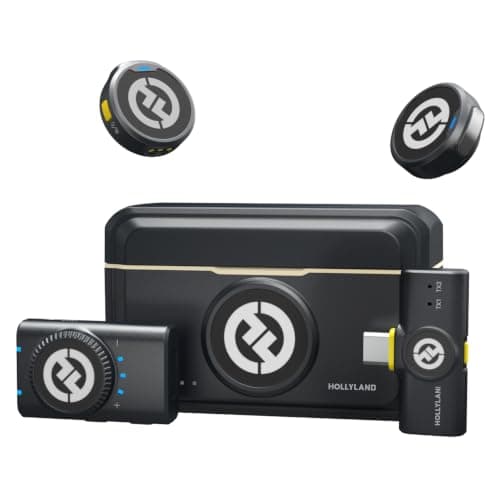
Hollyland Hollyland Lark M2 (Camera Kit)

Our #1 pick

Hollyland Lark M2 (Camera Kit)

The value wireless kit. Two of the smallest clip-on transmitters going, plus both a camera receiver and a USB-C receiver in one box, for well under the flagship money.

Don't buy it if you want a 32-bit-float safety net or the deepest first-party lavalier and mount range. The DJI Mic 3 handles levels for you, and the Rode systems have the widest accessory catalog.

#ad · Live Amazon price as of November 21, 2026. No verified price → we show none.

The closest alternative to a DJI Mic is the Hollyland Lark M2: the same two-transmitter, clip-on-and-forget shape, transmitters of roughly 9g, and a camera receiver plus a USB-C receiver in the camera kit — usually for less money. That is the pick if what drew you to DJI was the size and the simplicity. If you want to go the other way and buy more safety than DJI offers, the Rode Wireless GO III records 32-bit float audio onboard each transmitter, which makes a clipped take recoverable. Our budget pick is the Movo VXR10, a wired shotgun that costs a fraction of any wireless kit and still beats every built-in microphone. Live prices below, with the date they were read.

First, what the DJI Mic line is actually known for, because an alternative only makes sense against a fair description of the original. DJI publishes up to about 400m of range in open line of sight on both the Mic Mini and the Mic 3, transmitters of around 10g on the Mini and about 16g with the magnet on the Mic 3, two-level background-sound reduction, and — on the Mic 3 — dual-file 32-bit float internal recording with gain that sets itself. The kits ship as two transmitters, a receiver and, on most configurations, a charging case. That combination of very small transmitters, long published range and an almost foolproof pairing routine is a genuinely strong package, and it is why the DJI kits sit at or near the top of our wireless microphone ranking.

So why look elsewhere? Three honest reasons come up. Price, if a two-transmitter DJI kit is above your budget. Availability — DJI's US retail presence has been uncertain at times, which is worth knowing before you plan a shoot around a kit you may not be able to replace. And feature fit: if you need an external lavalier on a locking connector, or the deepest recording safety net, Rode answers that better than DJI does. None of that makes a DJI Mic a bad microphone. It is a very good one; it is just not the only one.

The short answer

Quick picks

#ProductBest forScorePrice
01
Hollyland Hollyland Lark M2 (Camera Kit)
Hollyland Lark M2 (Camera Kit)

The value wireless kit. Two of the smallest clip-on transmitters going, plus both a camera receiver and a USB-C receiver in one box, for well under the flagship money.

The best value wireless lav
8.6
$70.40Amazon
02
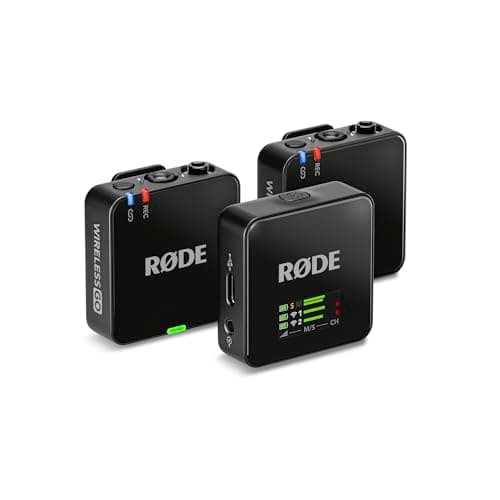
Rode Rode Wireless GO III
Rode Wireless GO III

The audio-quality step up. Two transmitters with 32-bit float onboard recording and automatic level control — the most bulletproof recording of the whole GO line.

The best all-round creator mic
8.8
$197.99Amazon
03
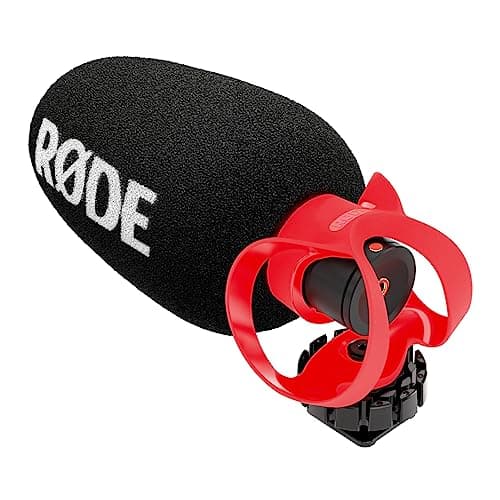
Rode Rode VideoMicro II
Rode VideoMicro II

The tiniest real shotgun here. A pocketable cardioid that runs on plug-in power, ships with a foam and a furry windshield, and turns a phone or camera into a proper directional mic.

The smallest grab-and-go shotgun
7.8
$77.56Amazon
04
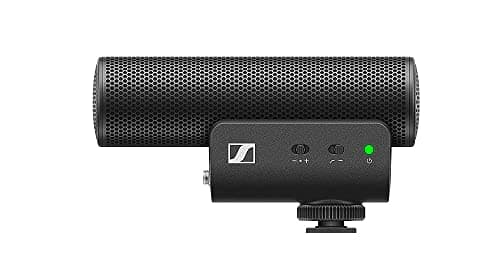
Sennheiser MKE 400 Shotgun Mic
MKE 400 Shotgun Mic

A compact, no-fuss on-camera shotgun with a built-in windscreen and shock mount, plus a headphone jack so you can actually hear what you're recording.

Fuss-free run-and-gun on-camera sound
8.0
$170.99Amazon
05
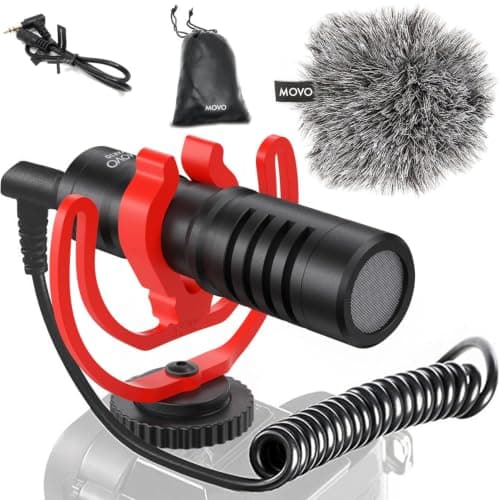
Movo Movo VXR10
Movo VXR10

The honest budget starter. A universal 3.5mm shotgun that plugs into a camera or a phone and beats built-in mics by a mile for very little money.

The cheapest real upgrade over a built-in mic
7.4
$28.77Amazon

#ad · Live prices from the Amazon Product API, as of November 21, 2026. Where we have no verified live price, we show none — we would rather leave a gap than print a number that has rotted.

In detail

The picks, in full

01
Hollyland Hollyland Lark M2 (Camera Kit)

The best value wireless lav

Hollyland Lark M2 (Camera Kit)

2 transmitters + camera & USB-C receivers48kHz / 24-bit audioUp to ~300m range (line of sight)~9g magnetic-clip transmitters
8.6/10

The value wireless kit. Two of the smallest clip-on transmitters going, plus both a camera receiver and a USB-C receiver in one box, for well under the flagship money.

Sound quality
8
Ease of use
9
Build
7
Versatility
9
Value
10

Pros

  • The transmitters are among the tiniest and lightest here, so they hide on a collar and clip on magnetically in a second
  • The camera kit includes both a camera receiver and a USB-C receiver, so one purchase covers your mirrorless body and a phone or laptop
  • Long battery life and effective background-sound reduction that punch well above the price

Cons

  • There is no 32-bit float, so you still set sensible levels before you roll rather than rescuing them later
  • The companion app and accessory range are less mature than DJI's or Rode's

Don't buy this if…

…you want a 32-bit-float safety net or the deepest first-party lavalier and mount range. The DJI Mic 3 handles levels for you, and the Rode systems have the widest accessory catalog.

$70.40View on Amazon

$88.0020% off

Price as of November 21, 2026. Prices change — Amazon's is the one that counts.

#ad · we may earn a commission from this link to Hollyland Lark M2 (Camera Kit)

02
Rode Rode Wireless GO III

The best all-round creator mic

Rode Wireless GO III

2 transmitters + 1 receiver32-bit float onboard recordingGainAssist automatic level controlLarge internal recording backup per TX
8.8/10

The audio-quality step up. Two transmitters with 32-bit float onboard recording and automatic level control — the most bulletproof recording of the whole GO line.

Sound quality
10
Ease of use
9
Build
9
Versatility
9
Value
7

Pros

  • 32-bit float onboard recording makes clipped or too-quiet audio recoverable in the edit — a genuine safety net
  • GainAssist rides your levels automatically, so beginners rarely clip a loud moment or lose a quiet one
  • Hours of internal backup recording on each transmitter means a dropout never costs you the take

Cons

  • Pricier than the value picks, and the standard box does not include a charging case
  • The transmitters are a touch larger than the tiny Hollyland and DJI Mic Mini clips

Don't buy this if…

…you want the smallest, cheapest kit or a charging case in the box. The DJI Mic Mini and Hollyland Lark M2 pack smaller for less, and the DJI Mic 3 bundles a charging case.

$197.99View on Amazon

Price as of November 21, 2026. Prices change — Amazon's is the one that counts.

#ad · we may earn a commission from this link to Rode Wireless GO III

03
Rode Rode VideoMicro II

The smallest grab-and-go shotgun

Rode VideoMicro II

Cardioid shotgun3.5mm + USB-C outputNo battery (plug-in power)Tiny and light
7.8/10

The tiniest real shotgun here. A pocketable cardioid that runs on plug-in power, ships with a foam and a furry windshield, and turns a phone or camera into a proper directional mic.

Sound quality
7
Handling & noise rejection
7
Ease of use
9
Build
7
Value
9

Pros

  • Small and light enough to live in a jacket pocket or sit on a compact camera without unbalancing it
  • Comes with a foam and a furry windshield plus a shock mount, so it is ready for outdoors out of the box
  • No battery to manage — it powers itself from the camera or phone and works over 3.5mm or USB-C

Cons

  • A cardioid pattern is less directional than the supercardioid shotguns above, so it rejects the room a little less
  • No onboard gain, safety channel or controls — it is a plug-in-and-go mic, not a feature set

Don't buy this if…

…you need tighter directionality or a fuller, broadcast-style sound. The VideoMic GO II and NTG reach further and isolate the front better; the Micro II trades some of that for pure pocketability.

$77.56View on Amazon

$89.0013% off

Price as of November 21, 2026. Prices change — Amazon's is the one that counts.

#ad · we may earn a commission from this link to Rode VideoMicro II

04
Sennheiser MKE 400 Shotgun Mic

Fuss-free run-and-gun on-camera sound

MKE 400 Shotgun Mic

Supercardioid shotgunBuilt-in windscreen + shock mount3.5mm headphone monitor out3-step sensitivity + low-cut filter
8.0/10

A compact, no-fuss on-camera shotgun with a built-in windscreen and shock mount, plus a headphone jack so you can actually hear what you're recording.

Sound quality
9
Ease of use
9
Build
8
Versatility
7
Value
7

Pros

  • The integrated shock mount and foam windscreen mean it's ready straight out of the bag — nothing to assemble or lose
  • A headphone output on the mic itself lets you monitor levels even on cameras that don't offer it
  • Three-step sensitivity and a low-cut switch cover most run-and-gun situations without diving into camera menus

Cons

  • Tighter pickup than the VideoMic NTG, so it isolates the front well but has a little less reach and low-end body
  • Powered by a AAA battery rather than USB charging, so you keep a spare in the bag

Don't buy this if…

…you want the absolute best reach and a USB mode for desk recording too. The Rode VideoMic NTG edges it on raw sound and doubles as a computer mic; the MKE 400 is about simplicity, not versatility.

$170.99View on Amazon

$198.8514% off

Price as of November 21, 2026. Prices change — Amazon's is the one that counts.

#ad · we may earn a commission from this link to MKE 400 Shotgun Mic

05
Movo Movo VXR10

The cheapest real upgrade over a built-in mic

Movo VXR10

Cardioid shotgun3.5mm TRS + TRRS cablesWorks on cameras and phonesFoam + furry windscreens included
7.4/10

The honest budget starter. A universal 3.5mm shotgun that plugs into a camera or a phone and beats built-in mics by a mile for very little money.

Sound quality
6
Ease of use
8
Build
6
Versatility
7
Value
10

Pros

  • A genuine step up from any built-in camera or phone mic for the least money of anything here
  • Comes with both TRS (camera) and TRRS (phone) cables plus a foam and a furry windscreen — no extras to buy
  • No batteries and no charging: it draws what little power it needs from the cable, so it's always ready

Cons

  • It's a passive analog mic, so noisy camera preamps can add hiss — it won't match the clarity of the powered shotguns above
  • Basic shock isolation means handling rumble and wind are more of a problem than on the pricier picks

Don't buy this if…

…audio is central to your videos and you can stretch the budget. It's a great first mic, but the MKE 400 or Rode VideoMic NTG are cleaner, quieter and will last you far longer as you grow.

$28.77View on Amazon

$35.9620% off

Price as of November 21, 2026. Prices change — Amazon's is the one that counts.

#ad · we may earn a commission from this link to Movo VXR10

How each alternative matches up

AlternativeMatches the DJI onBeats the DJI onGives up
Hollyland Lark M2Two clip-on transmitters, about 9g each, charging casePrice; a USB-C receiver in the box alongside the camera onePublished range (about 300m vs about 400m)
Rode Wireless GO IIITwo transmitters and a receiver32-bit float onboard recording per transmitter; locking lavalier inputSize — the transmitters are far bigger and heavier
Rode VideoMicro IINothing — different shape of solutionNothing to pair, charge or lose; 3.5mm and USB-C outThe mic is on the camera, not on the speaker
Sennheiser MKE 400Nothing — different shape of solutionHeadphone monitoring on the mic itself; built-in shock mountOn-camera placement; no second channel
Movo VXR10Nothing — different shape of solutionPrice, by a wide marginEverything except being better than a built-in mic

If size and simplicity are what you wanted: the Lark M2

The Lark M2 is the one direct substitute on this list — the same product idea executed by a competitor. Hollyland publishes transmitters of roughly 9g, 48kHz/24-bit audio and up to about 300m of line-of-sight range, and the camera kit includes two receivers: one for a camera hot shoe and one that plugs straight into USB-C. For anyone splitting footage between a camera and a phone, that second receiver is the single most useful difference in this whole comparison. The two are set against each other directly in DJI Mic Mini vs Hollyland Lark M2.

If you want more safety than DJI gives you: the Wireless GO III

Rode's pitch is recovery rather than convenience. Each transmitter records 32-bit float internally, so a voice that spikes into distortion on the radio link can be pulled back from the onboard file, and a dropout does not cost you the take. It also takes an external lavalier on a locking 3.5mm connector, which is how you hide a microphone under clothing. The price is physical: the transmitters are substantially larger than either DJI's or Hollyland's, which matters when the thing is clipped to a shirt for an hour. The full head-to-head against the current DJI flagship is in DJI Mic 3 vs Rode Wireless GO III.

If you would rather have nothing to charge: the two shotguns

A wired on-camera shotgun is not a like-for-like swap — it cannot put the microphone on the speaker, and that is the whole point of a wireless kit. But it removes every failure mode wireless adds: no pairing, no batteries, no interference, no transmitter left switched off in a bag. The Rode VideoMicro II runs on plug-in power and outputs over 3.5mm or USB-C; the Sennheiser MKE 400 adds a headphone socket on the microphone itself so you can hear what is being recorded, plus a built-in shock mount and windscreen. For a tripod-mounted channel or a tight vlog, either is the lower-risk choice. Ranked in full in best shotgun microphones.

If the budget is the binding constraint: the Movo

At well under $40 the Movo VXR10 is not competing with a DJI kit on capability and we are not going to pretend otherwise. What it does is clear the bar that matters most: it is a directional microphone off the camera's own body, with TRS and TRRS cables so it works on a camera or a phone, and it needs no power at all. If the choice is between this and the built-in mic, buy this. Then upgrade when the budget allows — the under-$100 wireless shortlist is in best camera mic under $100.

The check to make before you order any of them

Two things. First, your camera needs a 3.5mm microphone input; most mirrorless bodies have one, a few cheap ones do not, and without it no external microphone on this page is possible. Second, read the kit contents on the listing rather than the product name — every brand here sells single-transmitter, dual-transmitter and phone-only configurations from near-identical product pages, and the cheapest listing is usually the one with half the kit.
How we picked

We do not run a testing lab

We compiled the manufacturers' published specifications and manuals, did the cost math, and scored each product against a published rubric. The scores are judgments from that documented research — they are notmeasurements we took, because we do not have a lab and we are not going to pretend we do. Where a number came from someone else's testing, we name and link them in Sources.

Questions

Frequently asked

What is the best alternative to the DJI Mic?
The Hollyland Lark M2. It is the closest thing to the same product from another brand: two clip-on transmitters of about 9g, a charging case, and a camera kit that includes both a hot-shoe receiver and a USB-C receiver. It usually costs less than the equivalent DJI kit and its published range is shorter — about 300m against DJI's roughly 400m, both in open line of sight, which is far more than any normal shoot needs.
Is the Hollyland Lark M2 as good as the DJI Mic Mini?
On the things most people buy these kits for — transmitter size, two-person coverage, easy pairing, charging case — they are closely matched, and the Lark M2 adds a USB-C receiver the Mic Mini kit does not include. DJI publishes the longer range. Neither records 32-bit float. We go through both specification sheets line by line in DJI Mic Mini vs Hollyland Lark M2.
Why would I not just buy the DJI Mic?
Three reasons come up honestly. Budget, if a two-transmitter kit is above what you want to spend. Availability, because DJI's US retail presence has been uncertain at times and that is worth knowing before you build a workflow around it. And specific features DJI does not offer at a given price — chiefly a locking input for an external lavalier, and 32-bit float recording on the cheaper kits. If none of those apply to you, a DJI Mic is a very good microphone and we rank it highly.
Is there a cheap alternative to the DJI Mic?
If you mean cheap and wireless, the single-transmitter versions of the Hollyland and DJI kits are the floor, and we would rather you bought a two-transmitter kit than saved $30 on a mic that cannot cover an interview. If you mean cheap full stop, a wired shotgun is the answer: the Movo VXR10 costs a fraction of any wireless kit. The whole sub-$100 field is in best camera mic under $100.
Do any of these work with a phone as well as a camera?
The Hollyland Lark M2 camera kit includes a USB-C receiver as well as a hot-shoe receiver, so the same transmitters work on a phone with nothing extra to buy. The Rode VideoMicro II has a USB-C output alongside its 3.5mm. The Movo ships with a TRRS cable for phone use. The Rode Wireless GO III and the Sennheiser MKE 400 need an adapter for a modern phone.
Will I hear the difference between these microphones?
Between a built-in microphone and any of them: immediately and obviously. Between the two wireless kits: barely, in ordinary conditions. Between the wireless kits and the wired shotguns: it depends entirely on how far the camera is from the voice, which is the variable that dominates everything else. That is why we rank by placement first and sound character second — see lavalier vs shotgun mic.

Keep reading

Receipts

Sources

We do not run a testing lab, and we do not pretend to. Specs come from manufacturer sheets and manuals; where a figure came from someone else's measurement, we name and link them. Where we could not verify something, we say so on the page rather than quietly leaving it out. Read our full method.