Skip to content
Focal & Frame

Cameras · Mirrorless Cameras

The Best Cameras for Product Photography

The honest version: any modern body will do this well, and the money belongs in the light and a lens that focuses close. Four bodies ranked on the things that actually differ for tabletop work.

By Stephen V.Updated How we research
#ad

We earn a commission when you buy through our Amazon links, at no extra cost to you. It never decides our rankings — we say so when the cheaper pick is the better buy. How this works.

For most people shooting products, the Sony ZV-E10 is the best buy — not because it is the best camera here, but because it is the cheapest body that does everything product photography needs, and the money you save buys the two things that actually change your photos: a soft light and a lens that focuses close. If in-camera color matters to you more than price, the Fujifilm X-M5 is the pick. If you also shoot people and want a viewfinder, the Sony a6400.

We should be straight about something a camera roundup has an incentive not to say: product photography is the genre where the body matters least. Your subject does not move, so autofocus speed is irrelevant. You shoot from a tripod, so stabilization is irrelevant. You control the light, so high-ISO performance is irrelevant. Every camera on this page — and several we did not rank — produces files that are far better than the limiting factor, which is almost always the quality of the light and whether the lens can get close enough.

So this ranking is built on the short list of things that genuinely differ for tabletop work: whether the screen flips out far enough to compose an overhead flat-lay without lying on the desk, how many megapixels you have to crop into, how faithful the color is straight out of camera, and — the big one — whether the lens mount has an affordable lens that focuses close enough to fill the frame with a small object.

What matters, in order

SpecSony ZV-E10Fujifilm X-M5Sony a6400Sony a6700
Sensor24MP APS-C26MP APS-C24MP APS-C26MP APS-C
ScreenFully articulatingSide-hinged articulatingTilting onlyFully articulating
ViewfinderNoNoYesYes
In-body stabilizationNoNoNoYes
In-camera colorSony profilesFilm simulationsSony profilesSony profiles
MountSony EFujifilm XSony ESony E
Cheapest true 1:1 macro in the mountSony E 30mm F3.5 MacroNo native budget 1:1 macroSony E 30mm F3.5 MacroSony E 30mm F3.5 Macro

All specifications above are manufacturer-published and linked in Sources; the lens prices are live from our price layer on the macro lens page. We have not tested these cameras in a lab, because we do not have one — see how we research and score.

The short answer

Quick picks

#ProductBest forScorePrice
01
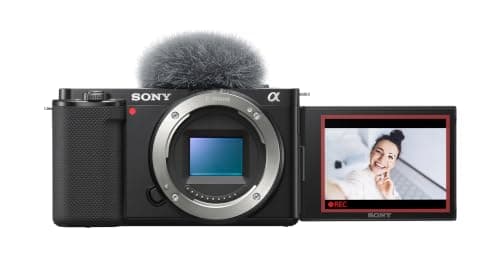
Sony Sony ZV-E10
Sony ZV-E10

The safe first camera if you shoot mostly video — flip-out screen, clean autofocus, and the cheapest lens system to grow into.

Video-first beginners
8.0
$748.00Amazon
02
Fujifilm Fujifilm X-M5
Fujifilm X-M5

A tiny, cheap creator camera with Fujifilm's colors and surprisingly serious video for the money.

Style-conscious budget creators
7.8
$899.00Amazon
03
Sony Sony a6400
Sony a6400

Still one of the best autofocus systems you can buy at this price, in a compact body with a proper viewfinder.

Stills shooters who want a viewfinder
7.8
$811.48Amazon
04
Sony Sony a6700
Sony a6700

Sony's flagship APS-C body finally adds in-body stabilization and AI-driven autofocus to the crop line — the a6400 grown up, at a step-up price.

The step-up APS-C Sony
8.6
$1,498.00Amazon

#ad · Live prices from the Amazon Product API, as of October 10, 2026. Where we have no verified live price, we show none — we would rather leave a gap than print a number that has rotted.

In detail

The picks, in full

01
Sony Sony ZV-E10

Video-first beginners

Sony ZV-E10

24MP APS-C4K30 (with crop)Fully articulating screenSony E-mount
8.0/10

The safe first camera if you shoot mostly video — flip-out screen, clean autofocus, and the cheapest lens system to grow into.

Image quality
8
Autofocus
9
Video
7
Handling
7
Value
9

Pros

  • Fully articulating screen and a dedicated background-defocus button make it genuinely built for talking to the lens
  • Sony's real-time eye autofocus is the best in this price class and holds your face while you move
  • The E-mount has more affordable third-party lenses (Sigma, Viltrox, Tamron) than any rival system

Cons

  • No electronic viewfinder, so bright-daylight stills are a squint
  • 4K is taken from a cropped, downsampled region and rolling shutter (jello on fast pans) is noticeable

Don't buy this if…

…you shoot a lot of stills outdoors or want to learn with a viewfinder. The missing EVF is the one thing you can't add later — the Canon R50 gives you one for similar money.

$748.00View on Amazon

$799.996% off

Price as of October 10, 2026. Prices change — Amazon's is the one that counts.

#ad · we may earn a commission from this link to Sony ZV-E10

02
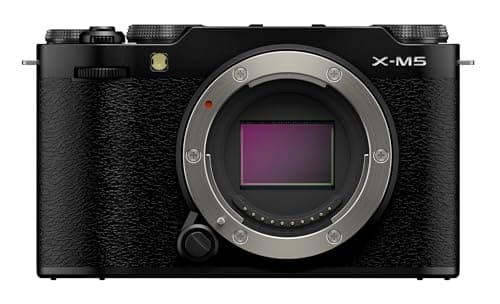
Fujifilm Fujifilm X-M5

Style-conscious budget creators

Fujifilm X-M5

26MP APS-C6K open-gate / 4KFilm simulations dialNo IBIS / no EVF
7.8/10

A tiny, cheap creator camera with Fujifilm's colors and surprisingly serious video for the money.

Image quality
8
Autofocus
8
Video
8
Handling
7
Value
8

Pros

  • Fujifilm's film simulations plus a dedicated dial make lovely color effortless — no editing required
  • Punches above its price on video, including 6K open-gate capture and a proper vlogging flip screen
  • Genuinely pocketable and one of the best-value routes into the Fujifilm X system

Cons

  • No in-body stabilization and no viewfinder
  • Small grip and battery — it's a camera you accessorize for a long shoot

Don't buy this if…

…you need stabilized handheld video or a viewfinder. The X-M5 trims both to hit its size and price; the X-S20 adds IBIS and an EVF if you want them.

$899.00View on Amazon

Price as of October 10, 2026. Prices change — Amazon's is the one that counts.

#ad · we may earn a commission from this link to Fujifilm X-M5

03
Sony Sony a6400

Stills shooters who want a viewfinder

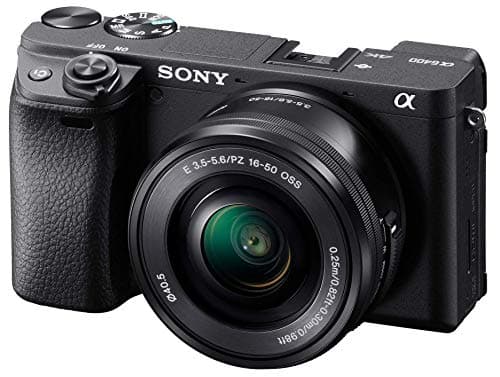
Sony a6400

24MP APS-C4K30Real-time tracking AFEVF, tilting screen
7.8/10

Still one of the best autofocus systems you can buy at this price, in a compact body with a proper viewfinder.

Image quality
8
Autofocus
9
Video
7
Handling
7
Value
8

Pros

  • Class-leading real-time tracking and eye AF that still holds up years after release
  • Compact, pocketable-with-a-prime body with a built-in electronic viewfinder
  • Access to the entire, enormous Sony E-mount lens catalog, first- and third-party

Cons

  • No in-body stabilization, and the screen tilts rather than fully articulating (it flips up, not out to the side)
  • The menu system is dated and dense compared with Canon's and Nikon's

Don't buy this if…

…you're vlogging yourself. The screen tilts up and is blocked by a tripod or top-mounted mic — the ZV-E10's fully articulating screen is the better tool for that job.

$811.48View on Amazon

$999.9919% off

Price as of October 10, 2026. Prices change — Amazon's is the one that counts.

#ad · we may earn a commission from this link to Sony a6400

04
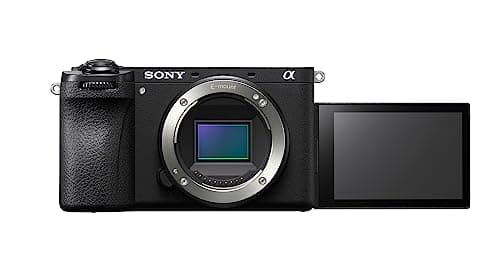
Sony Sony a6700

The step-up APS-C Sony

Sony a6700

26MP APS-C sensorIn-body 5-axis stabilization4K60 oversampled videoAI-based subject autofocusSony E mount (APS-C)
8.6/10

Sony's flagship APS-C body finally adds in-body stabilization and AI-driven autofocus to the crop line — the a6400 grown up, at a step-up price.

Image quality
9
Autofocus
10
Video
9
Handling
8
Value
7

Pros

  • AI-based subject recognition tracks people, animals and birds with a tenacity that outclasses every cheaper body in this class
  • In-body 5-axis stabilization steadies handheld stills and smooths walking video — the piece the a6400 never had
  • A fully articulating screen and a modernized menu fix the two things owners complained about most on older Sony APS-C bodies

Cons

  • Costs meaningfully more than the a6400 and the entry-level bodies — this is the premium APS-C option, not a budget pick
  • The deep, enthusiast-grade feature set is more camera than an absolute first-timer needs on day one

Don't buy this if…

…you are a first-time buyer on a tight budget, or you shoot mostly stills in good light. Much of what you pay for — IBIS, 4K60, AI tracking — goes untouched at that level, and the a6400 covers the basics for far less.

$1,498.00View on Amazon

Price as of October 10, 2026. Prices change — Amazon's is the one that counts.

#ad · we may earn a commission from this link to Sony a6700

Why the screen is the spec we weighted most

Product photography involves a surprising amount of shooting downwards. A flat-lay, an overhead of a desk setup, a top-down of packaging — all of them mean the camera is pointing at the table and your eye cannot get behind it. A fully articulating screen swings out and rotates so you can read it comfortably from the side while the camera points straight down. A tilt-only screen tilts up and down but does not rotate, which works for waist-level shooting and is awkward overhead. This is the single most practical difference between the bodies on this page, and it is why the a6400 — a better camera than the ZV-E10 in most other respects — ranks third here.

Megapixels: enough is enough, but more is free headroom

24 megapixels is already more than any web listing, marketplace image or social post will ever use. The reason to care at all is cropping: a product shot you can crop into hard and still deliver at full size gives you room to recompose after the fact, which matters when you are shooting dozens of items against the same background. The 26MP bodies have a marginal edge. It is a tiebreaker, not a reason to spend more.

Color: the one place Fujifilm earns its ranking

If you are photographing things you intend to sell, color fidelity has a commercial consequence — a buyer who receives a mug in a different green from the listing asks for a refund. All of these cameras can be color-managed properly with a raw workflow and a reference card. What Fujifilm adds is film simulations: consistent, well-regarded color profiles applied in camera, so a batch of JPEGs comes out looking coherent without editing each one. For a seller photographing a hundred items, consistent straight-out-of-camera color is a genuine time saving, and it is the reason the X-M5 ranks second above a cheaper Sony.

The two things worth more than the body

A big soft light. This is the entire difference between an amateur product photo and a professional one, and it is a geometry problem rather than a budget one: the bigger the light source is relative to the product, the softer the shadows and the longer the glossy highlights down its side. A single light in a softbox plus a sheet of white card as a bounce will transform your results more than any camera upgrade. Our best lights for product photography ranking covers exactly that, with live prices.

A lens that focuses close.This is where the mount choice bites. A standard kit zoom typically cannot focus closer than about 25-30cm, which means a small object — a ring, a watch, a cosmetic sample — simply cannot fill the frame. A macro lens that reaches 1:1 reproduction can. Sony's E mount has the cheapest true 1:1 macro of any crop system, which is the single strongest argument for the three Sony bodies on this page. Fujifilm X does not have an equally cheap native 1:1 option, which is the one real cost of the X-M5 recommendation. The options and current prices are in our macro lens guide.

A tripod, and then a polarizer

Because your subject is stationary you can use a slow shutter speed, which means you can shoot at f/8 or f/11 for front-to-back sharpness at base ISO — the cleanest files your camera is capable of. That requires a tripod, and a cheap one is fine for tabletop work; see best tripods. After that, if your products are glossy or packaged in plastic, a circular polarizer removes the reflections that no lighting technique can, and that is not recoverable in editing.

Bodies we considered and did not rank

Canon EOS R10 and R50. Both are good cameras and the R10 is the fastest body in this price class — but speed is the one thing product photography does not need, and the RF-S mount has no cheap true 1:1 macro, which is the lens that matters most here. The R50 also shows no buyable offer in our price data as we write, and we do not rank picks you cannot buy.

Fujifilm X-S20. Arguably the best-handling camera of the bunch and the one with in-body stabilization, but the only listing available is a lens kit at a price that is poor value against everything else here. Read the X-S20 review if the Fujifilm color argument appeals and your budget is larger.

Nikon Z50 II.Excellent autofocus and a lovely grip, and the Nikon Z MC 50mm macro is a genuinely good lens — but the body currently lists as a two-lens kit at a price well above the alternatives, and the macro costs considerably more than Sony's. If you already own Nikon Z glass, it is a sensible route; as a fresh purchase for this job, it is not the value pick. See our Z50 II review.
How we picked

We do not run a testing lab

We compiled the manufacturers' published specifications and manuals, did the cost math, and scored each product against a published rubric. The scores are judgments from that documented research — they are notmeasurements we took, because we do not have a lab and we are not going to pretend we do. Where a number came from someone else's testing, we name and link them in Sources.

Questions

Frequently asked

What is the best camera for product photography?
For most people the Sony ZV-E10 — 24MP, a fully articulating screen for overhead flat-lays, and the cheapest true 1:1 macro lens of any crop system behind it. The Fujifilm X-M5 is the pick if consistent in-camera color matters more than price. Honestly, though, the body is the least important part: a soft light and a close-focusing lens change your photos far more.
Do I need an expensive camera for product photography?
No, and this is the genre where that is most clearly true. Your subject does not move, so autofocus speed does not matter; you shoot from a tripod, so stabilization does not matter; you control the light, so high-ISO performance does not matter. Any modern 24MP body plus a soft light and a close-focusing lens will out-shoot an expensive body used badly lit.
Is a macro lens necessary for product photos?
It depends entirely on how small your products are. A kit zoom typically cannot focus closer than roughly 25-30cm, which is fine for a shoe or a bag and useless for a ring or a cosmetic sample. If your products are small enough that you want them to fill the frame, a 1:1 macro is the purchase that makes it possible - no amount of cropping substitutes for it.
Do I need a full-frame camera for product photography?
No. If anything, a crop sensor is mildly helpful here: at the same aperture and framing it gives you slightly more depth of field, and front-to-back sharpness is usually what you want in a product shot rather than a blurred background. Every pick on this page is APS-C, deliberately.
Why does the screen matter so much for product photography?
Because a lot of product work is shot downwards - flat-lays, overheads of packaging, top-downs of a desk - and your eye cannot get behind a camera pointing at a table. A fully articulating screen rotates so you can read it from the side while the camera points straight down. A tilt-only screen does not, which is the main reason the Sony a6400 ranks third here despite being a strong camera.
Can I use my phone for product photography instead?
For small, simple, well-lit items a recent phone gets surprisingly close, and if your listings convert there is no reason to change. What a camera adds is a lens that can focus genuinely close, raw files with real colour latitude for matching a product's actual shade, and the ability to shoot at f/8 for front-to-back sharpness without computational guesswork.
How many megapixels do I need for product photography?
24 megapixels is already far more than any marketplace listing or social post uses. The only practical reason to want more is cropping headroom, so you can recompose after the fact without losing resolution. Treat it as a tiebreaker between bodies, never as a reason to spend more.
What should I spend my money on first?
The light, then the lens, then the body. A single light in a softbox with a white card as a bounce is the biggest single improvement available. A close-focusing lens is second, because it decides what you can photograph at all. The body is third, and the cheapest capable one is genuinely fine.

Keep reading

Receipts

Sources

We do not run a testing lab, and we do not pretend to. Specs come from manufacturer sheets and manuals; where a figure came from someone else's measurement, we name and link them. Where we could not verify something, we say so on the page rather than quietly leaving it out. Read our full method.