Skip to content
Focal & Frame

Kit · Accessories

The Best Lights for Product Photography

Product shots live or die on one thing: a big, soft, color-accurate source. Four lights ranked for tabletop work, with live prices and an honest account of what each one cannot do.

By Stephen V.Updated How we research
#ad

We earn a commission when you buy through our Amazon links, at no extra cost to you. It never decides our rankings — we say so when the cheaper pick is the better buy. How this works.

For most people photographing products at home, the Aputure amaran 100x S is the light to buy — it is a 100W bi-color COB on a universal Bowens mount, which means it is bright enough to shoot through a big softbox at a small aperture and can still match whatever the room lights are doing. If you want the same idea for less money, the Godox SL60IID is the value version of exactly that setup. If you would rather not deal with stands and modifiers at all, the Neewer two-panel kit is the fastest path to a usable tabletop setup out of a single box.

Product photography asks something different of a light than filming yourself does. A talking head needs flattering, forgiving light on a face and enough output to beat a window. A product needs a source whose size and shape you can control, because the edges of the highlights on a bottle, a lens barrel or a watch face are the whole photograph. That is why this page ranks differently from our best lighting for video page even though some of the same hardware appears: here the mount matters more than the raw output, because the mount is what lets you put a 60cm softbox in front of the bulb.

The second difference is that you do not need much light. A product does not blink, fidget or walk out of frame, so you can put the camera on a tripod and use a slow shutter speed. That one fact means a modest continuous light plus a tripod will out-shoot a far more expensive flash setup for the kind of work most people are actually doing — shop listings, marketplace images, review shots, portfolio stills. Spend the money on the modifier and the stand, not on watts.

At a glance

Specamaran 100x SGodox SL60IIDNeewer 13in kitAmaran MC
Type100W bi-color COB70W daylight COBTwo bi-color flat panelsPocket RGBWW
Color temperature2700-6500K5600K ±200K, fixed3200-5600K3200-6500K plus full RGB
Modifier mountBowensBowensNone (bare panel)None
Published color accuracyHigh CRI / TLCI (Aputure-published)CRI 96 / TLCI 97High CRI (Neewer-published)No published figure
PowerMainsMainsBuilt-in 4000mAh batteriesUSB-C rechargeable
Stands includedNoNoYes, twoNo
Job on a tabletopMain key through a softboxThe same, for lessInstant key and fill, no extrasEdge light, color accent, fill

Every spec in that table is a manufacturer-published figure, named and linked in Sources. We did not measure any of it — we do not run a lab, and the methodology pagesays so in those words. Prices come from the live price layer and carry their own "as of" date beside each buy button.

The short answer

Quick picks

#ProductBest forScorePrice
01
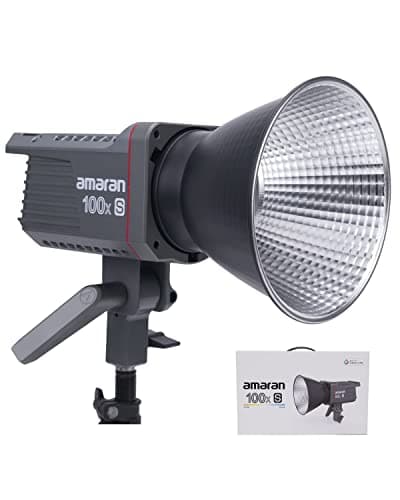
Aputure Aputure amaran 100x S
Aputure amaran 100x S

The step-up key light. More power than the Godox, warm-to-cool bicolor control, app control and built-in effects — with Aputure's excellent, true-to-life color accuracy.

The best bicolor key light
8.2
$199.00Amazon
02
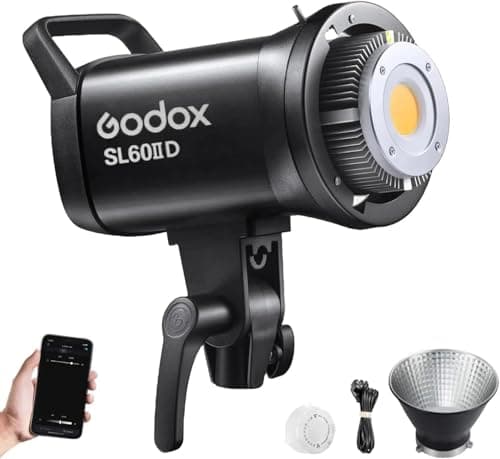
Godox Godox SL60IID
Godox SL60IID

The classic first studio light, a generation on. A 70W daylight COB on a universal Bowens mount, now with published CRI 96 color, app control and a quieter fan than the SL60W it replaced.

The best first studio key light
8.0
$139.00Amazon
03
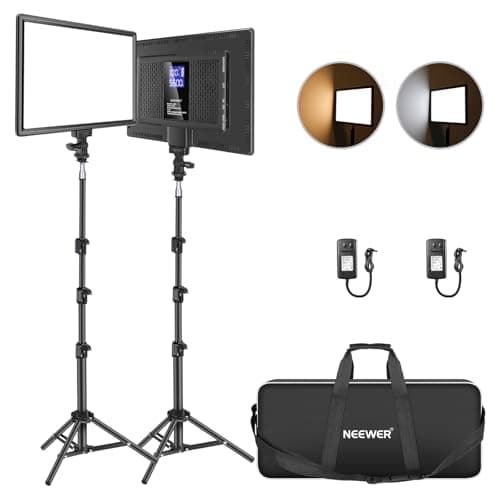
Neewer Neewer 13in LED Panel Kit (2-Pack)
Neewer 13in LED Panel Kit (2-Pack)

The do-it-all lighting kit. Two bicolor panels with stands and built-in batteries — enough to set up a key-and-fill in minutes, indoors or out, straight from one box.

The best two-light starter kit
7.8
$118.99Amazon
04
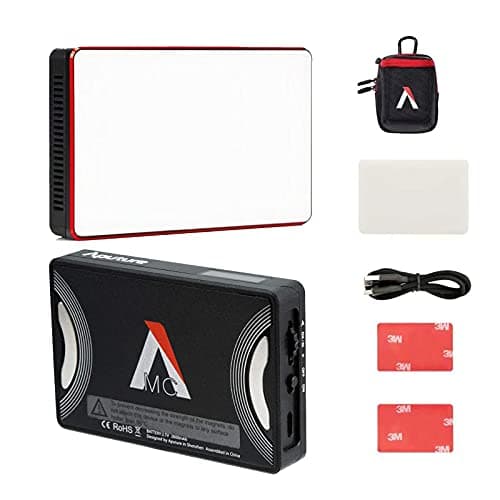
Aputure Aputure Amaran MC
Aputure Amaran MC

The pocket problem-solver. A palm-sized RGB light that adds a pop of color, a catchlight or a hair light anywhere, charges over USB-C and sticks to metal with a magnet.

The best pocket RGB accent light
8.2
$76.00Amazon

#ad · Live prices from the Amazon Product API, as of October 10, 2026. Where we have no verified live price, we show none — we would rather leave a gap than print a number that has rotted.

In detail

The picks, in full

01
Aputure Aputure amaran 100x S

The best bicolor key light

Aputure amaran 100x S

100W bicolor COB (2700-6500K)Bowens mountBluetooth app + 9 lighting effectsUltra-quiet fan, high CRI/TLCI
8.2/10

The step-up key light. More power than the Godox, warm-to-cool bicolor control, app control and built-in effects — with Aputure's excellent, true-to-life color accuracy.

Output
9
Color quality
10
Control
9
Portability
5
Value
8

Pros

  • Strong 100W output with full bicolor control, so you match warm rooms or cool daylight without gels
  • High measured color accuracy keeps skin tones natural — a real step up for interviews and portraits
  • Bluetooth app control and built-in effects (fire, TV, lightning) add production value on tap

Cons

  • Pricier than a single-color COB like the Godox
  • Still a mains-powered studio light, not something you clip on the camera

Don't buy this if…

…you only need a simple daylight key or want to spend the least. The Godox SL60IID covers the basics for less money.

$199.00View on Amazon

Price as of October 10, 2026. Prices change — Amazon's is the one that counts.

#ad · we may earn a commission from this link to Aputure amaran 100x S

02
Godox Godox SL60IID

The best first studio key light

Godox SL60IID

70W daylight COB (5600K ±200K)18,600 lux at 1mCRI 96 / TLCI 97Bowens mount + Bluetooth app control
8.0/10

The classic first studio light, a generation on. A 70W daylight COB on a universal Bowens mount, now with published CRI 96 color, app control and a quieter fan than the SL60W it replaced.

Output
9
Color quality
9
Control
9
Portability
5
Value
8

Pros

  • Real output for a home studio — far brighter than any on-camera panel, enough to light a face or a set cleanly
  • Published CRI 96 / TLCI 97 color accuracy is the clearest gain over the older SL60W, and it is the spec that keeps skin tones honest
  • The universal Bowens mount opens up cheap softboxes, umbrellas and grids, with Bluetooth app control and eight built-in effects included

Cons

  • Single-color daylight only — no warm-to-cool bicolor control and no RGB
  • Needs mains power, a stand and ideally a modifier to look its best, so it is a fixed rather than portable tool

Don't buy this if…

…you want on-camera portability or adjustable color temperature. A pocket light like the Amaran MC or Ulanzi VL49, or a bicolor panel kit, travels far better.

$139.00View on Amazon

Price as of October 10, 2026. Prices change — Amazon's is the one that counts.

#ad · we may earn a commission from this link to Godox SL60IID

03
Neewer Neewer 13in LED Panel Kit (2-Pack)

The best two-light starter kit

Neewer 13in LED Panel Kit (2-Pack)

Two bicolor panels + light stands3200-5600K, high CRIBuilt-in 4000mAh batteriesOn-panel dimming, 0-100%
7.8/10

The do-it-all lighting kit. Two bicolor panels with stands and built-in batteries — enough to set up a key-and-fill in minutes, indoors or out, straight from one box.

Output
7
Color quality
8
Control
8
Portability
7
Value
9

Pros

  • Two lights plus stands in one box makes a proper key-and-fill setup affordable from day one
  • Bicolor and fully dimmable, so you can match any room's color and brightness
  • Built-in batteries let you shoot on location away from wall power

Cons

  • Flat panels give soft, even light but less punch than a COB with a softbox
  • The plastic panels and stands are functional rather than sturdy

Don't buy this if…

…you want maximum output and modifier flexibility for a fixed studio. A COB like the Godox or Aputure with a softbox hits harder and shapes light better.

$118.99View on Amazon

$169.9930% off

Price as of October 10, 2026. Prices change — Amazon's is the one that counts.

#ad · we may earn a commission from this link to Neewer 13in LED Panel Kit (2-Pack)

04
Aputure Aputure Amaran MC

The best pocket RGB accent light

Aputure Amaran MC

Pocket RGBWW LED (3200-6500K + full color)USB-C rechargeableApp + built-in effectsMagnetic back, palm-sized
8.2/10

The pocket problem-solver. A palm-sized RGB light that adds a pop of color, a catchlight or a hair light anywhere, charges over USB-C and sticks to metal with a magnet.

Output
5
Color quality
9
Control
9
Portability
10
Value
8

Pros

  • Full RGB plus tunable white in something that genuinely fits a pocket
  • The magnetic back and app control make creative color accents and catchlights effortless
  • USB-C rechargeable, so there are no spare batteries to buy or carry

Cons

  • Low output on its own — it is an accent or fill light, not a key for a whole scene
  • You will want two or three of them for bigger setups

Don't buy this if…

…you need a main key light to properly light a face or product. Pair it with, or choose, a COB like the Godox SL60IID or Aputure 100x S.

$76.00View on Amazon

$90.0016% off

Price as of October 10, 2026. Prices change — Amazon's is the one that counts.

#ad · we may earn a commission from this link to Aputure Amaran MC

What actually makes a product photo look expensive

One idea does most of the work: the bigger the light source is relative to the product, the softer the shadows and the longer the highlights.A bare bulb is a tiny source, so it gives a hard-edged shadow and a small white dot of a highlight. Put that same bulb inside a 60cm softbox 40cm from a coffee bag and the source is now enormous relative to the bag — the shadow edge goes gradual and the highlight stretches into a long, glossy band down the side of the packaging. That band is the thing that reads as "professional", and it is a geometry problem rather than a money problem.

This is exactly why the two COB lights rank above the panels. A COB with a Bowens mount is not really a light so much as a socket — it accepts the cheap softboxes, umbrellas, grids and strip boxes the whole industry has standardized on. A flat LED panel has a fixed size and a fixed shape, and no amount of money changes that. If you expect to photograph more than one kind of object, buy the socket.

Color accuracy: the one spec worth reading

CRI (Color Rendering Index) and TLCI describe how faithfully a light reproduces color against a reference. It matters more for products than for faces, because a buyer who receives a sage-green mug that photographed as mint-green asks for a refund. The Godox SL60IID is the pick here with a published figure — CRI 96 and TLCI 97 — and that published number is the clearest single reason to prefer it over the unbranded COBs at the same price. Aputure publishes high accuracy figures for the amaran line as well. Treat any light that publishes no number at all as an unknown quantity.

Bi-color or daylight-only?

A daylight-only light like the Godox is simpler and usually cheaper per watt, and if you shoot in a blacked-out corner it is all you need. Bi-color earns its premium the moment there is another light in the room you cannot switch off — a warm kitchen bulb, a window at golden hour, an overhead you share with housemates. Being able to dial the key from 2700K to 6500K means you match the room instead of fighting it, and mixed color temperature is the single most common reason a home product shot looks subtly wrong. If you shoot on a kitchen table rather than in a dedicated room, pay for bi-color.

The cheapest setup that still looks right

You need four things and only one of them is the light: a key light, something to make it big (a softbox), something to bounce a little light back into the shadow side (a sheet of white card is free), and a tripod so you can stop down to f/8 for front-to-back sharpness. That is genuinely the whole list. A single COB in a softbox with A3 paper as a reflector will beat a two-panel kit used bare every time, because one big soft source plus a bounce is how product light works.

If your budget stretches to one purchase, buy the Godox SL60IID and a cheap Bowens softbox, and shoot on whichever tripod you already own. If you have a little more, the amaran 100x S does the same job with bi-color control and more headroom. The pocket Amaran MC is not a key light and we have not ranked it as one — it is here because a small RGB light tucked behind a bottle or raked across a textured surface adds the separation and color accent that otherwise needs a second full-size light.

Which camera and lens to put behind it

Almost any modern body is enough once the light is right, which is the honest answer and the reason we wrote a whole page about it — see best cameras for product photography. The lens matters more than the body: one that focuses close enough to fill the frame with a small object is the difference between a usable shot and a crop. Our macro lens guide covers the cheapest ways to get there. And if your product is shiny, a circular polarizer will kill reflections on glass and plastic that no amount of lighting technique can remove.
How we picked

We do not run a testing lab

We compiled the manufacturers' published specifications and manuals, did the cost math, and scored each product against a published rubric. The scores are judgments from that documented research — they are notmeasurements we took, because we do not have a lab and we are not going to pretend we do. Where a number came from someone else's testing, we name and link them in Sources.

Questions

Frequently asked

What is the best light for product photography?
For most home setups, the Aputure amaran 100x S — a 100W bi-color COB on a Bowens mount, so it takes any standard softbox and can match the color of the room lights you cannot switch off. The Godox SL60IID is the value version of the same approach, with a published CRI 96 / TLCI 97 figure. See the ranking above for who each one suits.
How many lights do I need for product photography?
One, plus something white. A single large soft source with a white card bouncing light back into the shadow side covers the overwhelming majority of product shots. A second light is for separating the product from the background or adding a controlled edge highlight - a refinement, not a requirement.
Are LED panels good enough for product photography?
They work, but they limit you. A flat panel is a fixed size and shape, so you cannot grow the source or shape it with a grid. A COB on a Bowens mount accepts cheap softboxes, strip boxes and grids, which is what lets you control the shape of the highlight on a glossy product. Buy a panel kit for convenience and portability, a COB for control.
Do I need a softbox, or is the diffuser on the light enough?
You want the softbox. The small frosted panel clipped to the front of a light barely changes its size, and size relative to the product is what softens shadows. A 60-80cm softbox for a Bowens-mount COB costs a fraction of the light itself and is the single most visible upgrade you can make to a product shot.
Can I use continuous LED lights instead of flash for products?
Yes, and for tabletop work it is usually the better choice. A product does not move, so you can put the camera on a tripod and use a long shutter speed - which removes the main advantage flash has. Continuous light also lets you see exactly what you are getting before you press the shutter, which shortens the learning curve enormously.
What color temperature should I shoot products at?
Pick one and make everything match it. 5600K (daylight) is the usual choice because it matches window light and most reference monitors. The failure mode is mixing - a 5600K key fighting a 2700K ceiling bulb gives you an orange shadow side that is painful to correct. Either switch the other lights off or use a bi-color light set to match them.
Is a ring light good for product photography?
Rarely. A ring light is designed to put flat, even, shadowless light on a face from the camera position, which is close to the opposite of what makes a product look three-dimensional. For products you want the light off to one side so the shadows describe the shape. None of our picks here is a ring light, deliberately.
What else do I need besides the light?
A softbox, a light stand, a tripod and a sheet of white card. That is genuinely the list. The stand and softbox usually cost less together than the light, the card is free, and you may already own the tripod. Budget for all four from the start rather than buying a brighter light and using it bare.

Keep reading

Receipts

Sources

We do not run a testing lab, and we do not pretend to. Specs come from manufacturer sheets and manuals; where a figure came from someone else's measurement, we name and link them. Where we could not verify something, we say so on the page rather than quietly leaving it out. Read our full method.