Skip to content
Focal & Frame

Stabilizers · Gimbals

How to Choose a Camera Gimbal

Five numbers decide this, and only one of them is on the front of the box. Weigh your rig, add headroom, then be honest about how much gimbal you will actually carry.

By Stephen V.Updated How we research
#ad

We earn a commission when you buy through our Amazon links, at no extra cost to you. It never decides our rankings — we say so when the cheaper pick is the better buy. How this works.

Choosing a gimbal is one piece of arithmetic followed by one honest question. The arithmetic: weigh your heaviest camera-and-lens combination, add roughly 30% for headroom, and only consider gimbals rated above that number. The question: how much weight will you genuinely carry for a whole day? The gimbal that stays in the cupboard stabilizes nothing, and that is the most common way this purchase goes wrong.

Everything else — app features, tracking modules, fill lights, mode names — is a tiebreaker. This page works through the five specifications that actually decide the choice, in the order they should decide it, and names the gimbal that fits each answer. Before any of it, though, read do you need a gimbal? If you film talking-head videos, tripod shots or short handheld clips, the honest answer is that you do not, and your money is better spent elsewhere. A gimbal earns its place only when you film while moving.

How this page was made: we have not tested these gimbals ourselves. Payload ratings, runtimes and weights are the manufacturers' published figures from DJI, Zhiyun and Hohem; the handling observations come from named reviewers at Digital Camera World, Fstoppers and ProVideo Coalition. All of them are linked in Sources. Our scores are judgments against our rubric, not measurements of our own, and prices are read live rather than written into the text.

1. Payload: the number everyone gets wrong

A gimbal's payload rating is the maximum weight its three motors can hold steady when the load is perfectly balanced and the gimbal is not fighting your movement. It is a ceiling, not a working load. Run a gimbal at 95% of its rating and the motors strain on every fast pan, the battery drains faster, and the footage develops the slight twitchy correction that makes gimbal work look like gimbal work.

Do this instead. Put your camera on a kitchen scale with the heaviest lens you own fitted, plus anything you leave permanently attached — a quick-release plate, a cage, a microphone, a filter. Take that number and add about 30%. That is the smallest payload rating you should buy.

Worked examples using weights we have verified elsewhere on this site: a Sony a6400 body is 403g and a Nikon Z50 II is 550g; a Tamron 17-70mm F2.8 is 525-540g depending on mount. So an a6400 with that zoom is about 930g, and a Z50 II with it is about 1,090g — before a plate, a mic or a filter. Add 30% and you are looking for roughly 1.2kg to 1.5kg of rated payload, which every gimbal on this page clears comfortably. Put a bigger body and a 70-200mm on the same scale and you are suddenly at 2.5kg before headroom, which rules out every Mini immediately.

The rough tiers, using the ratings the makers publish: ~2kg (DJI RS 4 Mini, DJI RS 3 Mini, Zhiyun Crane M3S) suits a compact mirrorless body with a prime or a small zoom. ~2.5-3kg (Hohem iSteady MT3 Pro at 2.5kg, Zhiyun Weebill 3E and DJI RS 4 at about 3kg) is the comfortable middle for a mirrorless body with a constant-aperture zoom. ~3.3kg (Zhiyun Crane 4) is for heavy rigs and accessories. Our best gimbals for DSLRs page is really a page about this one spec, because DSLRs are where payload stops being theoretical.

2. The weight of the gimbal itself — the spec that decides whether you use it

This is the number buyers underweight and owners complain about. A gimbal is carried in one hand, out in front of your body, for as long as you are filming. Published weights across the gimbals here run from about 700g (Zhiyun Crane M3S) and 795g (DJI RS 3 Mini) through 890g (DJI RS 4 Mini) and about 1,010g (Zhiyun Weebill 3E) to 1.3kg (DJI RS 4) — and that is before the camera goes on top.

The practical consequence: a 1.3kg gimbal holding a 1kg camera is 2.3kg held at arm's length. Most people can do that for a few minutes at a time. Almost nobody does it for an afternoon. If your shooting is travel, events or anything where you walk between setups, buy the lightest gimbal that clears your payload arithmetic, not the most capable one you can afford. Our best travel gimbals ranking exists for exactly this reason.

There is a real exception. If you shoot from a fixed position for long takes — interviews, product work, a studio — the extra mass of a heavier gimbal actually damps small movements and makes the footage calmer. Weight is only a penalty when you carry it.

3. Balancing: the chore that decides whether you bother

Every gimbal must be balanced before it is switched on: the camera slid forward or back, side to side and up or down until it sits still in every axis under its own weight. Done properly it takes a few minutes. Done badly, the motors spend their energy holding the camera up instead of holding it steady, and the battery and the footage both suffer.

Two features change how much of a chore this is. Automatic axis locks hold the arms in place while you mount the camera and release them when you are ready, which turns a two-handed juggling act into a one-handed one — the second-generation locks on the DJI RS 4 Mini and RS 4 are the clearest example, and they are the main reason people who gave up on an older gimbal get on with a newer one. Fine-tune knobs let you nudge a balance point by a fraction of a millimeter rather than sliding a plate by feel.

The honest counterpoint: balancing is a skill, and after a few sessions with the same camera and lens it stops being difficult on any gimbal. If you only ever use one combination, this criterion matters much less than it does if you swap lenses constantly.

4. Battery: read the rating, then halve your expectations

Published runtimes here range from about 10 hours (DJI RS 3 Mini) through about 12-13 hours (DJI RS 4, DJI RS 4 Mini, Zhiyun Crane 4) to up to 16 hours (Zhiyun Weebill 3E). Those are stationary ratings measured with a balanced load and the gimbal essentially idling. Real use — walking, following, fast reframing, an unbalanced rig — draws far more, and a badly balanced camera can halve the figure on its own.

What matters more than the headline number is how you recharge. Some gimbals, including the full-size DJI RS 4, put the battery in a detachable grip, so a spare grip swaps in and you keep shooting. Others charge over USB-C from a power bank, which works but means a cable dangling off the handle. For a one-day shoot, any of these ratings is enough. For a multi-day trip with no reliable power, the swappable grip is worth real money.

5. Ecosystem: apps, tracking and the accessories you will actually buy

This is the tiebreaker, not the decision — but it is a real tiebreaker. DJI's app, follow-focus motors, teleprompter and accessory range are the most polished in the category, and the DJI gimbals support native vertical shooting for social video. Zhiyun's software is functional and a step behind on polish, which is part of why its gimbals cost less for the same payload. Hohem's pitch is different again: the iSteady MT3 Pro builds an AI tracking camera and a fill light into the gimbal itself.

The one ecosystem feature worth paying for is subject tracking, and only if you film yourself with nobody behind the camera. A tracking module keeps you in frame as you move, which is the single thing a solo creator cannot otherwise fake. Reviewers who have tested these modules consistently find them slower to react than a human operator and prone to losing high-contrast subjects, so treat it as a useful assistant rather than a camera operator. If someone else holds the camera, skip it and put the money into a lens.

Watch for what is notin the box, too. The Weebill 3E's sling handle — the accessory that makes low-mode and long handheld takes comfortable — is sold separately, which Digital Camera World and Camera Jabber both flag. A cheaper gimbal plus the accessory it needs is not always cheaper.

What a gimbal does not fix

Two things, and both surprise people who have just bought one.

It does not remove the up-and-down bob of your footsteps. A gimbal stabilizes rotation — pan, tilt and roll — not vertical translation. Walking normally while holding one still produces a gentle bounce in the footage. The fix is technique: bend your knees slightly, roll heel to toe, and keep your arms soft. Some people buy a second gimbal looking for the fix. It is not a hardware problem.

It does not replace in-body stabilization, and in-body stabilization does not replace it. IBIS corrects small, fast shake — handshake on a static shot. A gimbal corrects large, slow movement — walking, following, orbiting. They solve different problems and work well together. Our image stabilization explainer separates all four kinds properly, and do you need a gimbal? walks through which one your footage actually needs.

The short answer

Quick picks

#ProductBest forScorePrice
01
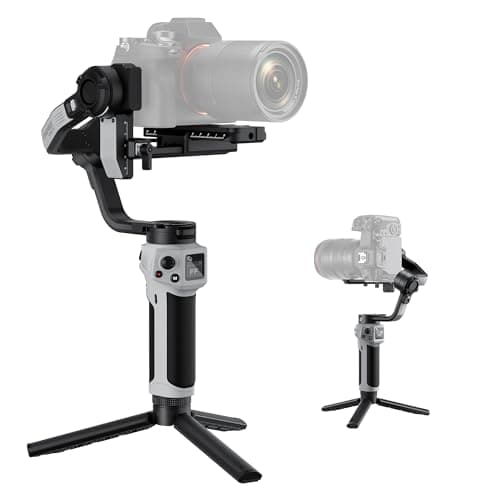
Zhiyun Zhiyun Weebill 3E
Zhiyun Weebill 3E

The value pick and the smart hedge against DJI: a bigger payload and a longer rated runtime than the RS 4 Mini, for less money.

The best value alternative to DJI
8.0
$199.00Amazon
02
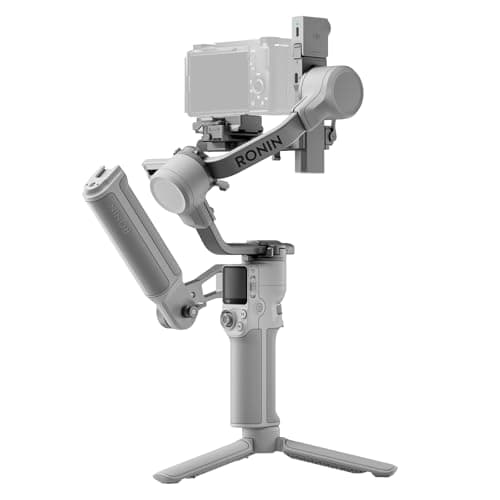
DJI DJI RS 4 Mini
DJI RS 4 Mini

The easiest gimbal to live with for a mirrorless creator: light enough to actually carry, and automatic axis locks that make balancing far less of a chore.

The best all-round beginner gimbal for mirrorless
8.2
$309.00Amazon
03
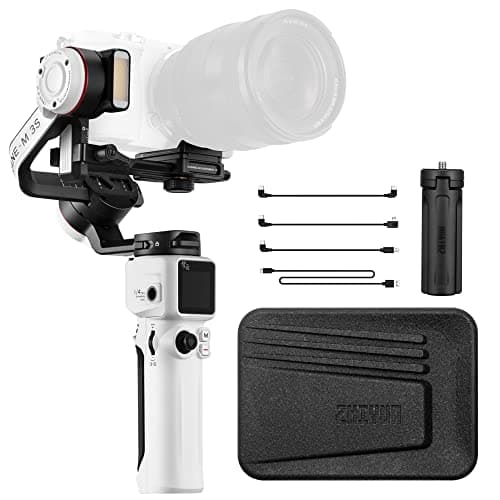
Zhiyun Zhiyun Crane M3S
Zhiyun Crane M3S

The compact all-in-one: one small gimbal that handles a light mirrorless body, a phone or an action cam, with a built-in light on board.

Compact mirrorless, phones and action cams in one
7.4
$239.00Amazon
04
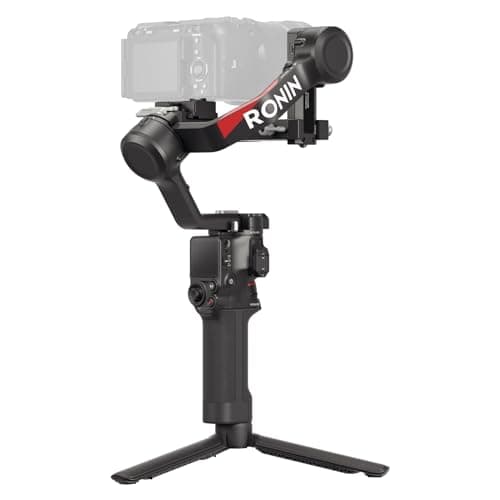
DJI DJI RS 4
DJI RS 4

The full-size DJI for heavier setups: ~3kg of payload, a swappable battery grip, and the smoothest automatic locks and app in the category.

Heavier mirrorless bodies with big zooms
8.6
$460.00Amazon
05
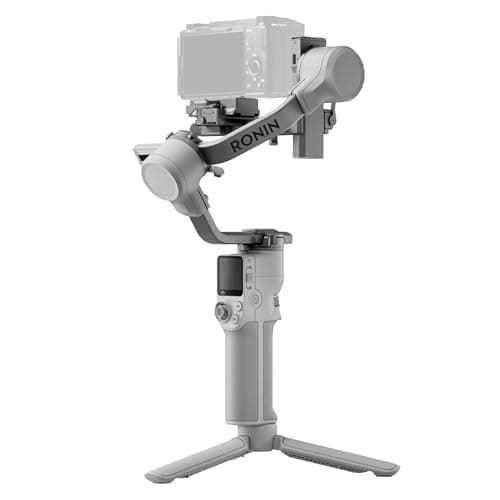
DJI DJI RS 4 Mini Combo
DJI RS 4 Mini Combo

The identical gimbal with the RS Intelligent Tracking Module and briefcase handle already in the box. Worth the premium only if you film yourself with nobody behind the camera.

The solo-creator bundle
8.0
$369.00Amazon

#ad · Live prices from the Amazon Product API, as of November 5, 2026. Where we have no verified live price, we show none — we would rather leave a gap than print a number that has rotted.

In detail

The picks, in full

01
Zhiyun Zhiyun Weebill 3E

The best value alternative to DJI

Zhiyun Weebill 3E

3-axis stabilization~3kg (6.6 lb) payloadUp to 16 hr rated runtime~1kg (1,010g) gimbal
8.0/10

The value pick and the smart hedge against DJI: a bigger payload and a longer rated runtime than the RS 4 Mini, for less money.

Payload
8
Battery
7
Ease of use
8
Build
8
Value
9

Pros

  • A ~3kg payload gives most mirrorless-plus-zoom combos genuine headroom, so footage stays smooth instead of straining the motors
  • Rated for up to 16 hours per charge, longer than the RS 4 Mini's 13-hour stationary rating, so a full shoot day rarely needs a top-up
  • Consistently priced below the comparable DJI, and it links reliably even if DJI's US availability wobbles

Cons

  • The sling handle that makes low-mode and long handheld takes comfortable is not in the box: Zhiyun sells its MasterMove handle separately, per Digital Camera World and Camera Jabber
  • Zhiyun's app and firmware are functional but a step behind DJI's for polish and follow-focus features

Don't buy this if…

…you specifically want DJI's app ecosystem, teleprompter and accessory range, or the lightest possible travel gimbal — the RS 4 Mini is lighter and slicker to use, just pricier and with less payload margin.

$199.00View on Amazon

Price as of November 5, 2026. Prices change — Amazon's is the one that counts.

#ad · we may earn a commission from this link to Zhiyun Weebill 3E

02
DJI DJI RS 4 Mini

The best all-round beginner gimbal for mirrorless

DJI RS 4 Mini

3-axis stabilization~2kg (4.4 lb) payloadUp to ~13 hr battery~890g (1.96 lb) body
8.2/10

The easiest gimbal to live with for a mirrorless creator: light enough to actually carry, and automatic axis locks that make balancing far less of a chore.

Payload
7
Battery
8
Ease of use
9
Build
8
Value
9

Pros

  • At roughly 890g it is one of the few gimbals you will still bother to bring on a full day of shooting, which matters more than any spec
  • The second-generation automatic axis locks fold the arms for you and speed up balancing — the single biggest reason beginners give up on gimbals
  • DJI's app, teleprompter and follow-focus ecosystem is the most polished here, so the learning curve is gentle

Cons

  • The ~2kg payload is comfortable with a small mirrorless body and a prime, but a heavier body plus a large zoom leaves little headroom
  • You pay a DJI premium over the Zhiyun equivalents for that software polish

Don't buy this if…

…your rig with its heaviest lens is close to or over 2kg — you want real headroom, not a spec you are fighting. Step up to the full-size DJI RS 4 or the Zhiyun Weebill 3E for a bigger payload margin.

$309.00View on Amazon

$369.0016% off

Price as of November 5, 2026. Prices change — Amazon's is the one that counts.

#ad · we may earn a commission from this link to DJI RS 4 Mini

03
Zhiyun Zhiyun Crane M3S

Compact mirrorless, phones and action cams in one

Zhiyun Crane M3S

3-axis stabilization~2kg (4.4 lb) payloadCompact ~0.7kg bodyBuilt-in fill light
7.4/10

The compact all-in-one: one small gimbal that handles a light mirrorless body, a phone or an action cam, with a built-in light on board.

Payload
7
Battery
7
Ease of use
8
Build
7
Value
8

Pros

  • One gimbal covers a compact mirrorless camera, a phone and an action cam, which is ideal if you shoot on several devices
  • A built-in fill light and a genuinely small, travel-friendly body make it easy to bring everywhere
  • The ~2kg payload is generous for how compact it is, so light mirrorless setups balance comfortably

Cons

  • It is optimized for compact and hybrid kit — a heavier body with a big zoom is beyond its comfortable range
  • The small frame means a shorter battery and a fiddlier balance than the full-size gimbals

Don't buy this if…

…you only ever shoot one heavier mirrorless body — a dedicated camera gimbal like the Weebill 3E or RS 4 Mini balances a bigger load with more headroom and less fuss.

$239.00View on Amazon

$299.0020% off

Price as of November 5, 2026. Prices change — Amazon's is the one that counts.

#ad · we may earn a commission from this link to Zhiyun Crane M3S

04
DJI DJI RS 4

Heavier mirrorless bodies with big zooms

DJI RS 4

3-axis stabilization~3kg (6.6 lb) payloadUp to ~12 hr battery~1.3kg (2.87 lb) body
8.6/10

The full-size DJI for heavier setups: ~3kg of payload, a swappable battery grip, and the smoothest automatic locks and app in the category.

Payload
8
Battery
9
Ease of use
9
Build
9
Value
8

Pros

  • The ~3kg payload swallows a full-frame body with a fast zoom and still leaves headroom, which is exactly what heavier rigs need
  • Second-generation automatic axis locks plus a fine-tune balancing knob make setup quick even with a demanding load
  • The battery lives in a detachable grip, so a spare grip swaps in when the first runs down, and DJI's refined app brings teleprompter, follow focus and native vertical shooting

Cons

  • At ~1.3kg it is noticeably heavier and bulkier than the Mini, so it earns its place only if you actually need the payload
  • It is the priciest pick here, and you pay for capability you may never use with a small body and a prime

Don't buy this if…

…your camera is a compact mirrorless body with light primes — you would be carrying weight and paying for payload you do not need. The RS 4 Mini or Weebill 3E is the smarter buy for lighter kit.

$460.00View on Amazon

Price as of November 5, 2026. Prices change — Amazon's is the one that counts.

#ad · we may earn a commission from this link to DJI RS 4

05
DJI DJI RS 4 Mini Combo

The solo-creator bundle

DJI RS 4 Mini Combo

Same 3-axis gimbal as the standard kit+ RS Intelligent Tracking Module (19g)+ briefcase handle~2kg (4.4 lb) payload
8.0/10

The identical gimbal with the RS Intelligent Tracking Module and briefcase handle already in the box. Worth the premium only if you film yourself with nobody behind the camera.

Payload
7
Battery
8
Ease of use
9
Build
8
Value
8

Pros

  • The magnetic tracking module clips on in a second and gives any camera subject tracking plus palm-gesture start and stop — the one thing a creator filming alone cannot otherwise fake
  • Buying the module in the box is usually cheaper than buying the gimbal and the module separately; compare the two live prices above before you choose
  • The briefcase handle makes low-angle and follow shots far less awkward than gripping the gimbal by its body

Cons

  • It is the same stabilizer — the premium buys accessories, not smoother footage
  • Reviewers who tested the module found it slower to react than a human operator and prone to losing high-contrast subjects
  • If somebody else usually holds the camera, the module sits in the case unused

Don't buy this if…

…somebody else operates the camera for you. The tracking module exists to replace an operator — if you have one, buy the standard kit and put the difference toward a lens.

$369.00View on Amazon

Price as of November 5, 2026. Prices change — Amazon's is the one that counts.

#ad · we may earn a commission from this link to DJI RS 4 Mini Combo

Which gimbal fits which answer

Run the arithmetic first, then find your row. Live prices are on the picks above — we do not write numbers into the text, because they change weekly.

If this is youBuyBecause
Mirrorless body with a constant-aperture zoom, want headroom and valueZhiyun Weebill 3EAbout 3kg of rated payload and a 16-hour rating, consistently priced below the comparable DJI
You will carry it all day and hate balancingDJI RS 4 MiniAbout 890g with second-generation automatic axis locks and DJI's app
Compact body, or you also shoot on a phone and an action camZhiyun Crane M3SAbout 700g, ~2kg payload and a built-in fill light, across three device types
Heavier body with a big zoom, or a long shoot with no powerDJI RS 4About 3kg payload and a battery in a detachable grip you can swap
You film yourself with nobody behind the cameraDJI RS 4 Mini ComboSame gimbal with the tracking module and briefcase handle already in the box

Three gimbals not picked above, and when they are right

Zhiyun Crane 4 has the biggest payload rating on this site at about 3.3kg and a built-in adjustable fill light, which is genuinely useful for run-and-gun and interviews. It is also the heaviest and most substantial thing here. Buy it if your rig is heavy and you shoot from positions rather than while walking; see best gimbals for DSLRs.

Hohem iSteady MT3 Pro puts an AI tracking camera and a CCT/RGB fill light into the gimbal itself, with a 2.5kg payload and a magnetic tracker that doubles as a remote. It is the most interesting option for a solo shooter who wants tracking without a phone clipped on — but when we last checked it listed above the RS 4 Mini, the Weebill 3E and the Crane M3S, so compare live prices before deciding.

DJI RS 3 Mini is the previous-generation Mini: under 800g, the lightest DJI here, with the same app and a ~2kg payload, but without the second-generation automatic locks. It is frequently discounted, and when the gap to the RS 4 Mini is large it is the best DJI value on the page. When the gap is small, buy the newer one — the locks are worth it. Our RS 3 Mini vs RS 4 Mini compare takes that decision apart, and best budget gimbals ranks the cheap end properly.

The order to decide in

If you take one thing from this page, take the sequence, because taking the specs in the wrong order is how people end up with the wrong gimbal.

First, decide whether you need one at all.Filming while moving: yes. Everything else: a tripod, your camera's own stabilization, or stabilization in editing will do the job for far less.

Second, weigh your rig and add 30%. This eliminates most of the market in one step and it is not negotiable — buying under your working load is the one mistake that cannot be fixed with technique.

Third, pick the lightest gimbal that clears the number. Not the most capable. The lightest. Capability you never carry is capability you never use.

Fourth, use the remaining features as tiebreakers: automatic locks if you swap lenses often, a swappable battery grip if you shoot away from power, and a tracking module only if you are the person in front of the camera. Then check Zhiyun vs DJI if two gimbals are still tied on everything that matters, because at that point the brand difference is the whole difference.
How we picked

We do not run a testing lab

We compiled the manufacturers' published specifications and manuals, did the cost math, and scored each product against a published rubric. The scores are judgments from that documented research — they are notmeasurements we took, because we do not have a lab and we are not going to pretend we do. Where a number came from someone else's testing, we name and link them in Sources.

Questions

Frequently asked

What payload gimbal do I need?
Weigh your camera with the heaviest lens you own and anything permanently attached - plate, cage, microphone, filter - then add about 30%. That total is the minimum payload rating to look for. A payload figure is the ceiling with a perfectly balanced load, not a comfortable working weight, and running near it strains the motors, drains the battery and shows up as twitchy corrections in the footage.
Is a heavier gimbal better?
Only if you shoot from a fixed position. Extra mass damps small movements, which makes long static takes calmer. If you walk between setups or film for hours at a time, weight is purely a penalty — and the gimbal you leave at home stabilizes nothing. Buy the lightest one that clears your payload arithmetic. See best travel gimbals.
Do I need a gimbal if my camera has in-body stabilization?
Usually not. IBIS handles small, fast handshake on a static shot; a gimbal handles large, slow movement — walking, following, orbiting. If you film yourself standing still, IBIS is enough. If you film while moving, IBIS will not get you there. Our do you need a gimbal? page is the longer answer, and the two work well together when you have both.
Why does my footage still bounce on a gimbal?
Because a gimbal stabilizes rotation - pan, tilt and roll - not the vertical movement of your body. The up-and-down bob of normal walking passes straight through it. The fix is technique: bend your knees slightly, roll heel to toe rather than stepping, and keep your arms loose so they act as a spring. No gimbal at any price removes this for you.
How long does a gimbal battery really last?
Less than the rating. Published runtimes here run from about 10 hours to up to 16, but those are stationary figures with a balanced load and the motors idling. Walking, fast reframing and a badly balanced camera all draw much more, and poor balance alone can halve the number. Any of these ratings covers a day's shooting; for multi-day work with no power, a gimbal with a swappable battery grip is worth the premium.
Are automatic axis locks worth paying for?
They are if you swap cameras or lenses often, because they turn mounting and balancing into a one-handed job and they are the main reason people who abandoned an older gimbal get on with a newer one. If you use one camera-and-lens combination every time, balancing becomes muscle memory within a few sessions and the locks matter much less. See RS 3 Mini vs RS 4 Mini for what that difference is worth in money.
Is subject tracking on a gimbal any good?
It is useful if you are the person in front of the camera with nobody behind it - that is the one job a solo creator cannot otherwise do. Reviewers who have tested these modules consistently report that they react more slowly than a human operator and can lose a subject against a high-contrast background. Treat it as a capable assistant, not an operator, and skip it entirely if someone else holds the camera.
Zhiyun or DJI?
DJI has the more polished app, the broader accessory range and the better axis locks; Zhiyun generally gives you more payload and runtime for the money, with software that is a step behind. Neither is a mistake. We take the brand question apart on Zhiyun vs DJI, and this site deliberately pairs every DJI pick with a Zhiyun alternative so a stock problem never leaves you without an option.
What should I buy before a gimbal?
A tripod, and probably a lens. A tripod solves every shot where the camera does not move, which is most shots, for a fraction of the price — see best tripods. And a faster lens changes every frame you shoot, where a gimbal changes only the moving ones. A gimbal is a specialist tool, and it should usually be a later purchase than it is.

Keep reading

Receipts

Sources

We do not run a testing lab, and we do not pretend to. Specs come from manufacturer sheets and manuals; where a figure came from someone else's measurement, we name and link them. Where we could not verify something, we say so on the page rather than quietly leaving it out. Read our full method.