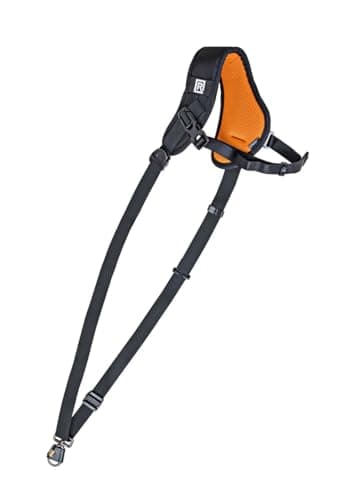
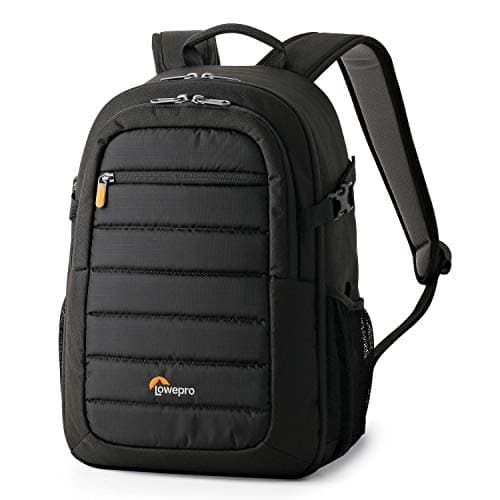
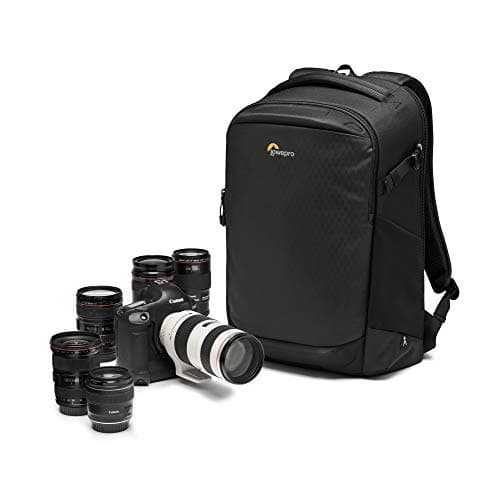
The best overall Peak Design alternative is the Lowepro Flipside BP 400 AW III. It answers the Everyday Backpack with a different idea of what a camera bag is for: the main compartment opens against your back, so the zips cannot be reached while you are wearing it, and an all-weather cover tucks into the base. That is the pick for travel, crowds and anyone who has ever worried about a bag on a train. For the strap, the BlackRapid Sport X is the alternative with a real argument — a fast-draw sling built for events. Our budget pick is the Altura Photo sling strap, the cheapest way to get the hip-carry feel at all. Every price here comes from the live price layer with its own date stamp.
Peak Design earns its reputation. We rank the Everyday Backpack 30L first in best camera bags, the Slide first in best camera straps and the Travel Tripod first in best tripods, which is three categories out of three. The company publishes real specifications, the designs genuinely solve problems — the FlexFold dividers, the quick-connect anchors, the packed diameter of the tripod — and the build quality holds up. This page is not an argument that any of that is wrong.
It is an answer to a specific question people search for: what else is there? Usually the reason is price, because Peak Design sits at the top of each of its categories. Sometimes it is a feature the design deliberately does not offer — rear-only access for security, a sling that draws from the hip, a tripod with a conventional ball head you can replace. Below, each alternative is matched to the Peak Design product it stands in for, with the strength it wins on and the thing it gives up stated plainly.
Alternative by category
| Instead of | Consider | Wins on | Gives up |
|---|
| Everyday Backpack 30L | Lowepro Flipside BP 400 AW III | Rear access security, built-in rain cover, lens capacity | Grab-and-go side access; everyday non-camera use |
| Everyday Backpack 30L | Lowepro Tahoe BP 150 | Price and weight — a daypack, not a photo pack | Capacity: a body and one or two lenses, no more |
| Slide | BlackRapid Sport X | Fast draw from the hip; locking bumper for action work | The three-way carry; it is a sling and only a sling |
| Slide / Leash | Altura Photo sling strap | Price, by a long way | Materials and hardware feel; tripod-socket mounting |
| Travel Tripod | Manfrotto Befree Advanced | Price; a conventional, proven ball head; about 8kg rated load | Packed diameter — it does not pack to a bottle profile |
The bag: two different ways of disagreeing with Peak Design
The Everyday Backpack's central idea is access — dual side openings so you can swing the bag round and pull a camera out without stopping. The Flipside inverts that completely: the main compartment opens on the panel that sits against your back, which means nobody can open it while you are wearing it and nothing can fall out if a zip fails. You lose the quick grab, you gain genuine security and a rain cover, and it holds a body with four or five lenses rather than a camera plus a laptop plus your lunch. Pick on which risk you care about more. The Tahoe BP 150 is the other kind of disagreement: it argues you do not need a photo pack at all, just a light daypack with a padded section, which is true for a lot of people carrying one body and one lens.
The strap: anchors versus the tripod socket
Peak Design's quick-connect anchor system is the thing being copied, and the reason the Slide can be a sling, a neck strap or a shoulder strap in seconds. The BlackRapid approach is different by design: the camera hangs from its tripod socket at your hip and slides up the webbing to your eye in one motion, with a bumper that locks it in place. For events, sport and anything where the camera comes up and down repeatedly, that is faster than any neck strap. The cost is flexibility — it is a sling, it does not become anything else — and you unclip it before mounting on a tripod, which is also true of the budget Altura. The whole category, Peak Design included, is ranked in best camera straps.
The tripod: what you are really paying for
The Travel Tripod's headline achievement is geometry. It packs to roughly a drink-bottle profile because the legs are shaped to close around a non-round center, and the ball head is integrated rather than bolted on. That is a real engineering win and it costs real money. The Manfrotto Befree Advanced takes the ordinary route — round legs, a conventional replaceable ball head, about 1.49kg, around 40cm folded, roughly 8kg rated load — for substantially less. If your bag has a tripod sleeve, the extra diameter will not bother you, and a standard head is easier to live with long term because you can change it. We review the Peak Design on its own terms in the Peak Design Travel Tripod review.
Where we would still buy Peak Design
Three cases, stated so this page is not quietly one-sided. If the bag is also your everyday bag — laptop, lunch, camera, all day, every day — the Everyday Backpack's dual side access and FlexFold dividers do something nothing here replicates. If you carry two bodies and want to switch carry style constantly, the anchor system is genuinely better than a fixed sling. And if packed size is the binding constraint, because the tripod has to fit inside a carry-on rather than strapped to the outside, the Travel Tripod wins on the one measurement that matters to you.
Before you order
Measure your kit, not your brand preference. The three numbers that decide a bag are the laptop size you need to fit, the number of lenses you actually carry, and whether you ever need a rain cover. For a tripod, the three are folded length, rated load against your heaviest body-and-lens combination, and whether the head is replaceable. For a strap, it is simply how long the camera hangs on you in a day. Our beginner kit guide puts all three against a realistic budget.